Creativity Sessions writing process. Evening Satellite Publishing.

A Changing of the Writing Goals: Or a Reassessment

In my October Write Day post, I started to ponder what my medium-term writing goals really were. I’ve been diligent about setting monthly goals for myself, just to ensure I’m focusing some of my energy on my hobbies, like writing.

I also know what my super-long-term goal is: I’d like to have multiple published stories that I can take to conventions and book festivals. I want to actually meet people who may be interested in reading my stories, not just try to sell online.

My current work-in-progress, which I’ve generally referred to as “The Herb Witch Tales”, is a duology of novellas that I intend to publish as one volume in print, to keep printing costs down. My next intended project is the sequel to Warden of Everfeld: Memento, which will be a full-length novel. While I have a solid start on that novel I had started drafting in 2018, it will not be ready for publication quickly.

At the moment, I have one published book and a slew of online short stories that are not ready for print form. I definitely need more than one book in order to make paying for tables at conventions worth the cost.

But I’m also concerned about pushing to publish my current work-in-progress, doing a bunch of marketing, going to some conventions, and then not being able to publish anything for a few more years.

That doesn’t seem like an effective way to sell books. I also don’t want “final” drafts to languish on a hard drive somewhere without seeing the light of day.

So maybe that’s the answer. I’ll publish my current work-in-progress when it’s ready, not make a huge deal about it, and continue with my next project. Once I have three books to sell, then I can start to consider my proactive marketing and conventions.

It just may take a few more years to get there.

Do any other writers out there stuggle with this question? Do you feel pressure to publish every year?

Steve D

Book Review: SISTERSONG reignites old magic in Dark Age Britain

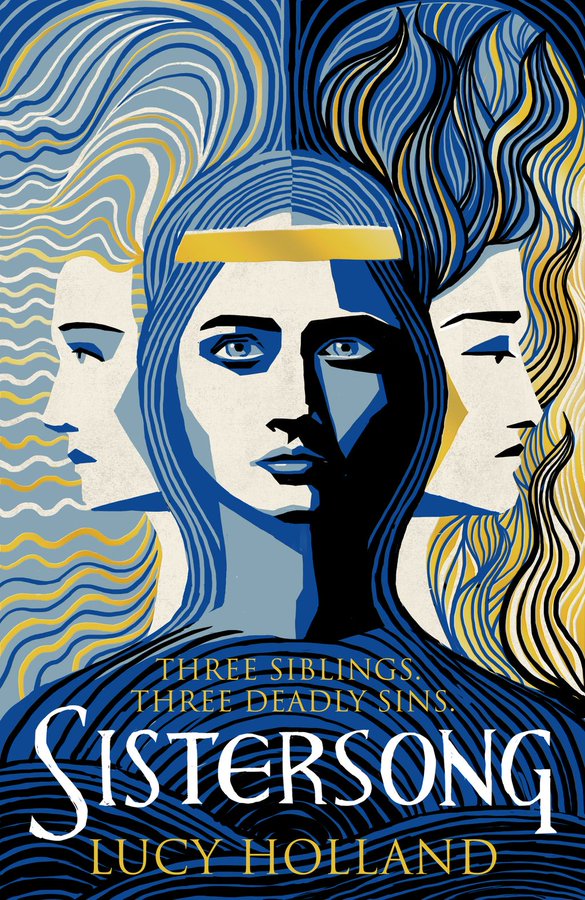
I recently listened to Sistersong by Lucy Holland on audiobook. I’m in the midst of an era kick, where I’m almost exclusively interested in historical fiction or fiction stories set in Dark Age Britain. So, I found this book as part of my keyword search on Audible, and it sounded intriguing.

I enjoyed it, overall.

This was a very intricately and well written story. Holland deftly weaves part fairy tale, part ballad about the stories we tell ourselves and how they come to define us. This story follows three siblings who are each struggling to understand or reconcile some part of themselves, or, in my ways, some part of their relationships with their parents and with each other.

Thus, the story quickly becomes part family reckoning, part coming-of-age, and part classical drama, all wrapped in a tale of lost magic and impending war.

Having known nothing so this story or author beforehand, I found it both surprising and familiar, in the way that classical storytelling forms often are. I recognized the beats as they came, but the characters’ lives were so vivid that their inner emotional turmoil drove the tension.

Each of the three siblings at the center of Sistersong has a unique voice that reflects the others, making their interactions poignant in every scene. Holland peppers her story with enough twists and interesting character turns to make it feel unique.

The soft magic system felt a bit all-powerful for my liking, but it was not a ‘deus ex machina’ effect. Magic permeated the narrative, but did not drive it completely.

Steve D

WAR LORD rings true for THE LAST KINGDOM series and Uhtred’s legacy

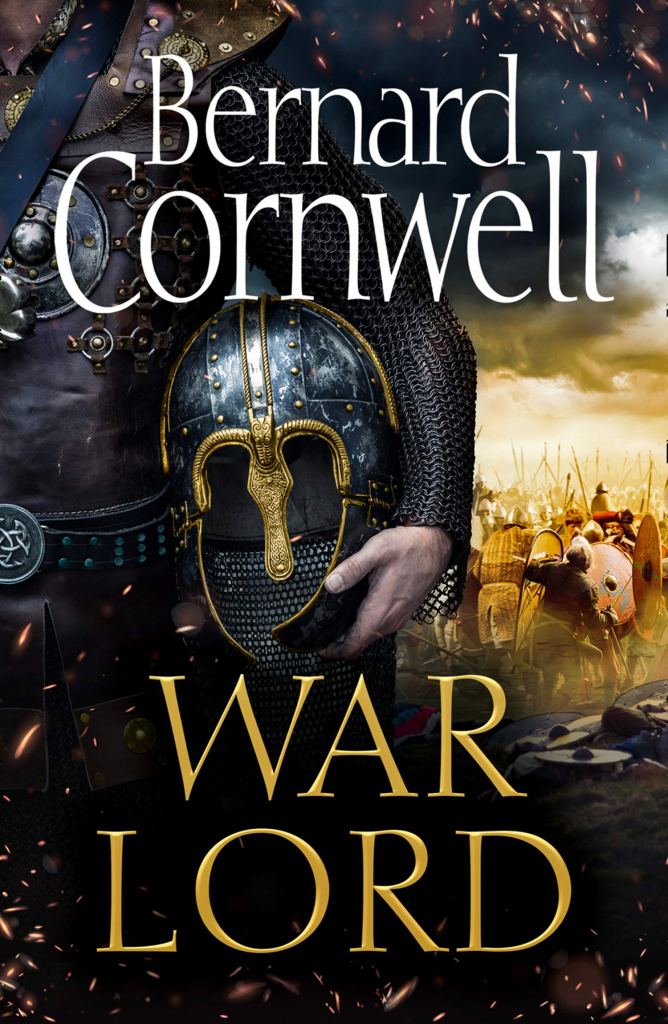
A couple weeks back (this post is delayed because life happened), I finished reading War Lord.

This final installment of The Last Kingdom series by Bernard Cornwell is a perfect ending for what has been a highly entertaining series.

In this story, Uhtred is old, and the only thing he wants is to die at Bebbanburg. He has lived a life of war, and politics, and striving desperately to reclaim the home he had lost as a child. Now he has, and he only wants peace. But war stirs to the north and south, and Uhtred must decide whether to fight for King Aethelstan or Constantine of Alba.

Uhtred’s age in this story make any significant fighting on his part a bit farfetched. That’s why the most ingenious part of this book is how Uhtred mostly becomes a battlefield spectator to be awed by a younger generation of warriors making their own reputations. He is the elder warlord whose experience and presence certainly help shape the battle, a general who commands the respect of those who follow him and tries to fight beside them as best as he can. But he no longer seeks out battle–the sword song–as he did in his younger days.

Uhtred’s relationship with King Aethelstan comes to fruition in this story as Aethelstan pays respect to the man who raised him, and Uhtred recognizes Aehtelstan for the noble and fearsome warrior king he has become.

I greatly appreciated Cornwell’s historical note to close the book, and I’ll be looking into his other historical fiction works.

Steve D

October Write Day: Steps

September was interesting. We spent a weekend at the beach, and both of our boys got their feet wet in the ocean for the first time. Work has been nuts for a variety of reasons, topped off by my best team member and good friend leaving for a new position. And we sold our old house!

It took me way too long to remember everything we did last month.

Last Month’s Goals

  1. Read three books.
  2. Exercise every day.
  3. Write long-form at least every other day.

Read three books?

Yes! I read three books in September by powering through the remaining three installments of The Last Kingdom series. I should have posted my review of the final book last week, but totally missed my regular post. I did not finish my current nonfiction read, but I’m picking away at it.

I’m on the lookout for my next big series, but I’m content to pick away at my current to-be-read list for the time being.

Exercise every day?

No, but I think I’ve still improved my routine. I haven’t yet gotten a new gym membership, so to ensure that I can do something each day, I’ve just started building my own yoga routine. It’s basically a full-body flow that takes me about 10 minutes, for now. I’m slowly building on it, adding moves as I see fit.

Because it’s my own routine, it’s really easy for me to just step away from desk for a few minutes and work through the flow a couple times. Once I get a gym membership, my plan is to use this yoga flow on my off days, just to stay loose.

Write long-form every other day?

No. I only worked on long-form writing on seven days. Missing my blog post last week didn’t help.

Overall, I feel motivated to continue picking away at my writing–the issue is finding and dedicating time to do so week in and week out.

What I’m really questioning is whether I have–or should have–any medium-term goals aside from just getting my current stories to final draft status. I had always assumed I would publish them when I had them ready, but then I look ahead to my next project, and I don’t see that being publishable for a few years at least. I’m at the point where I just have stories I want to write, and I know I can’t publish new stories every other year. Is it enough to publish once every six years? Or, should I put more energy into just writing.

I may be exploring this a bit more in a blog this month.

Goals for October

  1. Read three books. This is about as close to automatic as any goal can be for me.
  2. Exercise every day. I’m going to continue with my current yoga routine, since it’s been working out for me. I’m not sure when I’ll add something else to my routine at this point, but I’d like it to be soon.
  3. Write long-form at least 10 days. Yes, I’m scaling back my writing goal. I always try to be realistic about my goals, and I haven’t made a writing goal in I don’t know how long.

Steve D

Book Review: SWORD OF KINGS demonstrates Uhtred’s ability to rise above humiliation

I’m very rapidly making my way through the final books in Bernard Cornwell’s The Last Kingdom series. I finished reading book #12 of 13 last week, Sword of Kings.

I greatly enjoyed this story after feeling like its predecessor, War of the Wolf, felt overly contrived.

Sword of Kings follows Uhtred as he makes mistake after mistake. For the first time really in the entire series, Uhtred’s penchant for impetuous decision-making and lack of communication with anybody significant in his life stacks up against him.

A similar trail of mistakes followed in Uhtred’s wake in War of the Wolf. The difference in Sword of Kings is that in the moment, every single one of Uhtred’s mistakes makes sense. He rationalizes to the reader as he proceeds, but events turn against him for various reasons, and by the time you reach the final confrontation, you’re left wondering a) how the hell did we get here, and b) how the hell is Uhtred getting out of this one alive?

Uhtred ultimately faces the most humiliating moment of his life. The shame, regret, and fear he demonstrates thereafter is poignant as a side of Uhtred we’ve never seen. After several books of seeming invincibility to anyone else’s ambitions and his own brashness, Uhtred is brought as low as possible, and he has to be convinced by those closest to him to either give in or fight for his own dignity.

My only nitpick is the quite flippant disposal of a few characters in Uhtred’s life, treated with little more than a footnote at the end of the story. Without giving away anything, I think these characters had lost their own purpose in Uhtred’s stories, and perhaps made room for new characters and narrative developments, but these are not realized until the next book.

This is perhaps one of the best novels of the series.