“Finish”
Checkered flag in view,
but the end stretches further.
Dive, reach for the line.
Steve D

Checkered flag in view,
but the end stretches further.
Dive, reach for the line.
Steve D

After years of watching the show and hearing from my father-in-law that I would love Bernard Cornwell’s The Saxon Stories series — now more famously known as The Last Kingdom series — I finally listened to the first story, The Last Kingdom, on Audible.
This was my first introduction to Cornwell’s writing, having watched all of the TV adaptation of “The Last Kingdom” previously. Even though I came into this book with inflated expectations, I was definitely not disappointed.
The Last Kingdom follows young Uhtred, the son of an English noble, from the time he is kidnapped by a Danish earl, Ragnar, until he becomes a man. This first installment is effectively a coming-of-age story, where Uhtred learns how to live like a Dane and how to be a true warrior. He learns early on that he has a strong lust for battle and killing, and he chooses the warrior’s path for himself, becoming caught between his Saxon heritage and his Danish upbringing.
Cornwell’s story is exciting, and his plot is punctuated by thrilling action sequences and scenes of dialogue that do most of the heavy lifting in revealing the characters. Many of the names would be familiar to those who had watched the titular Netflix show, but the story is far more in depth.
I thoroughly enjoyed seeing more of Uhtred’s early years, which are largely glossed over in the show. The reader gets to see more of the relationship between Uhtred and Ragnar, which truly becomes a father-son bond as the young Uhtred grows. This story lays a strong foundation for Uhtred to constantly be pulled between the two halves of his heart — the half that wants to help Ragnar the Younger in avenging the death of their father, and the half that wants to reclaim his birthright as lord of Bebbanburg.
This story also sets up what is sure to be a fiery relationship/rivalry between Uhtred and King Alfred of Wessex, as Alfred ensnares Uhtred deeper and deeper in the politics of Wessex (and his liege-ship), and Uhtred tries to angle for a chance to see his homeland in Northumbria reclaimed. The dialogue scenes between Uhtred and King Alfred crackle with tension.
If I had one gripe against this story, it’s that I don’t know if I would enjoy it as much if I didn’t already know the characters. Being able to see the actors’ faces in my mind as I listened brought this story to life in a way that many others cannot be.
Can’t wait to start the next one.
Steve D
Whether teaching old
or learning something brand new,
always together.
Steve D

Charles Yu exposes a ton of insight into what it’s like to be a “Generic Asian Man” in America. In Interior Chinatown he tells the story of an actor, Willis Wu, trying to work his way up the ladder, advancing from Generic Asian Man #3, to #2, through several intermediary roles, until at last he gets the chance to play the dream role: Kung Fu Guy.
That is all Willis thinks he is capable of becoming, a trope of cinema and a caricature of himself.
Through this experience, and with some much needed help from his family, Willis comes to realize that Kung Fu Guy is still just another version of Generic Asian Man, just like Old Asian Man or Asian Seductress.
In a strange but emotionally stirring scene in which Willis is “on trial” for boxing himself in racially and socially, he (and the reader) learn some tragic tidbits about how the US has treated immigrants from East Asia, and especially China throughout its history.
This is yet another side of history that we don’t often find in American textbooks; policies like the Page Act of 1875 and the Chinese Exclusion Act of 1882, which took steps to effectively ban all immigration to the US from China. The Chinese Exclusion Act was the first of its kind to ban immigration based on race or country of origin. There were also a series of Supreme Court rulings in the 1920s which sought to exclude Asians from naturalization in the US. (Read more here).
Ultimately, Willis realizes that he is playing into a system which exacerbates his own place as Asian Man; a role which continues to flummox American society at large, even after 200 years of immigration (particularly from China).
I found the structure of this story odd at first. It read like a TV script, with characters delivering lines to each other in such a way that it was difficult to tell at times when Willis was actually acting in a scene for one of his roles, versus when he was “playing” a role as Asian Man in his everyday life. This storytelling mechanism is intentional, of course, and does lend to the author’s crucial commentary, in the form of the protagonist’s monologues.
Overall enjoyed this, but more than anything, Yu makes me want to read more about the Chinese American experience, and the US’s abominable history, distant and not so distant, in this (and many other) regards.
Steve D
On the precipice,
caught between foggy choices,
hair’s breath decisions.
Steve D
Back in September, I allowed myself to get a little pre-hyped for Amazon Prime’s The Wheel of Time series, and I promised that I would check back in after the first couple episodes. The Wheel of Time show currently has six episodes released, and I have watched the first five, so I am definitely overdue for this post.
Spoiler warning: I will be discussing events in the TV show only, through episode 5–which maybe means this isn’t really spoiler-y. Anyway, anything that has happened in the first five episodes is fair game for this post. Although I am a current book reader I will not bring up any events from the books that have not yet been depicted on the show.
Honestly, I don’t feel like there’s a whole lot to spoil at this point in the series, which is maybe part of the problem I have with it so far. These first five episodes feel so packed with plot-building, and world-building, and characters, and movement that I have to imagine it’s difficult for casual viewers to keep track of everything and everyone that’s happened so far.
In five short episodes we’ve seen seven primary characters–Rand, Mat, Perrin, Egwene, Nynaeve, Moiraine, Lan–come together, split apart, and (almost) reunite in Tar Valon, while also meeting half a dozen other characters who appear to have some part to play this season. Stepin, Liandrin, Alanna, Logain, Eamon Valda, and Aram all seemed poised to round out a pretty full cast of characters and factions with whom that party-of-seven would have to contend. Stepin has already off’ed himself, and Aram seems to have exited the story for now, but this is still a list of characters I would…
a) never have expected to meet or be asked to care about in the first place,
b) never have expected to meet this quickly,
and c) don’t think quite fit together in an 8-episode season that is now more than halfway over with no clear central conflict having yet emerged.
The one through-line of all of this is that no one knows who the Dragon Reborn is yet, which, fine, that’s a mystery for people who haven’t read the books. But it doesn’t feel like a conflict to me.
I think my point here is that this show, so far, feels like an oversized plot that does not take the necessary steps to make me care about these people. I care, at the moment, because I’m reading the books, but that’s not enough when viewing this show in isolation.
Okay, I don’t want to be all cynical about this show, because I am enjoying it for what it is. The acting is great overall, the landscapes and set pieces are stellar, and the story has a compelling pace.
Listening to a podcast interview of showrunner Rafe Judkins has me confident that the man behind the curtain knows what he’s doing in trying to adapt a massive story to the small screen, where we do not have the luxury of 400 pages to tell the first part.
The first three episodes, which were dropped all at once on Prime, are heavy on lore and trying to get the viewer to even understand what the hell the Dragon Reborn is supposed to be. In hindsight, it makes perfect sense that Prime decided to present the first three episodes all at once. I think episode one on its own would have been too jarring for most people; it moves at a break-neck pace, introducing a host of characters and tons of lore, has a thrilling climax, and then ends with barely a moment to breathe.
Episode 4, in which Nynaeve discovers her ability to touch the One Power in stunning fashion, is when I decided I liked this show. I can see past the overloaded plot if we get moments as powerful as that a couple times per season.
Looking ahead, it’s hard to believe that this season is only going to be eight episodes. I really have no idea what sort of “ending” this first season could possibly have, unless they decide that season one is just a prologue.
All in all, I’m enjoying watching this show, but I have lingering concerns that the showrunners have tried to pack too much into so short a season for it to have much meaning. I hope to be proven wrong.
Steve D
Old friends become new
through young eyes, developing
tight relationships.
Steve D
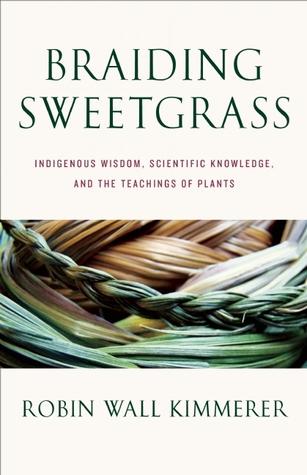
I recently listened to Braiding Sweetgrass: Indigenous Wisdom, Scientific Knowledge, and the Teachings of Plants by Robin Wall Kimmerer. This is another book I happened across while browsing Goodreads, and I gave it a shot to broaden my reading list a bit.
I can’t remember the last time I have been so completely inspired by a book — inspired to take action, but also emotionally.
Kimmerer’s book is a wonderfully woven selection of stories from her personal life, her career as an ecologist, and her own rediscovery of her Potawatomi heritage.
She cleverly leads the reader on a wandering journey as she tells of her own experiences as a student, a teacher, a mother, a scientist, an Indigenous woman, and a being with personhood (other beings with personhood include trees, plants, animals, rivers, basically everything in the natural world), to discuss the damage we have done and are doing to indigenous culture, to the natural world, and by extension, to each other.
I must admit that I found this book hard to follow during the early chapters. Kimmerer seemed to be telling random stories with no clear direction. But this series of vignettes begins to paint a larger picture as she describes a project she worked on with a fellow grad student to prove her hypothesis that sweetgrass would grow better with a human caregiver selectively harvesting it — a notion that goes against traditional Western science’s insistence that humans are separate from the environment, rather than an integral part of it.
In their experiment, Kimmerer, her colleague, and their team demarcate plots of sweetgrass and treat each one according to several variables. There were those they did not harvest at all, those they harvested by snipping at the stem, and those they harvested by pulling entire clumps of sweetgrass from the dirt. Over the course of two years, they consistently found that the plots where they were actively harvesting sweetgrass grew back better the next season. They did not wipe out an entire plot by harvesting, but instead let the sweetgrass regrow on its own terms. And they were right. This technique showed that the plots which were untouched did not regrow well at all — the older taller stalks of sweetgrass went untouched and prevented new growth, eventually choking out younger stems until their plots suffered.
There are almost too many lessons to try to take away from this book in one reading. From sustainable gardening and agriculture to on-the-ground conservation efforts to throwing support to indigenous communities’ efforts to reclaim their language and traditions, this book highlights a long list of efforts we need to make to provide a more sustainable future.
I came away from this reading both angered and inspired, frustrated and hopeful. Kimmerer does not offer hard and fast solutions — there are too many, and too complex, to enumerate in a single volume — but she does present the reader with a call-to-action, to begin pushing for change, or at least enacting change in our daily lives.
I like the idea of a larger, more sustainable garden that we can harvest vegetables from, and allowing sections of our yard to grow “wild” with shrubs and bushes native to our area and beneficial to the other fauna and flora. I also know that I need to identify local organizations focused on ecological restoration and sustainability, but finding these can be tough, at least at first.
It’s still difficult to pin down specific steps I can take as an individual towards a more sustainable future, but this book has laid the path. We just have to follow it.
Steve D
Find that extra inch,
the last iota of love,
compassion, patience.
Steve D

Ah, the optimism of the pre-holiday season, doomed to be crushed under the weight of festive preparations. November was such a weird month, but not really because of the holidays, like at all.
I mentioned in my post two weeks ago that I had a rough bout with some kind of illness around the middle of the month. Well, just a week later, our toddler caught hand foot and mouth disease, which is basically a beefed up cold with a rash. The boys were both home the entire week leading up to Thanksgiving, and I took a day off work to stay home with them. We flipped our Thanksgiving plans around and were basically on constant guard for any sign of the virus in our 3-month-old, or ourselves. Somehow, we have as yet escaped unscathed, and the toddler is just about healed.
So, yeah, November was a weird month. As you might imagine, my NaNoWriMo progress was greatly interrupted by these happenings.
Not even close. I started out slowly and fell behind within the first few days, but at the midway point I thought I could at least hit 15,000 words or so and get a good head start on New Earth, The Herb Witch Tales #2.
I wrote 8,500 words total in November, and almost nothing during the final week. Oh well. 8k is a solid total any other month, so I’m glad I at least hit my average.
I like where New Earth is going, as well. It started out slowly because I realized I needed a bit more set-up at the start, and the plot is changing more than I had anticipated. Still, it’s given me an opportunity to rethink how this story fits in with part 1. Speaking of which…
Not really. I was hyper-focused on writing during the first part of the month, and then the wheels fell off during the second part. This will be one of my goals this month, when I’ll have some real time off around the holidays.
Yes! I happened to finish two books in November, one of which I’ve already reviewed. I’ll likely review the other one next week.
I’ve gotten my hands on The Gathering Storm, book 12 of The Wheel of Time, and I’m already excited for it. Barely a chapter in, this book carries the weight of an epic finale on its shoulders. It’s also the first book in this series co-authored by Brandon Sanderson after Robert Jordan’s death. Sanderson’s writing style is definitely different from Jordan’s, but what I’ve seen of the main characters so far, he stays true to their spirits. I’ll have a tough time putting this one down.
Steve D
 Evening Satellite Publishing