Book Review: BLACKFISH CITY and the scarily real imaginings of our post-apocalyptic future

I’m way behind on posting this. Last month, I finished listening to Blackfish City by Sam J. Miller in audiobook.

This book had jumped out to me both for its stunning cover — cyberpunk feel with Indigenous artistic themes — and its intriguing synopsis.

Miller constructs a fascinating future world where refugees and oligarchs have fled or abandoned their fallen cities due to climate disasters. Miller deftly alludes to a multitude of climate disasters causing upheaval around the world, but really only goes into detail in one instance, as it affected a few of the characters.

Many of these refugees fled their homes for a newly built city in the Arctic Circle — an eight-armed floating city called Qaanaaq. The design of Qaanaaq is intricate and authentic. Miller describes geothermal pipes used to warm the entire city, and a highly computerized system that mostly runs the underlying infrastructure needs of the entire city.

Qaanaaq feels like a place that could very easily exist in a post-climate disaster world, both exploitative of the people who’ve lost everything and serving those who have profited from the chaos of a crumbling global civilization. It is technologically advanced and still not free of poverty, overcrowding, resource scarcity, and bureaucratic ignorance of real people’s issues that plagues rapidly growing cities.

I found it difficult to connect with the characters at first. I couldn’t quite place the age of most of the characters until much later int he story, so I assumed they were all Adults — this was not the case. Miller’s brilliance is in the way he slowly weaves interconnectedness between the characters, but this also requires patience from the reader to allow those connections and the wider story to unfold.

Fortunately, the world-building is what really kept me invested. Once some of the plot began to reveal itself, the pacing picked up, and I began to understand the wider narrative better.

This was a highly enjoyable story, and Miller is a fantastic writer. I genuinely hope to return to this world in future stories.

Steve D

Book Review: A KNIGHT OF THE SEVEN KINGDOMS

I finally picked A Knight of the Seven Kingdoms by George R.R. Martin off my bookshelf to read, and I ended up powering through most of it during our relaxing beach weekend.

I had always intended to read this story, a novel set within Martin’s world of Westeros that takes place a century before the events of A Song of Ice and Fire.

While I had little doubt that I would enjoy this story, as I’ve enjoyed Martin’s other Westerosi writings, A Knight of the Seven Kingdoms is an excellent example of the depth of Martin’s world-building in this series.

While the familiarity of the world brought me to this novel, the obvious joy with which Martin writes about Ser Duncan the Tall and Egg kept me reading. Dunk is an interesting protagonist in that he has traveled all over Westeros as both a squire to a former knight and a knight himself, and yet he doesn’t have much familiarity with the great houses of Westeros, except what he has seen himself or absorbed from the knight who had trained and knighted him. He provides a good counterpoint to the protagonists of A Song of Ice and Fire, many of whom are in positions of power, or come from families power.

Dunk has no power, except his sword, armor, and horses, and the optimistic chance that strangers on the road will recognize his knighthood. Egg, Dunk’s unlikely squire of noble birth, is a good foil to Dunk’s taciturn, blunt, but ultimately honorable nature. Egg comes from privilege but grows to respect Dunk and the experiences they have together as a hedge knight and squire with no permanent home. Dunk must choose to remain honorable, even in the face of corruption and cruelty from his fellow knights, or lords in whom he could find stability, comfort, and gold.

A Knight of the Seven Kingdoms is a good story in its own right, but I definitely feel like it enriches and is enriched by the wider world of Westeros. I also read this novel alongside The World of Ice and Fire, a literal encyclopedic history of the Seven Kingdoms co-authored by Maritn and beautifully illustrated by several artists. I was able to read the wider historical context of the period in which Dunk traveled Westeros to better understand some of the more minute plot details.

Like all great world-builders, Martin relishes the opportunity to write about people just trying to survive in this world, even if they are heroes whose legends have not yet grown. A Knight of the Seven Kingdoms is a testament to that joy. I’ll be looking forward to any future installments in this series.

Steve D

Book Review: A CURSE OF KRAKENS lands the trilogy masterfully

A Curse of Krakens is the third and final installment of Kevin Hearne’s The Seven Kennings series, which I rounded out fairly quickly on the heels of A Plague of Giants and A Blight of Blackwings.

A Curse of Krakens is a fantastic finale to the Seven Kennings trilogy. Oddly enough, I feel like I don’t have much to say about this specific book, because it so wonderfully builds upon the themes and characters of the first two novels and brings them to a fulfilling conclusion (alongside some exciting climactic moments, of course).

As a finale, this story expertly builds upon the narratives of its predecessors while elevating the story’s themes to a fulfilling ending. The pervading themes of grief, loss, and the characters’ ability to pick up the pieces and strive for a better future, both as individuals and as a collective, ring true to the end of the story. In fact, that eagerness to build something better from the rubble is exactly where this story lands.

I could see a scenario where a reader may find this overarching theme too “preachy”, but I find the optimistic, hopeful ethos of this world to be refreshing in a genre that is so often dominated by grim characters and grimmer worlds. I can’t think of a single thread from this sprawling story that was left untied by the book’s end. A Curse of Krakens really is the most fitting end to this series I can imagine.

Steve D


October Write Day: The Lost Routine

September was crazy busy. Between our kindergartener starting school, some big family events, and work, I didn’t have time for much else. I basically fell off of every single routine I had, aside from work and family pick-up/drop-off.

I just realized that I didn’t even post a September Write Day post in September. I posted five haiku total, where I might have posted 10 times over the course of the month, including longer-form posts.

Anyway, I’m not trying to beat myself up. I’m just coming to the realization that an entire month of life has passed me by.

Last Month’s Goals (…meaning from August)

  1. Read three books.
  2. Plan for/test a writing routine.
  3. Figure out my next writing steps.

So that’s where I left off a full two months ago. I guess I’ll speak to each point, but not in terms of what I achieved. I need to allow myself space to reset.

Reading

I read during September, just not as much as I had hoped. I’ve completed A Curse of Krakens, which rounds out Kevin Hearne’s Seven Kennings trilogy that I’ve been working through. I really want to write a review, and likely one other post, about that one.

I also finished reading The Storyteller: Tales of Life and Music by Dave Grohl, which I really enjoyed. Not the type of book I’m interested in reviewing, though.

Writing things

In August, before all of my routines disappeared, I had started to write/revise the first part of my duology. This wasn’t with incredible consistency or progress, but I had started tracking how much content I was able to write/revise in a short session, usually 15-30 minutes. The idea was to see how I could progress and increase my writing time each month, without necessarily chasing a specific word count goal.

I haven’t done any writing in weeks. Now that we’ve ironed out our home routine a bit better, I feel like I’ll be able to put a bit more attention to it, but it will still just be an effort to see what I can accomplish for now.

Goals for October

  1. Read three books.
    • Current reads: A Knight of the Seven Kingdoms, by George R.R. Martin, which has been on my shelf for a few years, and An Afro-Indigenous History of the United States by Kyle T. Mays, an historical essay that’s been in my Audible library for a while, too.
    • Likely next reads: I don’t know. I’m on the hunt for my next big fantasy series.
  2. All the routines. With our new pick-up/drop-off schedule that takes some pressure off my workday, I’m thinking about where I can fit in the things that I tend to put aside for family and work: exercise, writing, music. I have ideas for each. This has been the first week on our new schedule, so I’m still adjusting. Overall, I just want to get back to life in a way that I haven’t been mentally available for the past several weeks.

Steve D

Book Review: A BLIGHT OF BLACKWINGS leaps above middle book syndrome

A Blight of Blackwings is the second installment of Kevin Hearne’s The Seven Kennings series, and I could not resist diving straight into it after I finished A Plague of Giants a few weeks back.

As with the first book, I greatly enjoyed A Blight of Blackwings, which felt somewhat different from its predecessor and deftly maneuvered around the dreaded middle book syndrome.

Hearne achieved this by lacing this book with its own somewhat contained narrative threads that appeared separate from the larger series plot. The introduction of characters like Pen, Hanima, and Koesha enriched the plot without making the reader feel over-burdened with new voices. After being given the proper time to develop in their own right, each new character ended up serving the larger narrative in their own ways, without becoming subsumed by it.

Where some middle books, especially in trilogies, struggle to maintain narrative momentum, Hearne provides tangible story progression that is not wholly divorced from the wider series, so the reader does not feel like they are just getting “filler” content before the finale.

Hearne also manages to hit similar emotional stakes in this book as the first. Grief, and the myriad ways in which characters process their grief, is a significant and explicit theme in the first book. Grief and loss play just as important a role in Blackwings, but in a much different way.

Where the first book used dramatic scenes to demonstrate the power of grief – and anger, and sorrow, and despair – Blackwings focuses this poignancy on smaller, more intimate scenes that deepen the reader’s connections with the characters.

In short, A Blight of Blackwings both inherits and expands upon its predecessor’s themes, creating a story that builds upon the series without feeling repetitive.

I’ve already started book three.

Steve D

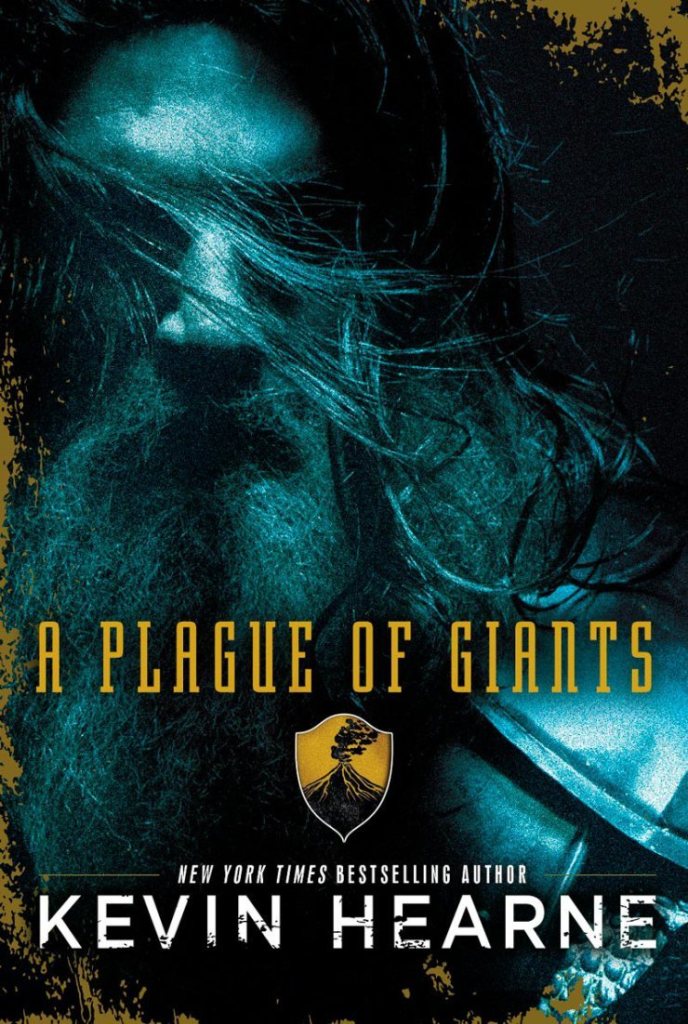
Book Review: A PLAGUE OF GIANTS is a superbly intricate story

A Plague of Giants by Kevin Hearne, the first in his Seven Kennings series, has been on my radar for far too long. I finally got this book on audiobook, and man, I can’t believe I neglected to read this sooner.

A Plague of Giants is a highly enjoyable read. This is perhaps one of the most well-rounded fantasy stories I’ve read.

The world-building is superbly intricate and layered into the plot in a way that’s accessible to the reader. This is introduced to the read through a framework structure, where a bard is recounting stories of a recent war to a crowd of refugees who had fled from it. The bard, through his “kenning” – the system of magic in this universe – can take the appearance and voice of whoever’s story he is telling. Thus, we’re treated to multiple voices through the voiceover narration of Luke Daniels and Xe Sand in turn.

The plot is well paced, and the multiple point-of-view narratives keep the voicing dynamic. This is the type of story where the first third feels to come from multiple unrelated angles, but each of the POV narrators end up building towards a larger theme.

The framework style of storytelling is effective and introduces its own plot mechanics that add depth to the main narrative. The bard and a local scholar spend time together between recountings of the tale, so that the scholar can record the bard’s oral history in writing.

And the characters feel authentic. This book carries weighty themes of grief and loss without burdening the reader with them, instead allowing each character to experience these feelings in unique ways. The characters wrestle with their own perspectives or histories even as they’re experiencing new waves of loss with the onset of this war, forcing the characters to react and reassess their own values in real time.

A Plague of Giants is one of the best fantasy novels I’ve read in recent memory. I cannot wait to start book 2 in this series.

Steve D

Book Review: AMONG THE BEASTS AND BRIARS

I discovered this book somewhere on Audible and gave it a listen a few weeks ago. (I’m a bit behind on posting my book reviews.)

Among the Beasts and Briars by Ashley Poston is an enjoyable story about gardener’s daughter, Cerys, who is cursed with the magic of the dark forest that borders her home, and who must save her kingdom from the forest’s dark powers.

This was a classic quest/coming-of-age story with a strong underpinning of fairy tale lore – the dark forest, old gods, terrible curses, and young people reaping the sins of their forebears. There is a spot of romance throughout the narrative as well, but I would not describe this as a romance novel — it fits well with the plot. The story is well-paced, and there are enough little twists to keep the reader guessing as to the final resolution.

There is some surprisingly fantastical and frightening imagery as the characters survive and then confront the dark magic of the forest, and I think this story would translate well to an animated horror/fantasy treatment.

For the audiobook version, male and female narrators trade point-of-view sections for the two characters who end up becoming our protagonists. The dual narrators definitely provided interesting perspective, as the conflicted perspectives of particular scenes drove some of the conflict. However, I didn’t find that the narrators’ voices matched what I felt were much more intense or frightening scenes, especially in places where Cerys confronts gaunt and terrible visages of the people of her kingdom. I think there’s a version of this narration that could lean much more heavily into the horror aspects.

Still, this was an enjoyable standalone novel, and I’m curious about of Poston’s other work.

Steve D

Book Review: STAR WARS: TARKIN sheds light on enigmatic character

I listened to the audiobook version of Star Wars: Tarkin by James Luceno, a story of one of Tarkin’s endeavors in the early years of the Empire that helped him rise to prominence. This is essentially his backstory for the opening of A New Hope, and it was a solid read about an otherwise enigmatic character in Star Wars lore.

I’ve never read any novel in this universe, and this seemed like a relatively innocuous place to start — a bit in the middle in terms of timeline, but likely not explicitly connected to any other stories, aside from the obvious background/lore pieces.

Tarkin effectively follows Moff Tarkin as he oversees a secret project for the emperor and tries to track down suspicious attacks across the galaxy. Simultaneously, the reader is introduced to Tarkin’s upbringing that made him the ruthless, calculating strategist that he is.

Darth Vader plays a surprisingly prominent role throughout the story, effectively teaming up with Tarkin to track down the “dissidents”, and I found their relationship highly engaging, as Tarkin tries to understand Vader, whose identify he believes he knows, and Vader largely remains a mysterious personality.

As a first-time reader of the Star Wars canon, this was a solid entry point. There were references to things about the universe I’m unaware of, but they did not stand in the way of the main plot, which had a clear trajectory for Tarkin and the growth of the Empire at large.

This book has me interested enough to continue reading Star Wars lore. I’m just not sure which direction I’ll go next: back to the High Republic, or these interwar years.

Steve D

Book Review: Spectacular World-Building in CHILDREN OF TIME

I got Children of Time by Adrian Tchaikovsky as a gift from my brother-in-law, who thought I might enjoy it. I had heard of Tchaikovsky before in passing, but was otherwise unfamiliar with his work.

The description of this book certainly piqued my interest, and I didn’t want it to languish on my to-be-read shelf for ages, so I dug in.

Children of Time is a fantastic read that encapsulates both the awe-inspiring technological dreams of epic science fiction and the remarkably grounded perspectives and emotional weight of human stories.

This story is described as “evolutionary world-building”, and it takes place over literal millennia as a ship of human survivors of a destroyed Earth search for and try to claim a terraformed Earth-like world as their own. Only a select few humans aboard this ship are awakened at various intervals to deal with the potentially-catastrophic problems that can befall any deep-space mission. Simultaneously, a new race of beings are evolving on the terraformed world at a super-charged pace, thanks to a bioengineered nanovirus to accelerate their advancement in preparation for their human-creators’ arrival.

This brilliantly “symbiotic” narrative alternates over nearly incomprehensible lurches in time. One human aboard the ark ship is awakened from cryo-sleep several times over the course of millennia, facing new challenges or threats each time in what to him feels like only weeks. On the terraformed world, the narrative follows successive generations of characters as they advance and reach for the stars in their own right.

The first portion of the story is a little jarring, perhaps intentionally so, and the reader is flung from one moment in time to the next, separated by centuries or more. Once the reader figures out this rhythm, though, it is quite enjoyable to see how the dueling plots advance over such inhuman time spans.

Much of the world-building focuses on how such a world could be terraformed, how a massive ark ship carrying the remnants of human civilization survives for millennia, and how a nanovirus can advance a civilization. This is all endlessly fascinating, toeing the line between believability and awe.

The story, however, is an entirely human one, focused on the very existence of one civilization or another. This book delves into what it means to be both the first and the last of a great civilization, to survive and continue living as the world appears to be collapsing around you, and to harness or reject the breakneck pace of social and technological advancement.

I loved this book, and there appear to be two more in this series already. I will absolutely be picking up the next installment, Children of Ruin, in the near future.

Steve D

May Write Day: Continuing the New Mode?

Yard work. Gardening plans. Summer-like weather. Some light air travel with our boys for the first time. April was a cool month, overall. Work was stressful for the first couple weeks, but it’s calmed down enough for me to catch my breath.

I’m still figuring out my day-to-day routine, but I feel like I’m making progress, in that I have ups and downs but generally get things done when I need to. I’m referring to my “new mode” of approaching Second Shift, family time, and my hobbies, which entails trying to stay up and active through the evenings and not falling into a pattern of laziness that ultimately leads to guilt/shame over not being “productive enough”.

It’s gone pretty well.

Last Month’s Goals

  1. Finish three books.
  2. Finish final chapter of New Earth and review story for overall chapter structure.
  3. Contemplate what my vision for my writing/publishing actually is.

Finish three books?

No, but I finished two: MCU: The Reign of Marvel Studios and His Last Bow, as part of the Sherlock Holmes omnibus I’m working my way through.

I’m still relishing the journey of Children of Time, and I’ve started on a nonfiction work about the marvelous world of fungi, called Entangled Lives. This is one of those books that is about science and microbiology and ecology on the surface, but really has some much deeper insights into our perceptions of life, sentience, intelligence, and the connectivity of all things. Both of these books will take me some time to get through and appreciate them in full, so I’m in no rush.

Finish New Earth and chapter overview?

Uuugggghhh no. This is one area I have not been able to work into a consistent routine. I’ve broken myself of the bad mental habit of only writing in long, dedicated sessions, which is a good start.

I was able to write in a couple spurts, but I’ve officially run into book-ending-syndrome, in which I find it impossible to write a suitable ending. I want to play out the scenes in my notes, but I keep watching the word count extend farther and farther over my intended count, and while that doesn’t actually matter, it absolutely distracts me from just writing the damn ending.

Contemplate writing/publishing vision?

Yes, and I haven’t made any firm decisions. I think I know what I would like my next four or five publications to be, which is a great start. Two of them would be the duology of novellas that are my current works-in-progress, and two would be full-length novels, which is obviously way more intimidating.

Identifying a tangible and achievable timeline to write and publish all those stories is the trick. At this point, I’m not even sure when I want to publish my novellas. I could just get them out into the world, but then it could be another few years at least before I publish anything else. What I can’t decide is whether I’m okay with that.

Similar to my previous workout life, spending 10+ hours per week exercising, I haven’t totally shed the notion of publishing at a pace more akin to a full-time writer. I’m not a full-time writer. At this point, I’m barely a hobbyist. But what does it mean for a hobbyist to publish occasionally? Should I try to prepare and publish several works in a shorter timeframe to try to drive real sales pivot into full-time writing? I’m not sure I’m ready for that either.

So, that is part of my dilemma at the moment. Not only the act of writing, but even what my medium- and long-term goals are. I require more contemplation.

Goals for May

  1. Finish three books. I already mentioned my current reads:
    • Children of Time by Adrian Tchaikovsky, and Entangled Lives by Merlin Sheldrake. I will likely finish both in the next couple weeks.
    • Likely next read: I’m eyeing Thor, Volume 1: The Goddess of Thunder for a change of pace, and because I never finished reading Jason Aaron’s run on the Thor comics. After that, I’m not sure.
  2. Finish New Earth, please? Focus on 15-minute writing sprints, a couple nights per week, and I should get this done.
  3. Continue to contemplate my writing/publishing vision. I went into more detail above than I had anticipated, so maybe I’ll end up writing about this more this month to get my thoughts onto virtual paper.

Steve D