“Search”
Seek and you will find,
or, find what is still unknown,
an endless question.
Steve D

Seek and you will find,
or, find what is still unknown,
an endless question.
Steve D
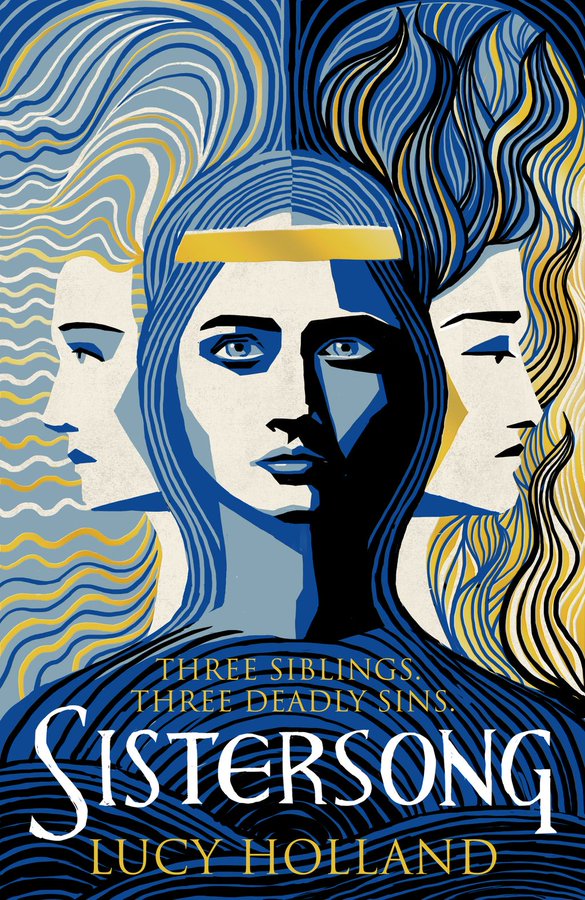
I recently listened to Sistersong by Lucy Holland on audiobook. I’m in the midst of an era kick, where I’m almost exclusively interested in historical fiction or fiction stories set in Dark Age Britain. So, I found this book as part of my keyword search on Audible, and it sounded intriguing.
I enjoyed it, overall.
This was a very intricately and well written story. Holland deftly weaves part fairy tale, part ballad about the stories we tell ourselves and how they come to define us. This story follows three siblings who are each struggling to understand or reconcile some part of themselves, or, in my ways, some part of their relationships with their parents and with each other.
Thus, the story quickly becomes part family reckoning, part coming-of-age, and part classical drama, all wrapped in a tale of lost magic and impending war.
Having known nothing so this story or author beforehand, I found it both surprising and familiar, in the way that classical storytelling forms often are. I recognized the beats as they came, but the characters’ lives were so vivid that their inner emotional turmoil drove the tension.
Each of the three siblings at the center of Sistersong has a unique voice that reflects the others, making their interactions poignant in every scene. Holland peppers her story with enough twists and interesting character turns to make it feel unique.
The soft magic system felt a bit all-powerful for my liking, but it was not a ‘deus ex machina’ effect. Magic permeated the narrative, but did not drive it completely.
Steve D
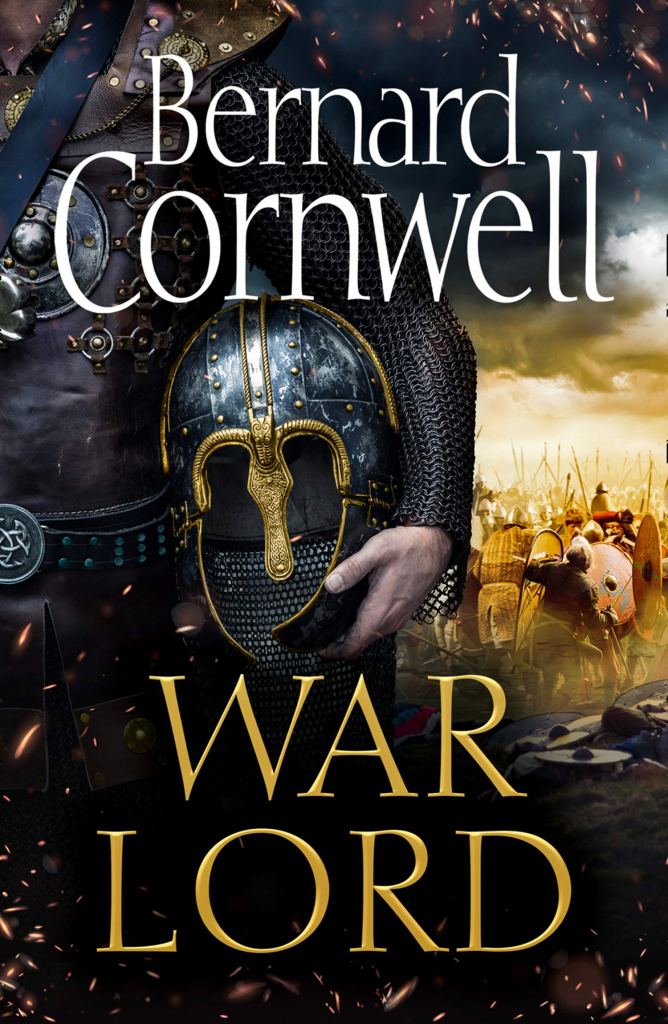
A couple weeks back (this post is delayed because life happened), I finished reading War Lord.
This final installment of The Last Kingdom series by Bernard Cornwell is a perfect ending for what has been a highly entertaining series.
In this story, Uhtred is old, and the only thing he wants is to die at Bebbanburg. He has lived a life of war, and politics, and striving desperately to reclaim the home he had lost as a child. Now he has, and he only wants peace. But war stirs to the north and south, and Uhtred must decide whether to fight for King Aethelstan or Constantine of Alba.
Uhtred’s age in this story make any significant fighting on his part a bit farfetched. That’s why the most ingenious part of this book is how Uhtred mostly becomes a battlefield spectator to be awed by a younger generation of warriors making their own reputations. He is the elder warlord whose experience and presence certainly help shape the battle, a general who commands the respect of those who follow him and tries to fight beside them as best as he can. But he no longer seeks out battle–the sword song–as he did in his younger days.
Uhtred’s relationship with King Aethelstan comes to fruition in this story as Aethelstan pays respect to the man who raised him, and Uhtred recognizes Aehtelstan for the noble and fearsome warrior king he has become.
I greatly appreciated Cornwell’s historical note to close the book, and I’ll be looking into his other historical fiction works.
Steve D

I’m very rapidly making my way through the final books in Bernard Cornwell’s The Last Kingdom series. I finished reading book #12 of 13 last week, Sword of Kings.
I greatly enjoyed this story after feeling like its predecessor, War of the Wolf, felt overly contrived.
Sword of Kings follows Uhtred as he makes mistake after mistake. For the first time really in the entire series, Uhtred’s penchant for impetuous decision-making and lack of communication with anybody significant in his life stacks up against him.
A similar trail of mistakes followed in Uhtred’s wake in War of the Wolf. The difference in Sword of Kings is that in the moment, every single one of Uhtred’s mistakes makes sense. He rationalizes to the reader as he proceeds, but events turn against him for various reasons, and by the time you reach the final confrontation, you’re left wondering a) how the hell did we get here, and b) how the hell is Uhtred getting out of this one alive?
Uhtred ultimately faces the most humiliating moment of his life. The shame, regret, and fear he demonstrates thereafter is poignant as a side of Uhtred we’ve never seen. After several books of seeming invincibility to anyone else’s ambitions and his own brashness, Uhtred is brought as low as possible, and he has to be convinced by those closest to him to either give in or fight for his own dignity.
My only nitpick is the quite flippant disposal of a few characters in Uhtred’s life, treated with little more than a footnote at the end of the story. Without giving away anything, I think these characters had lost their own purpose in Uhtred’s stories, and perhaps made room for new characters and narrative developments, but these are not realized until the next book.
This is perhaps one of the best novels of the series.

I’m working my way through the final three books of Bernard Cornwell’s The Last Kingdom series. War of the Wolf posits an interesting question: what sorts of adventures / wars does Lord Uhtred get drawn into after he’s achieved his ultimate goal?
The answer, it seems, is getting tricked into fighting a war in someone else’s land.
While I always enjoy The Last Kingdom series to some extent, this installment felt too formulaic. The book opens with Uhtred outside of Bebbanburg, the nigh impenetrable fortress of which he is lord, for a dubious reason. Someone lured him there with a lie to try to ambush and kill him. Without giving away any spoilers, the rest of the narrative follows with similarly dubious decision-making by our usually cunning Uhtred.
There were some notable emotional stakes here that helped Uhtred’s individual development, and his fealty to King Sigtryggr of Eoforwic makes for some interesting politics. Aethelstan remains a compelling character, but his presence in this story merely feels like set-up for future stories.
This was not my favorite story in this series, but it was still entertaining.
Steve D

I don’t remember the circumstances under which I picked up Andrea Vernon and the Corporation for UltraHuman Protection, but it’s been sitting in my Audible library for a good while. So I finally decided to read it.
It was quite enjoyable.
Author Alexander Kane appears to have a knack for witty and compelling storytelling that does not get weighed down by exposition. This story moves quickly and demonstrates Kane’s deft plotting. No chapter felt cumbersome, and no character was throw-away.
Each character had a unique voice, perhaps in part thanks to Bahni Turpin’s excellent narration. Andrea, as the protagonist, had the strongest scenes and sense of growth. Other characters, like Ms. Oh, were interesting in their own right, but I often found myself anticipating Andrea’s next section more than any other POV character.
This is not necessarily my preferred style of storytelling, which veers between absurd cultural references and wise-cracking one-liners to keep the dialogue bouncing along, but I respect that Kane executed it so well.
There are two other books in the Andrea Vernon series, and I just may be tempted to pick them up.
Steve D

I just finished listening to The Plotters by Un-Su Kim on audiobook, a story with the trappings of an action thriller and the tonal resonance of a slow-burning suspense novel.
This story wound through a methodical plot, at times jumping into the past to provide insight into the mind and life of the protagonist, Reseng. While the narrative focuses on Reseng’s time as an assassin and his growing discontent with his life and the people around him, this is really a story about making life choices and living with – or fighting against – the consequences. The reader finds themselves rooting for Reseng to find some semblance of understanding about his own life, even if he is not a heroic character.
The narrator had a sort of deep, droning voice for the protagonist. As the story proceeded, I think this tone worked to emphasize Reseng’s aimless resignation with his life, compared to other character who had much more distinctive voices and motivations.
I did not find this story to be suspenseful in that I was riveted to my seat, but every scene carried a latent tension that was difficult to grasp. Even the action sequences were described with such monotoned effect that they seemed to be happening in slow motion. It felt like the entire story was gradually building towards something, but the final reveal was inside the character’s head, rather than in the action surrounding them. I don’t know that I’ve ever read a story with that type of tension, and it was quite compelling.
This story asks readers to empathize with its characters despite, or perhaps, because of the horrible things they do. Really fascinating read.
Steve D

I recently finished listening to The Great Train Robbery, by Michael Crichton, on audiobook. This is the second Crichton novel I’ve read, having started with Jurassic Park a couple years ago.
The Great Train Robbery is wholly different from Jurassic Park in both style and tone, but the level of detail and research poured into it is an obvious hallmark of Crichton’s I’ve already recognized.
This story recounts in meticulous detail the plot to pull off the greatest heist yet seen in Victorian England: the aptly named Great Train Robbery, masterminded by Edward Pierce in 1855.
The Great Train Robbery was a fascinating story combining court testimony of Edward Pierce’s trial, narrative dramatization of Pierce’s planning of the robbery, and historical context for Victorian England.
Because the story starts off with Edward Pierce giving his testimony in court, the suspense of this story comes from Pierce’s planning of the heist and the final outcome. While it’s obvious he had been caught and arrested, how the heist plays out, how Pierce was caught, and the result of the trial are all left as mysteries until the final chapters.
I found that I particularly enjoyed Crichton’s tangents into the culture and society of Victorian England surrounding the robbery and trial, even if these sometimes felt a little too far afield of the primary story. These sections reinforced my interest in Victorian England from a historical and sociocultural context that I’ve grown into recently. Crichton writes this story with the inquisitive eye and narrative flourish of an investigative journalist, which lends itself to a sweeping narrative that deftly weaves direct readings of the original court testimony with dramatized scenes of Pierce and his accomplices playing out their plot over the course of many months.
Narrator Michael Kitchens recounts the story like a documentary, seeming to speak directly to the listener and invite them into understanding every detail of Crichton’s meticulous research.
Although there were some moments of suspense, I was not necessarily riveted by the story. Still, I quite enjoyed its style and detail.
Steve D
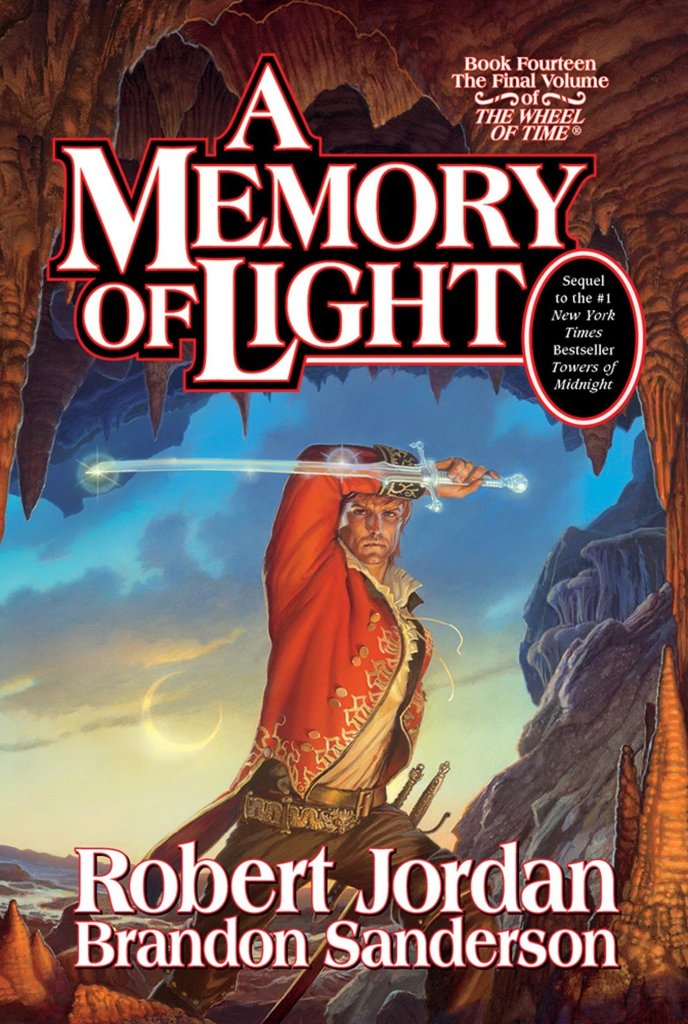
I don’t recall exactly when I first started reading The Eye of the World, the first novel in Robert Jordan’s A Wheel of Time series. My active Goodreads usage only goes back to about 2016, when I had read The Fires of Heaven (book five).
It has likely been 10 years since I first started reading this series, and to finally have reached the end feels like an achievement on its own.
Overall, A Mermory of Light is a great ending to an exceptional series. The Last Battle plays out with stunning complexity over 100-some pages. All of the major characters and plot threads were tied off from a narrative, and there were still plenty of surprises. Where character stories were not tied off in as much detail as I would have hoped were in the surviving characters dealing with the trauma and the aftermath of such a momentous event as the Last Battle. There was very little time spent on the emotional resonance of everything that had happened in the final act of the book.
Having read this series over the course of years, I at times felt both overwhelmed and bored by the drawn-out narrative, the twisting plot lines, and the ever-expanding cast of characters with seemingly dubious purpose in the story.
This book, and the two preceding it to include Sanderson’s completion of Jordan’s story, managed to balance the incredible web of characters Jordan had created with the streamlining necessary to bring this series to a meaningful conclusion.
Even still, while the primary plots were drawn to a close, I think the ending was rather abrupt and left too many unanswered questions about the aftermath. I fully acknowledge that the lack of definitive aftermath leaves it open to interpretation for each reader. I also recognize that a 900+ page book might not want to dedicate a ton of space to what comes after the Last Battle.
I just wanted a little more closure for the characters who were left behind — their grief and mourning, and their recovery and ambitions for rebuilding their world.
I truly enjoyed this book. And I still have questions to which I will need to devise my own answers, it seems.
Steve D

I picked up Tyll by Daniel Kehlmann, translated from German by Ross Benjamin, mainly because the cover caught my eye.
I didn’t really know what to expect with this story, except that it played on historical figures of the seventeenth century and was loosely based on an old German folk hero dating back to at least the sixteenth century.
It seemed right up my alley, if a bit different from what I usually read.
Tyll is a very well-written story with unique characterizations and an interesting confluence of themes between separate but overlapping tales. The first is a drawn out introduction to a tiny village in the Holy Roman Empire where the young son of Klaus Ulenspiegel is raised. The boy shows a knack for acrobatics and an interest in the occult from a young age, causing trouble for his family until he eventually runs away to escape the clutches of prying clergymen who come to his home.
From there, the story meanders between vignettes of different characters. I found myself interested in the detailed writing style, but wondering where this was all headed. Eventually, it becomes clear that it’s following several overlapping characters across time. Certain sections seem to be arranged non-chronologically, but it’s not difficult to follow.
I feel like I will need to reread this to see all of the connections in full, but I quite enjoyed it.
Steve D
 Evening Satellite Publishing