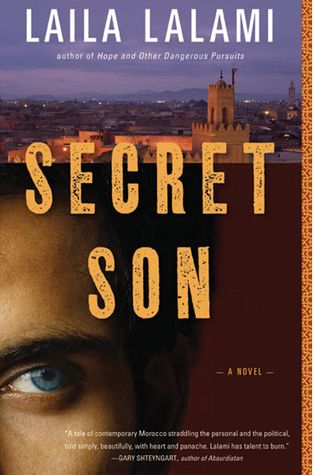
Book Review: SECRET SON is family and sociopolitical drama wrapped in one story

Secret Son portrays the life of a young man in a Casablanca slum trying to find his way. Caught between the stories of orphanhood and struggle his mother raised him on and the discovery of his real family, Youssef tries to understand who he is versus the various roles that society asks him to play.

As a fatherless boy from a poor area, Youssef’s prospects are limited until he finds a glimmer of hope in the discovery of his unknown wealthy father. Youssef is suddenly thrust into the elite circles of Casablanca life. As he tries to fit into this new world, he must navigate college, friendships, life as a working man, and the opposing wishes of his parents — the mother who raised him, and the father he always wanted.

Ultimately, Youssef’s uncertainty leads him astray, and he must find a way out. Like many disillusioned adults, he turns to the only people who seem to understand his struggle, a local political organization who promise to help the people of Morocco.

For the first part of this story, Youssef is the only point-of-view character. However, this changes when the meeting between he and his father is told first from his father’s perspective, and then again from Youssef’s. In this and other mirrored scenes, the reader is able to understand the interior thoughts of each participant — how they react to and often misunderstand each other. I found myself relating to each of the characters in different ways, whether Youssef’s desperation for a path forward, his mother’s attempts to set him on that path, and his father’s hope for a brighter future with his newfound son. Other characters, as well, helped to fill in the gaps between these three, to give the reader a full picture of the history of this family.

The abrupt ending and non-finality of any characters’ stories were surprising but fitting. The notions of Family, Identity, and Home don’t have beginnings, middles, and ends. They are relationships an individual evolves over time that shape one’s decisions and outlook, but rarely settle in one place.

Lalami captured the turmoil of family, of adolescence, and of despair amidst social stagnation in ways that many will be able to relate to. Great story.

Steve D

3 Elements to Revise in an Early Draft

Creativity Sessions writing process. Evening Satellite Publishing.

I’ve started a full revision of The Herb Witch Tales this month. I’m currently revising the third draft of Uprooted, and will move straight into revising the second draft of New Earth.

These novellas form a duology, so it’s important to me that the characters, plots, and narrative themes align between them. I had written the first part in full, started the second part, and then decided to rewrite part one. Now that I’ve finished a subsequent rewrite of part two, I’m taking the time to revise both parts together.

Thus, my focus for this revision phase is first on consistency of those big pieces, knowing I’ll likely have to come back again to revise for smaller details.

That got me thinking about which elements are important to focus on during a given revision phase.

I’ll start by looking at what to focus on when revising an early draft.

3 Elements to Revise in an Early Draft

I’m using the term “early draft” here, because every writer drafts at a different pace. Some take three drafts to get a polished story; others take ten, or fifty. An early draft could be a discovery draft, where you’re just getting words onto paper, or it could be a draft that has already gone through a couple of revisions, but still feels raw.

In any case, you have a completed draft that you know needs some work. Where to begin? I’d like to highlight three places to start.

1 – Scene Development

This might seem obvious, but an early draft likely has a lot of plot holes to fill. Read through your draft with a questioning mind. From scene to scene, are there any questions left unanswered about how your characters are behaving, jumps in time, or events that are not presented to the reader directly?

It’s okay to leave some of these things for the reader to interpret, but that should be an intentional decision. If you’ve skipped a ton of scene development for the purpose of getting that draft finished, then many parts of the story may feel unfinished when you’re revising.

With every scene you revise, ask yourself:

  • Does this scene transition well from the previous scene?
  • Does the scene demonstrate new or reinforce established information about the characters, the plot, or the world they’re in?
  • Does it transition well into the next scene in a way that readers can follow?

2 – Character Consistency

Pay attention to the way your main characters may change – or not change – over the course of the story.

  • Do their attitudes shift, and do these changes serve the narrative?
  • Does each character have consistent voicing — the way the speak, act, fidget, or think?
  • Do their decisions align with what the reader knows about their fears, their motives, and what’s happening around them?
  • Does each character have agency, able to make decisions in reaction to what’s happening around them, rather than being buffeted through each scene like a toy doll in a hurricane?

Similarly, do your side characters have a purpose in your story? These are the folks who may only appear in a few scenes, or in the background of whatever the main characters are doing, but they should be there for a reason. A character who just reacts to what’s going on around them – a child who only complains to their parents, or a sidekick who only cheers on their leader – will fall flat. If you’re taking the time to create a character and place them in a scene, then give them something to contribute.

3 – Narrative Flow

This follows on element number one above, but forces you to take a step back and view your story not just for each individual scene, but for how the entire piece comes together.

  • If the story is intense with drama or action, are there moments of quiet and calm, or is the reader constantly pushed from one crisis into another with no respite?
  • Does the narrative meander from one scene to another, taking random expository detours that last for pages on end?
  • Does the plot flow naturally, or will the reader feel jolted along due to unexpected time jumps, or sudden changes of place?

Finding Your Story’s Intention

None of these things are bad to have in a story, but they should be intentional. Revising an early draft should give you the opportunity to understand, and improve on, the tone, pacing, and style of your story.

And don’t fret the details of Editing or Proofreading just yet. That will come in later revision phases.

Steve D

Book Review: 1984, and Truth against totalitarianism

I just finished reading 1984 by George Orwell for the first time. Somehow, this book was not part of my high school reading curriculum. I feel like my high school English class had a huge reading list, and each class read only a selection — friends of mine read 1984, and my class read Brave New World, which I loved.

This book is a must-read for anyone who feels compelled to understand the psyche of fascism and totalitarianism.

If a reader comes to this book looking for character development, reasonable plot pacing, or much scene work beyond didactic dialogue, they will not find it. They will also be missing the point. From a story perspective, I really enjoyed the section focusing on Winston and Julia’s relationship, even if their time together ended rather abruptly.

Orwell’s story is a mechanism to explain the idea that totalitarianism seeks control as an end itself. The ideology doesn’t matter. Control over every aspect of life – even over thought, if it can be achieved – is the entire aim of the totalitarian system. To gain power over people and keep it is the only goal.

This book is a product of its time and timeless, as applicable a warning against fascism now as it was seventy years ago. As a lover of history, I was interested in the alternative rendering of the post-WW2 order, but I know there are likely other stories where this is the focal point, rather than the exposition dump Orwell uses. This section was particularly frightening to me as the end of the book drew near, as it provided a view into a world where Truth does not matter – even upon learning the truth about your reality, a totalitarian system’s entire existence is predicated on controlling you in spite of it.

Steve D

2023 To be Read & To be Watched List

I wrote a TBR / TBW last year, and then never followed up on it. Turns out, I didn’t end up getting to about half of the things on my list in 2022. That’s not really a negative — I just ended up focusing my reading and TV/movie energies elsewhere. So, why not provide an update?

To Be Read in 2023

I’m going to take a mulligan on the first… four entries on this list, since these were all on my 2022 list.

The Wheel of Time

I’ve been slowly but steadily making my way through the final book in this series. I’ve mentioned it a few times before, but I’m not really in a rush to finish this series. First of all, the final trilogy of the series has been intense and incredibly satisfying. The final book, A Memory of Light, has been exponentially more intense, in a good way, than any of the thirteen books that precede it. But it means that I’ll read a couple sections, then stop to process a bit. I’m basically savoring this read, and not regretting it in the slightest.

The Saxon Stories, or The Last Kingdom series

I’ve read the first seven books in this series now, and while the last couple installments haven’t been as exciting to me, I still intend to continue the series. These books are great ways for me to pad the Read list on GoodReads, since I tend to get through them pretty quickly. So, I always look for the next one when I need an easy, action-packed read.

An Encyclopedia of Tolkien

…which my wife got me for Christmas two years ago and keeps tempting me from the shelf. After the joy of watching Rings of Power last autumn, I’ve been burning to get into this deep-dive of Tolkien lore.

The Storyteller: Tales of Life and Music, by Dave Grohl

Dave Grohl’s memoir, which my wife got me for Christmas last year. I’m generally not a memoir type of reader, but I love Dave Grohl, and I don’t want this book to sit unloved on my shelf for years at a time. I need to check this one off my list.

Some new fantasy series

I legitimately don’t know where I will turn next for epic high fantasy series after I finish Wheel of Time, and the opportunity is honestly exciting. There are several candidates on my Want to Read list on GoodReads, such as Rachel Caine’s The Great Library series, Tomi Adeyemi’s Children of Blood and Bone, Patrick Rothfuss, or a Brandon Sanderson series. I am open to recommendations, so leave a comment!

Social science-y type books

I will, of course, continue to read some history, politics, anthropology, or linguistics books as I go, just to mix it up, but those are usually decisions of the moment.

To be Watched in 2023

Honestly, this one is a little more difficult this year. In early 2022, I was excited about all of the shows and films in the MCU, Star Wars, and other IP universes. A lot of those properties were mediocre, at best, and I will definitely be more skeptical of them going forward. I think I need to pay closer attention to more “prestige” TV shows this year.

The Bear

I’m already halfway through this eight-episode show on Hulu, but I’m really enjoying it. I like Jeremy Allen White, and the restaurant setting pulls at a few of my memories from my years in the service industry. This one has me focused for now, but I know it will go quickly.

The Last of Us

This is on the list exclusively because a friend of mine asked if I wanted to watch it with him. This is the same friend with whom I’ve watched The Walking Dead, Game of Thrones, Ballers, and House of the Dragon, so this show will be our next shared viewing experience. I never played the video game this series is based on, and I don’t know much about it other than zombies. Big fan of Pedro Pascal, though, so I don’t need any more convincing.

More Movies

I’d like to go to the movies more this year, but I’m not sure how I’ll swing that, just based on my schedule. I feel like I only went to the movies once or twice all of last year, though, so I can probably do better than that.

I really just want to watch more movies that I’ve never seen before. There are likely tons of movies I could list out that many would consider classics, or must-see, which I have not seen. Listening to The Big Picture podcast on The Ringer is entertaining in its own right, but also a constant reminder of how little I’ve scratched the surface of movie lore from the last few decades.

I have no idea where I’m going to start. I just want to make it a point to watch more movies. Maybe one per week? That seems ambitious, but I will try.

Recommendations?

Is there any book, movie, TV show, or documentary that I am blatantly missing from this list? Anything you feel like you’ve been screaming at people to get on board with? Please tell me about it! I love sharing reading and watching experiences with people.

Steve D

Book Review: THE PAGAN LORD grinds series progression to a halt

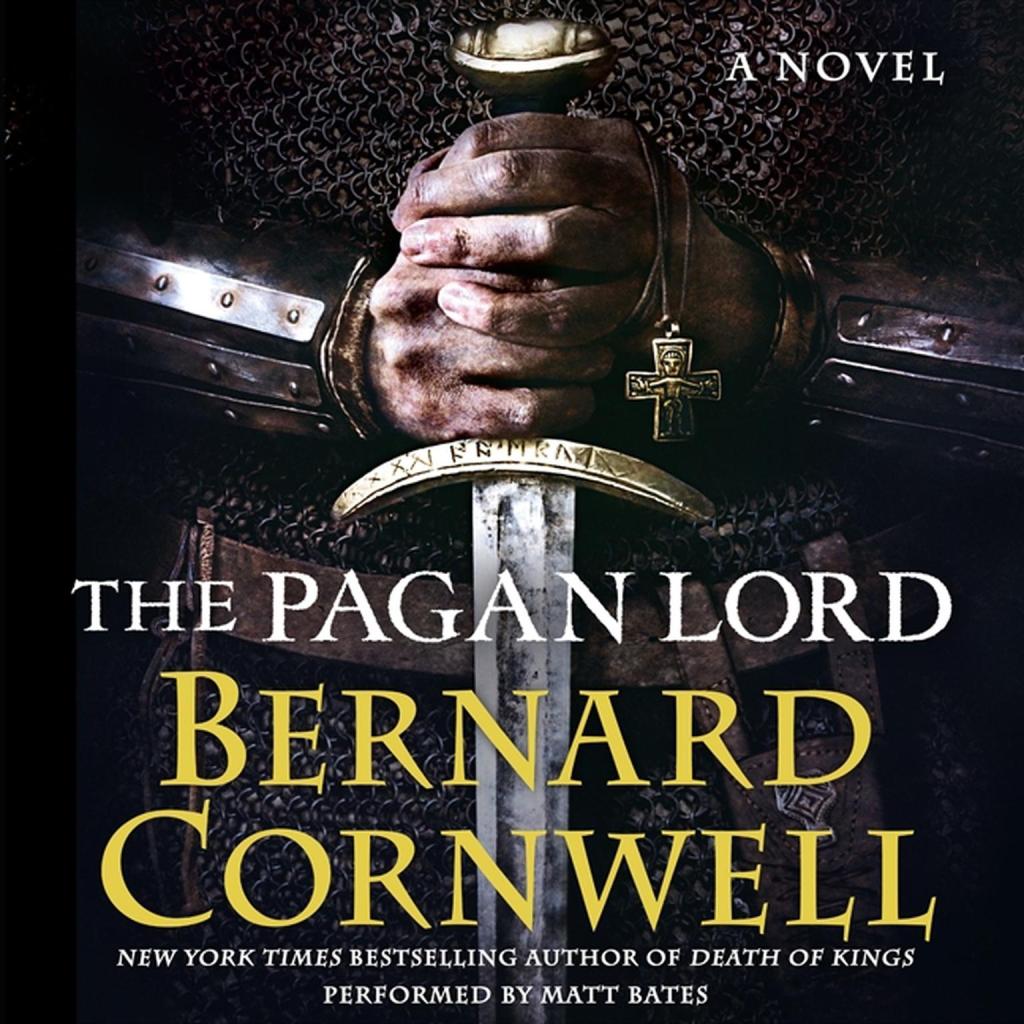
The Pagan Lord is the seventh book in The Last Kingdom series by Bernard Cornwell, and this has been my least favorite of the series so far.

This installment has all the trappings of a classic “middle book”: no major plot progression for Uhtred or other main characters, stagnant action that lacks excitement or real stakes, and no new characters to liven up the story.

After several years of relative peace, the Saxons and Danes feel restless and wary for the next war that most don’t truly believe is coming. Uhtred, as always, if on the lookout for the next war, and his instincts end up proving correct.

However, this book feels like a regression for Uhtred as a character, who makes a rash mistake that leads to him being outcast by the Saxon kingdoms. Uhtred is bitter in his old age and still clings to his dream of retaking Bebbanburg, which makes him more desperate than in previous stories.

The wisdom and growth as a leader we had seen from Uhtred in recent stories seems to have eroded, perhaps because he has been rudderless for several years. It is perhaps fitting that this story also feels largely rudderless, like its protagonist, but it does not make for a very enjoyable read.

With both of his sons grown into men, Uhtred’s successes and shortcomings as a father are also on display. He is ashamed of his eldest son for becoming a priest, but his actions are those of a petulant child who did not find his heir in a son whom he largely neglected as a child. His second son is a brave lad eager to prove himself as a warrior, but Uhtred does more to put him down than build him up. Uhtred’s daughter, Stiorra, another child to whom he hasn’t paid much attention, is also notably absent from his life.

This was a decent story, but I’m hoping Uhtred snaps out of his funk. The narrator was okay, but did not bring the same intensity to the story that previous narrators have. Here’s hoping book eight picks up the pace again and Uhtred finds his way.

Steve D

ANDOR takes the title for Best STAR WARS

I’ve recently caught up with and finished watching Andor, the latest show in the Star Wars universe on Disney+. Coming in a few weeks late to this show, I had heard good things about it, even if it wasn’t getting a ton of buzz. I came into this show with an open mind. The Mandalorian has been great. Boba Fett and Obi-Wan were decent, but flawed in their own ways. I felt like Andor had potential as a show that didn’t have to try to build around characters we already knew from the original trilogy, and I was excited by the show’s premise of focusing on the rebellion leading up to A New Hope.

With season one in the books, and a few days for me to think about it: Andor is the best that Star Wars has been to this point, from the storytelling, the writing, the world-building, and the meaning. I’ve watched it once through and am already watching it again with a friend who has yet to see it. I can barely contain my excitement to watch this show a second time, mere days after I’ve finished my first watch-through.

Spoilers ahead for Andor and for the movie it leads to, Rogue One.

Tony Gilroy, the writer/director behind the first three Bourne films and a ton of other action-thrillers, is the creative director and head writer for Andor. The 12-episode season is structured into four three-episode arcs, which presents an interesting ebb and flow of tension as the season progresses.

Let’s pause for one moment to appreciate that this show is a full 12 episodes, making it a legitimate season of television — not a 6-8-episode “limited series event” that feels like three C-average movies stuffed in a trench coat

I don’t want to go down the rabbit hole of summarizing the entire season. Just go watch it and be amazed. Instead, let’s talk about some key themes.

Cassian Andor, as the titular character played by Diego Luna, is ostensibly the protagonist, but when we meet him at the start of the season — five years before the events of Rogue One — he is a scavenger and thief who seems to have burned a lot of bridges and eroded the trust of those whom he cares about most. He argues with his adoptive mother, Maarva, and his ex-girlfriend and partner-in-smuggling, Bix, does not seem to trust him. How did this guy become an intelligence officer within the Rebel Alliance and a hero who sacrificed himself for the rebel cause?

The beauty of Andor, and its writing in particular, is that we see this arc develop for Cassian over the course of the season. He becomes a critical role-player in a heist on an imperial vault that he had only learned about days prior; he helps 5,000 fellow prisoners escape an inescapable prison; and he returns to his home planet, Ferrix, to help the people he had left behind. He’s not an expert rebel spy yet, but his character shows us a lot of grit and heart over 12 episodes.

Stellen Skarsgard is also stellar in his role as Luthen, a rare artifacts dealer in Coruscant-turned rebel ring-leader. It’s not quite clear how Luthen became involved in his own rebellious network against the Empire, but his connection to Saw Gerrera, played by Forrest Whitaker reprising his unique role from Rogue One, and knowledge of the various factions fighting the Empire indicate that Luthen has been in this war for a long time. That history is what has been missing from Star Wars, at least from the live-action movies and shows.

What Andor really demonstrates is the cost of a nascent rebellion. The Rebel Alliance doesn’t even exist yet. There are just a bunch of tiny factions fighting the Empire in their own ways, with no common goal yet identified. So why are they fighting? Luthen, along with Cassian, and another character, Kino Loy, played by the incomparable Andy Serkis, each take their turn delivering the thesis statement for this show, and for the rebellion at large — no one can fight fascism without sacrifice, without pulling together for the people next to you, and that sacrifice is worth it, even if the players themselves never get to see the dawn of a galaxy without the Empire in power.

The Best of Star Wars

I will not be able to do this show justice in a single post, and I may need to follow-up with a ranking of my favorite Star Wars stories.

All I know is that I’ve never heard dialogue in Star Wars like I have in Andor. I’ve never seen a Star Wars property as well-written and deliberate as this show. I’ve never felt like a story in this universe was this important, or this of-the-moment in our current culture.

A lot of Star Wars properties have reminded us of what we loved about the original trilogy, or tried to upend our expectations entirely. Andor manages to do both. It is an affirmation that these stories, in this universe, can say something meaningful about sacrifice, hope, suffering, love, light, and darkness. And it’s a challenge to every new series or film in this universe to be great, not just for a Star Wars story, but for a story of any genre. This show demonstrates the universality of Star Wars in a way I’ve never seen before.

I can’t stop thinking about it, and I can’t wait for season two.

Steve D

Book Review: DEATH OF KINGS ages the series gracefully

Death of Kings is the sixth book in the series of a thousand names… The Last Kingdom, The Saxon Stories, The Saxon Chronicles… This book serves as a nice change-up for the series at a point where the general arc of each story starts to feel predictable

  1. Uhtred clashes with his liege-lord, King Alfred of Wessex and yearns to be free of his oath.
  2. A Danish lord raises an army an threatens Wessex.
  3. Uhtred meets his army and kills the Dane in battle, bolstering his reputation.

That’s reductive and not really fair to a series I have greatly enjoyed, but it’s not hard to see how some readers might become bored of that type of formula.

Death of Kings plays with that formula a bit to lull both the reader and Uhtred, our protagonist, into a sense of complacency and end on a bit of a surprise. Yes, Uhtred must confront a Danish army, but he is now trying to do so in league with Edward, the newly raised king of Wessex, who is young and well-liked, but untested and uncertain.

The story proceeds and it feels as though our characters are approaching war… but the war doesn’t come. Uhtred is baffled by this, until he realizes a crucial piece of information, and the confrontational battle we’ve come to expect out of these books comes with a unexpected suddenness and a surprising turn of events.

This book is also an interesting advancement of Uhtred and several other characters. We meet an older Uhtred and walk with him through a changing of the guard, so to speak, among the leaders of both Saxon and Dane. There’s a lot of good character work with Uhtred, Aethelflaed, and Edward, and it’s clear that the relationship between these three will be pivotal going forward.

Steven Perring is a good narrator who brings a somewhat wiser and less intense voice to Uhtred. This feels appropriate given Uhtred’s Old Man Status (he’s 45 and describes himself as an old man with a graying beard), although I do miss Jonathan Keeble’s iconic narration from previous installments.

Steve D

See reviews of previous installments in this series here.

Passing on the Storytelling Love

Our four-year-old loves to read before bed. Reading has been baked into his bedtime routine since he was a baby. He takes a bath, brushes his teeth, gets his pajamas on, picks some books, and then we snuggle up to read.

I always let him pick the books. I tell him how many we have time for, and he makes the picks. He usually goes through phases of reading three same three to five stories ecru night for a couple weeks, until a new set is chosen.

I usually read to him. He loves hearing each story told in a certain cadence. He asks questions about the words he hears and the pictures he sees.

For a while, I tried to teach him basic reading as we went, sounding out the letters of simple words like “dog” as we read. He was not into it. He would just like to be read to, thank you very much.

He tells fantastic stories to himself as he plays, and he tries to tell us about his imaginary party house we have yet to see.

A couple months ago, I was worried that he would be slow to pick up reading on his own. After talking about it with my wife, I realized that was a premature idea.

For one, he’s still too young to really grasp reading on his own, without being a prodigy. And two, my mom read too me every night before bed until I was much older than he is now. Maybe 10? And even once I started reading too myself, I read a lot of the same books over and over.

The Redwall series, various Calvin and Hobbes collections, Animorphs, probably some Roald Dahl.

I didn’t pick up The Hobbit until I was 12, and I didn’t expand my reading list much beyond what was assigned to me in school until I was in college.

I was a late bloomer as a reader. And the four-year-old might be, too.

I’m cool with that. It may just give me more time to read with him. And the chance to share some of the novels I loved as a kid.

He loves stories. He loves hearing them told, and he loves telling them, even to himself. I’m just here to listen.

Steve D

Book Review: THE OCEAN AT THE END OF THE LANE delivers a fantastic modern fairytale

The Ocean at the End of the Lane is my second foray into Neil Gaiman’s fantastical storytelling, and I am in awe once again, as I was when I read Stardust.

Gaiman has an otherworldly knack for telling modern fairytales, both as a writer and as a narrator. I listened to the audiobook version of this novel, which Gaiman himself narrates.

The Ocean at the End of the Lane is a fascinating exploration of memory, friendship, and the underpinnings of existence itself.

Told from the perspective of a jaded adult remembering a fantastical experience he had as a young boy, this story is full of wonder, fear, and anxiety about the world of grown-ups and other things as can only be seen through the eyes of a child.

The story begins when the protagonist, unnamed, goes on a drive to get away from the drudgery of a funeral he is attending.

He soon finds himself driving to the lane where he grew, where his house no longer stands, and at the old farmhouse at the end of the lane. He doesn’t quite understand why, but he seems to be drawn to this place. He speaks with the old woman over a spot of tea, then goes to sit by the pond out back, which the little girl he used to know there called an ocean. Then, the memories flood back to him.

This framework story toys with the idea of memory, why we remember the things we do and may be better off not, or remember the things we don’t when those things could change our lives, our very existence.

The Ocean at the End of the Lane is a rich story that weaves these concepts deftly in and out of the narrative, so you only ever feel like you’re hearing a fairytale, and not a lecture on childhood memory and the forgotten perceptions of adulthood.

Gaiman masterfully narrates the audiobook as well. Having listened to two of his novels on audiobook, and never having read the print copies, it’s actually difficult for me to imagine not hearing these stories told in his deliberate, inquisitive, and soothing narrative style. Other than Jonathan Keeble’s raucous delivery of The Saxon Stories, I can’t think of a narrator who so intrinsically captures the tone of the story they’re reading, let alone an author capturing their own work. Gaiman brings a level of depth to his characters, dialog, and descriptions that I might be able to conjure myself if I read the print version.

Steve D