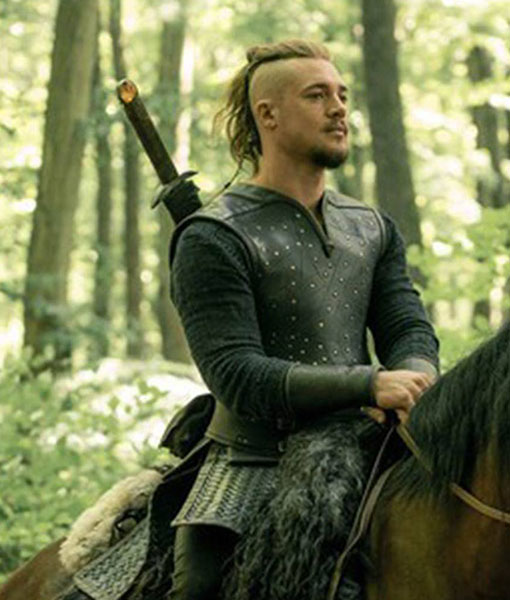
THE RINGS OF POWER reignites Middle Earth

Season one of The Lord of the Rings: The Rings of Power is in the books, and I, for one, am mostly pleased with how this season went. Here is my review of this show, where I will talk freely about everything that happened.

Spoilers ahoy!

Overall, I really enjoyed this show. The car was incredible, each of the storylines was fulfilling and had something to offer. Morfydd Clark’s portrayal of Galadriel is among my favorite performances in recent memory. Clark’s smoldering rage, steadfast determination, sword and riding skills, and empathetic story perfectly encapsulated such an iconic literary character.

The Harfoot plot was endearing and ultimately paid off with our very own Gandalf-like figure. In fascinated by the power this Istar may wield in future seasons.

The friendship between Elrond and Durin was heartfelt and funny. I just wish they hadn’t discovered the massive vein of mithril or woken the Balrog so quickly.

The Numenorean plot was intriguing, but I honestly expected a little more politicking there. Elendil feels like a strong character going forward.

Arondir, Bronwyn, Theo, and the Southlanders had some cool encounters with the Orks. I’m definitely looking forward to seeing more of Adar, who was somehow a sympathetic character despite wanting to block out the sun.

And Halbrand. I didn’t want him to be Sauron, but it became too obvious not to be true. His confrontation with Galadriel in the finale was legitimately unsettling.

My main gripe with this show is the pacing. I think they could have really benefited from at least two more episodes to draw out Halbrand’s trickery with Celebrimbor. My understanding is the production schedule was disrupted by the pandemic, so here’s hoping season two can be produced and released on time.

The Rings of Power was entertaining and recaptured the magic of Peter Jackson’s trilogy while adding new characters and new lore. I think this show’s biggest achievement is how much it feels like Tolkien, like Middle Earth. That’s a testament to all the details of dialog, set design, and story that the showrunners pieced together.

I’m already looking forward to a rewatch in preparation for season two.

How did you feel about The Rings of Power?

Steve D

Double Book Review: SWORD SONG and THE BURNING LAND and the narrator effect

After not achieving much on the reading front last month, I’ve powered through two consecutive books of The Saxon Stories series by Bernard Cornwell, upon which the Netflix series The Last Kingdom is based. I’ve slowly picked through this series over the last year or so after watching the Netflix show and hearing about the books from my in-laws.

I really enjoyed this series so far, but I’ve learned that my enjoyment of these books, more so than others I’ve listened to on Audible, really hinges on the narrator.

Sword Song, book 4 of The Saxon Stories

As the fourth book in the series, Sword Song may be my favorite yet. Uhtred has come into his lordship with household guards, an estate, servants, and a family, and he displays stern but fair leadership. Brash and arrogant as ever, he still does not hesitate to argue with or insult the other lords or clergy of Alfred’s court.

Sword Song winds through a closer character story where Uhtred is pulled between his oath to Alfred and his family, and a larger sense of duty to Wessex. This culminates in a battle for London, where the Saxons try to wrest control of the city from the Danes.

This book is also narrated by Jonathan Keeble, who is the best narrator for this series to this point. His various British accents feel authentic, he has an excellent tonal range, and his natural litheness with dialog brings a wit and charm to Uhtred’s character that really overpowers his cocky attitude and makes him likeable as a protagonist.

With the return of some old friends and a little more narrative room to breathe, Sword Song is a great catch-up that turns into a harrowing adventure. I enjoyed this book so much that I jumped immediately into the next installment in the series.

The Burning Land, book 5 of The Saxon Stories

The Burning Land is a less glory-filled story of Uhtred’s saga. Five books in, it’s not surprising that Uhtred’s fortunes start to take a turn for the worse, and that even his decision-making seems clouded by his own pride. This is a story of hubris, where Uhtred’s own comes back to bite him in harsh and tragic ways.

Uhtred tries to free himself of his oath to King Alfred of Wessex, and in doing so, finds himself int he company of the Danes of Northumbria. He dreams of retaking his ancestral home of Bebbanburg, but that dream makes him desperate, rather than savvy.

There are few exhilarating battles in this story. Rather, this story is weighed down by a more somber tone and drama-filled scenes as much of Uhtred’s character flaws catch up with him, even in ways he cannot control.

Unfortunately, this tone is made drab by the narration. Whereas Jonathan Keeble brought a humor and wit to Uhtred’s character and dialog, the narrator for The Burning Land was completely humorless. His narration style sounded more like a self-serious Shakespeare reading, which really dragged the story down for me.

I will definitely continue reading this series. However, this experience is making me wonder whether I really love these stories, or I just really love Keeble’s narration. I think the stories are good, but Keeble’s voicing brings an energy, an authenticity, and a weight to these books that I’m not sure I would find so readily on the page.

Steve D

Way-Too-Early Reactions to THE RINGS OF POWER

Another week, another multi-hundred million dollar budgeted TV show based on an iconic fantasy author’s universe.

The Rings of Power is the primary show I have been awaiting all year. Of all the MCU, Star Wars, and other mega-IP content to debut this year, I have had the highest hopes and most weighty expectations for Amazon’s foray into Tolkien’s universe.

Part of that is due to history. The massive narrative history of Middle Earth, and the surrounding historiography of it, is an obvious choice for “spin-offs”. Christopher Tolkien himself published stories based on unfinished drafts in his father’s notes.

Another part of my weighty expectations for this show come from a much more recent benchmark. Peter Jackson’s The Lord of the Rings trilogy is epic filmmaking at its finest, a wondrous cinematic adaptation that is just as affecting twenty years later as it was when I sat in the theater at thirteen for Fellowship.

The showrunners for The Rings of Power made a pretty big gamble when they decided to set their series in the Second Age of Middle Earth, thousands of years before most of the characters whom casual fans would know were alive. Middle Earth itself is quite different at this time.

Through two episodes (which is all I’ve seen so far) I’m already getting nostalgia-driven chills when I watch this show. The costumes, the music, the dialog, the settings all feel like Tolkien, and crucially, like the Tolkien we were introduced to in Jackson’s trilogy.

The Rings of Power, wisely, is speaking the same visual and emotional language as it’s cinematic predecessor. When I see characters in thematic clothes, I don’t just see generic fantasy brings. I know them as Noldor Elves, dwarfs of the line of Durin, and yes, even Harfoots, who feel just enough like their descendant hobbits to be recognizable, without feeling copied.

So, this show has already fixed itself squarely within the look and feel of Middle Earth.

I also find the beginning of the story and the characters driving it to be quite compelling.

As usual, I will not get into an episode recap, so I’ll just say that I already feel attached to and invested in Galadriel, Nori, and Arondir as they traverse differing plot lines that seem to be pointing in the same direction: the rise of the shadow after centuries of relative peace.

I don’t know how much more I can say without getting too deep into the details and ending up with 5,000 words for this post.

The showrunners took a big gamble with this show, especially with Amazon beating down their necks looking for a smash hit. Two episodes in, I feel like it’s already paying off.

I’m so excited to continue watching.

Steve D

Way-Too-Early Reactions to HOUSE OF THE DRAGON

It’s official. We’re back in Westeros after a 6-year hiatus from decent storytelling in George R.R. Martin’s fantasy universe.

As the first spin-off show we’re getting in the wake of Game of Thrones, I’ve been cautiously optimistic about this House of the Dragon.

With director Miguel Sapochnik, who directed several of Thrones‘s most harrowing and exciting episodes (see “Hardhome” and “Battle of the Bastards”), Martin himself more closely involved once again, and a star-studded cast, I felt like House of the Dragon had legitimate potential to be great.

After the debut episode, “Heirs of the Dragon”, all I can say is… I think I was right.

This premier introduced a set of characters who are poised to clash politically — or otherwise — and laid the groundwork for the rest of the season in an interesting way. They even managed to introduce a bit of lore that even the most ardent of book-readers could not have guessed.

I will not go into detail about the plot of the episode except to say that there is a jousting tournament with phenomenal cinematography and some pretty brutal violence. (The jousting show at the Maryland Renaissance Faire is one of my favorite events of the year, so I was thrilled to see such an exhilarating sequence in this show.)

I had honestly forgotten how unforgiving the early seasons of Game of Thrones could be, so to see it again in this premier was a bit of a shock.

While I have read part of The World of Ice and Fire, and Fire and Blood sits on my unread shelf, I’ve decided not to follow along with Martin’s writings while watching this show. I want to experience the show for its own merits, and then read the stories again.

Between the intriguing cast of characters, the tight-knit plot, the broader narrative it introduced, and the incredible looking dragons (more than one!), it’s apparent that the showrunners have set out to prove that the expanding Thrones-verse is still a force to be reckoned within the IP-as-content wars.

All in all, the showrunners have set the stage for what I anticipate will be an enjoyable, suspenseful, and action-packed season of television.

And of course, there are the dragons.

Share your thoughts or way-too-early reactions about this first episode of House of the Dragon in the comments below.

Steve D

Review: TOWERS OF MIDNIGHT overcomes Middle Book Syndrome

Towers of Midnight is the thirteenth and penultimate book in Robert Jordan’s The Wheel of Time series. I’ve been reading this series off and on for about six years. It took me some time to get through this book, primarily because I wanted to savor it, rather than rush through it to get to the end. That was a wise decision.

I consider this installment a “middle” book for two reasons.

  1. The Gathering Storm (book 12), Towers of Midnight (book 13), and A Memory of Light (book 14) are very clearly the final act in this sprawling series, narratively.
  2. They are also the final act in their production. Sanderson worked with the editor, Jordan’s widow, to split the final act into three books, and produced these three volumes.

This review contains spoilers for this book and those preceding it in The Wheel of Time.

So when I say that Towers of Midnight overcomes Middle Book Syndrome, I really mean that as a transitionary book to build to the climax that is surely waiting in A Memory of Light, this book succeeds.

Towers of Midnight is a compelling read jam-packed with fascinating plot lines centered around our main characters, especially Mat and Perrin, but also Elayne and Egwene. Other staple characters like Faile, Nynaeve, Lan, Galad and Gawyn also build towards a rich narrative.

It is very much a middle book in that these plot lines serve to close out long-running narrative threads, such as Perrin’s rise to leadership, Mat’s shifting focus back towards Rand and the Last Battle, Egwene’s cementing of her power as Amyrlin, and Elayne’s marshaling of power around her throne in Caemlyn.

These characters are shifting, slowly and inexorably, towards the Last Battle. In doing so, Towers of Midnight necessarily takes on the hefty task of transitioning the characters, all of the hundreds of characters, and the reader into Tarmon Gaidon.

That’s not to say that A Memory of Light opens with the Last Battle and is one massive compendium of fighting. (I’m a few pages in and can confirm this is not the case.) But after 13 novels of ever-increasing length and complexity, everyone is facing the same direction: towards The End.

Some sections of the book drag a bit — Perrin’s training in the wolf dream with Hopper and his inevitable face-off with Slayer took me a bit to get through, both because of the tension that had been built and because I wanted to get past it. Still, I understood in the moment that his realization and acceptance of his true self was necessary to Perrin’s facing of the Whitecloaks.

Overall, though, Sanderson churns through these plot lines and still manages to provide some surprises, some poignant moments, and some clean breaks with narrative threads that would no longer serve the end of this series.

After the numerous books I struggled to get through, or even to understand at points because they were so weighed down with characters about whom I could not bring myself to care, I’m honestly still a little awestruck at how neatly Towers of Midnight, and The Gathering Storm before it, have brought us to this point.

Like I said, I’ve already started A Memory of Light. I’m thrilled and simultaneously reluctant to get to the end of this series. That, I think, is testament enough to its storytelling power.

Steve D

The MCU and the Multiverse of Expectations

I’ve mostly been following along with the Marvel Cinematic Universe as they’ve plotted their course from Avengers: Endgame through Phase Four – otherwise known as the Disney+ era. Of the Phase Four properties, I have yet to watch:

  • Spider-Man: No Way Home – because honestly, this movie is impossible to find without buying the DVD/Bluray outright, which I’ll probably end up doing. I feel like I’ve absorbed most of the major spoilers through pop culture osmosis, however, so there’s that.
  • Thor: Love and Thunder – which, if you’ve been here recently, you know I was excited about. I still am. I just need to get to a theater.
  • Black Panther: Wakanda Forever – because it’s not out yet, but is definitively the best MCU trailer ever.
  • What If…? – because I wasn’t that interested or into the animation style.
  • There are also the upcoming She-Hulk and Guardians of the Galaxy Holiday Special, neither of which strike a chord with me at this point.
  • I am also on episode 6 of Ms. Marvel – but I had to write this post instead of watching it!

Obviously, I haven’t watched everything, but from what I’ve and heard about Phase Four, I have some thoughts. Specifically, I have reservations about the wider story that Marvel seems to be building, or crucially, not building to this point.

Seriously, just watch that trailer if you haven’t yet. Or if you have.

Spoiler warning – From here on out, I will talk freely about Phases Four, Five, and Six (and previous phases) of the Marvel Cinematic Universe.

To me, Phase Four feels like a bunch of individual stories with very little connective tissue. There have been some very good origin stories (Shang-Chi) and some moderately good passing of various torches (Falcon and the Winter Soldier and Hawkeye). There are tons of really interesting new characters, such as Yelena, Oscar Isaac’s multiple personalities, Kamala Khan, alternate timeline Loki, Sylvie, and Shang-Chi. And I’ve had a lot of fun watching most of these people do superhero things.

What feels sorely missing is the feeling that we are actively building towards something bigger. Phase One was all origin stories for the first Avengers team that were independent of each other, but used specific characters, like Nick Fury or Coulson, to tie them together and build anticipation.

Now, I’m fully aware of the announcements Marvel just made for Phases Five and Six, respectively, telling us that we are building towards Avengers: Secret Wars and Avengers: The Kang Dynasty. Those are coming alongside a lot exciting titles over the next few years, but I’m not really interested in stories that haven’t come to the screen yet.

What I want to know is how all of the characters we have seen so far coexist in their world. How can they coexist without any overlap? Why was no one aware of what Wanda was up to for a few canonical years in isolation? How did two Egyptian gods coming to life over the Cairo skyline not elicit some response from Dr. Strange, or anyone else?

Who or what will be binding these characters together, aside from Kang the Conqueror as the eventual Big Bad and the Secret Invasion as the Big Crisis?

Marvel hasn’t tried to start planting these seeds yet, at least not with any consistency. Loki met a version of Kang. Dr. Strange (and Kamala?) have traveled the multiverse. Captain Marvel, Wong, and Hulk are interested in Shang-Chi’s Ten Rings. Nick Fury is still off-world. Hints have been dropped along the way, but it’s really not clear at this point how they’re all related. Will half of the superheroes be off fighting Kang while the others deal with the Secret Wars? Or will all of them come together in two gigantic team-ups?

I know the overall path because Marvel has told us, but not really because that’s what the storytelling has shown us. With Phase Four wrapping up this November, it feels like an assortment of stories, rather than the beginning of a new saga.

Those are my feelings on the MCU. What are yours? Have you enjoyed Phase Four?

Steve D

Spare Parts for Broken Hearts – Songs that Stick to My Brain part 2

It’s time to return to my review of Spare Parts for Broken Hearts, the L.A.-based rock band whose eight singles have inhabited my ear space for the last couple of months.

When I listen to and review an album, the goal is to understand the music as a whole piece, rather than a critique.

I reviewed Spare Parts for Broken Hearts’ first for singles a few weeks ago. Today we’ll listen to the back four.

Previous post: Spare Parts for Broken Hearts – Songs that Stick to My Brain part 1

“You’re softer / When we collide

Gentle acoustic strums open “Pleasure Delay”, paired with lead singer Sarah Green’s off-kilter verses. The sound steadily builds with rhythm guitar and then drums.

Then the chorus hits with atmospheric sound–crashing cymbals, heavy chords, and eerie vocal tracks from Green behind the lyrics: “I could really show you something / I could be your one and only”

This song is a plea, perhaps for connection, but with a darker self-awareness, or maybe an admission: “But if you’re gonna die would you do it for me”.

“Take my hand and watch it burn”

“Say When” opens with a kind of slurring verse that seems to be directed at a former significant other. The music treads forward inexorably to a wailing chorus of old wounds: “Say when / Tell me you don’t want me then you hurt me just to stick around”.

In the second verse, the music quiets to a walking bass line and light drums, but Green’s vocals retain the anguish: “Take my hand and watch it burn / Oh I am shaking / From the love I can’t return”.

As in the first crop of songs from my previous post, “Say When” exemplifies Spare Parts for Broken Hearts’ ability to embody diverse and often conflicting emotional tones between songs, within songs, or even within a single verse.

“Build a bridge / Burn it down together”

“Mush” is the first song I ever heard by this group, and I was immediately struck by the weighty post-grunge overtones and Green’s ability to take her voice from warm and breezy to a full-throated gale and back in an instant.

I’m counting this entry as two songs, because the acoustic version of “Mush” is just as poignant as the full-band version. If someone had shown me the acoustic version first and told me it was the original, I would have believed them.

The authenticity of Spare Parts for Broken Hearts’ music is what resonates with me. It feels real, and even when the tones of the music seem to contradict the anguished lyrics, that contradiction feels intentional.

It makes listening to these songs a layered experience, even after the tenth or twentieth time.

Steve D

Spare Parts for Broken Hearts: Songs that Stick to my Brain part 1

See part 2 here.

I’ve spent the last several days listening ad nauseum to eight songs by Spare Parts for Broken Hearts, an LA-based rock band about whom I’ve been aware for at least a year, but had neglected to spend any significant time with. I’ve been missing out.

Last week I finally bought all eight singles that are available for download from their website. From what I can tell, they have yet to put out an EP or LP, but I’m still pleased with their eight-song playlist on my phone. (Reading the about page on their site, they plan to release an LP this year!)

Today, I’m going to take the first four songs from my playlist and look at them a little more closely. I’ll do the other four songs I have in a follow-up. I’m just doing these in the order they appear on my phone. If you’ve never read one of my album reviews before, I like to review the musical and lyrical tones of the songs and try to interpret them together. So this is not a critique so much as an attempt at understanding this music.

“I don’t want to be the voice of your prophet, your profit”

“Dirty Milk” opens with a fast, distorted bass line, feedback chords, and ringing cymbals. Lead Singer Sarah Green’s voice is melodic with just the right bit of scratchiness: “I am anonymous / Are you just like me / I need a friend”. And the refrain: “I don’t wanna be the voice of your prophet / I just want to be alone”

The song repeats its only verse and refrain twice each, never relenting until an abrupt ending that briefly fades out with squealing distortion feedback. This pace is more what you would expect from a heavy post-grunge band, but it’s not what Spare Parts for Broken Hearts typically do.

“Tell me the story from a different angle”

“Big Win” is more of a slow burn to start that builds into a soaring chorus: “All that I want from you / You can’t take back”

Even as Green’s voice rattles and nearly drowns out the dirty guitar chords, she still finds the space to lower her refrain to a gentle, almost sweet level, only to come back to a final chorus with fury and anguish. Spare Parts, or perhaps Green herself, perfectly blend these opposite emotional levels in most of their songs.

This is easily my favorite song of the bunch.

“I could swim til the bitter end”

“Cold Wave” similarly transitions from floating verse to torrential chorus and back. These transitions are jarring in that the listener feels the sudden weight of Green’s pain. Her first belting cry of “With no air” is powerful on its own, but its true meaning is only revealed when she growls: “I’m holding my breath / With no air”.

These songs run 3-4 minutes each– an average length– but each one is so full of sound and feeling that they feel like frozen moments.

“Where you end I begin / Severed”

Most of SPFBH’s songs are laden with inner turmoil, but perhaps none feels as forceful as “Ever”. Green’s wail on the first word of the chorus is a challenge and a rebuke: “What you can’t give / You can’t take from anyone.”

Plucking strings and distortion-rended chords. Soft hi-hat and crashing cymbals. Airy verses and wailing choruses.

All of these elements mingle throughout most songs for Spare Parts for Broken Hearts, and they never feel out of place or forced.

That the band can embody these dichotomies so completely is a testament to their songwriting skill and their authenticity. Whatever inspired these songs, I believe it, and that’s part of what makes them unforgettable.

I’ll come back with the other four songs in a couple weeks.

How do you like Spare Parts for Broken Hearts so far?

Steve D

THE LAST KINGDOM Finale: Epic TV storytelling

The Last Kingdom TV series recently debuted its fifth and final season, which I caught on Netflix.

The show follows Uhtred of Bebbanburg, a Saxon lordling captured and raised by Danes who rises to become an important warrior and warlord during the reigns of Kings Alfred and Edward of Wessex. This show is the reason I’ve started reading the book series by Bernard Cornwell that it’s based on.

Having now finished season 5 and gotten confirmation that it is, indeed, the last of the series, I find myself reflecting on what, to me, has been a truly great show.

While much of the story of Uhtred himself is fictionalized, the show is realized with impeccable detail in the settings, the sets, and the costumes. Individual fight scenes are well choreographed and the battle scenes are mostly good if not great.

I’ve watched this show from the beginning, and had eagerly anticipated each of the last three seasons in particular as the show really hit its stride. Alexander Dreymon’s portrayal of Uhtred evolved from that of an arrogant, if skilled, young warrior into a admirable, honorable, and relentless lord who manages to fight both for what is right and for what he is owed.

The rest of the cast is stellar to the point that you might as well read through the cast list on IMDB, because I don’t think there is a poor actor in the entire series. This is the type of show where I recognized basically none of the actors when I first saw them, and now I can only think many of them will go on to do incredible things in television and film.

Alright, that’s enough reflecting. The main element of this show I wanted to call out is the storytelling.

Beware spoilers for season 5, including the season and series finale.

The Last Kingdom’s Epic Storytelling

The main arc of the story centers on Uhtred in his quest to reclaim his ancestral seat as the lord of Bebbanburg. Throughout the first four seasons of the show, Uhtred is desperate to retake his homeland, but is always called by duty, by oath, by extortion, or by his heart to fight different battles. These are so often at the behest of King Alfred of Wessex that by season four, it is almost laughable, except the relationship between Alfred and Uhtred has grown into the dearest of friendships, and you can’t really blame Uhtred for being loyal to one of his biggest patrons.

Season 5 presents a key opportunity for Uhtred to attack Bebbanburg – held by his estranged cousin – at the head of the armies of Wessex and Mercia, now joined under King Edward (Alfred’s son and Uhtred’s liege lord).

In the season and series finale, Uhtred fights to take Bebbanburg, Edward’s armies are nearly thrown over a cliff into the sea, and the enemy they fight tries to burn Bebbanburg to the ground.

This is the moment that any long-time watcher of this show has been waiting for, and recognizes what the show is doing. They literally and figuratively bring Uhtred to his knees, so close to achieving his lifelong destiny, within the walls of his home, and it burns to ashes in front of him.

And then the show takes another predictable turn that is just perfect. They show a montage of previous scenes from the show, focusing on Uhtred’s friends, allies, family, all lost in the turmoil of the previous five seasons (and some 20 years) of Uhtred’s life.

Going into this episode, I was not aware that season five was to be the final chapter of this show. But this montage was so perfectly executed and attuned to the emotional weight of the moment that I immediately knew that this was the end of the series.

After the montage, the sky breaks open into rain, drowning out the flames that would engulf Uhtred’s home, and in a last desperate act, Uhtred and King Edward’s forces emerge victorious. Uhtred claims Bebbanburg and becomes Lord of Northumbria.

This moment would have been meaningless – or perhaps cheap – if the show had not had the patience to lead the viewer through five seasons of loss, failure, and shortcomings with Uhtred. Or if they had tried to drag the show out to extra seasons for no reason. They chose their moment to end the story, and they stuck the landing, something that more than a few shows in recent memory have failed to accomplish.

Finale Thoughts

I did not go into season 5 of this show expecting to write a review on it. I think I’ve only mentioned it in passing before on this site. That finale hit home to me, to the point that I’d like to rewatch the entire show at some point.

I’m also even more stoked to continue my read of the book series.

Please watch this show, if for nothing else, to give me someone to talk about it with!

Steve D

On Presence

I’ve been thinking a lot about presence recently, and especially how much I’ve caught myself not being in the present moment in recent weeks.

February was a tough writing month for me in part because I spent more time thinking about stories I haven’t written yet than thinking about my actual current work-in-progress. Even now, one week into this month, I find myself thinking a lot about the end game for The Herb Witch Tales. Not just how I want part 2 to end, but about how I want to reread parts 1 and 2 together and think of them holistically, how I might need additional drafts just to ensure I get them right before I publish, and how my publishing timeline seems to be in a state of constant expansion.

I haven’t even finished a full draft of part 2 yet.

A similar feeling has passed over me while spending time with my three-year-old. A moment at the park when he is playing a game with me but I’m thinking about what time we need to leave to be home for dinner. Or a moment where I’m watching him interact with his six-month-old brother and wondering if the two of them will make each other laugh as teenagers the way they do now.

Neither of those are “bad” distractions, but they are distractions nonetheless.

Even in writing this post, I can’t keep my fingers off my phone until I’ve settled on a song that both suits my vibe and allows me to focus. (The correct answer is “Monumental Holiday” by Dead Sara.)

What I have tried to do is take those distracting thoughts, let them pass through me, and let them go — a lesson I’ve taken from the meditation intro I listened to last month.

Am I going to be able to publish my stories this year? Maybe. Keep writing. What will my kids be like at X age? Impossible to know and always fascinating, but don’t lose sight of who they are right now.

What I can’t say for sure is whether I’m more distracted than usual, or I’m just noticing it more. This site is ostensibly A Writer’s Blog, but these things tend to bleed into each other.

Steve D