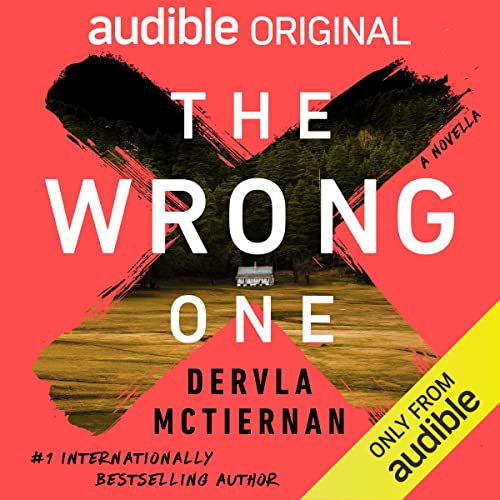
Review: THE WRONG ONE delivers thrilling twist

Audible recently offered The Wrong One as part of some kind of sale. I’ll always give free books a shot, and I could definitely not say no to a novella by Dervla McTiernan.

I’ve read the first couple installments of McTiernan’s more well-known Cormac Reilly series, following a Dublin-born detective trying to figure out his career in Galway as he solves often strange cases.

McTiernan’s crime stories always have a slow burning build, usually following multiple characters, until the threads twist into an intense third act. It may sound formulaic, but the characters are always well-developed, and the twists are enough to put a reader off-kilter.

So, I went into The Wrong One expecting to be hooked from the start. Admittedly, I was not. The Wrong One uses two voice actors to narrate the respective point-of-view narrators in the story, and I was not a fan of the first narrator. I’ll go into a little more detail below, in a section marked for spoilers.

This first narrator had an odd inflection to his voice that irked me. The second narrator was good, fitting for a teenaged boy who thinks he knows everything.

Despite my issues with one of the narrators (and the character they were playing), the story’s tension ramped up rapidly with a looming realization and twist that only McTiernan can deliver with such fluidity and emotional weight. I ended up enjoying this story quite a lot. Now I just want to go read more Cormac Reilly stories.

Steve D

Spoiler section with some further thoughts…

Alright, so I didn’t like the first narrator, playing Simon, had an inflection that made him sound emotionally vacant and like a know-it-all from the start, making him virtually unlikable. Then, as the story progressed, it becomes clear that Simon is more than full of himself — even delusional — about his advances towards Clara and her obvious (to everyone but him) complete disinterest in him. Then, his pathetic delusions became overbearing, then possessive, then manipulative, and then, holy shit it was him the whole time! Great twist. I’m telling myself that the strange voice-acting of the character was completely intentional to throw the reader off-balance from the start. Totally worked.

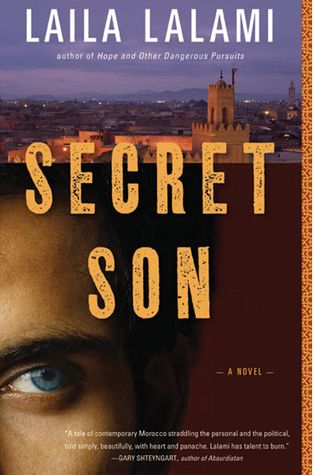
Book Review: SECRET SON is family and sociopolitical drama wrapped in one story

Secret Son portrays the life of a young man in a Casablanca slum trying to find his way. Caught between the stories of orphanhood and struggle his mother raised him on and the discovery of his real family, Youssef tries to understand who he is versus the various roles that society asks him to play.

As a fatherless boy from a poor area, Youssef’s prospects are limited until he finds a glimmer of hope in the discovery of his unknown wealthy father. Youssef is suddenly thrust into the elite circles of Casablanca life. As he tries to fit into this new world, he must navigate college, friendships, life as a working man, and the opposing wishes of his parents — the mother who raised him, and the father he always wanted.

Ultimately, Youssef’s uncertainty leads him astray, and he must find a way out. Like many disillusioned adults, he turns to the only people who seem to understand his struggle, a local political organization who promise to help the people of Morocco.

For the first part of this story, Youssef is the only point-of-view character. However, this changes when the meeting between he and his father is told first from his father’s perspective, and then again from Youssef’s. In this and other mirrored scenes, the reader is able to understand the interior thoughts of each participant — how they react to and often misunderstand each other. I found myself relating to each of the characters in different ways, whether Youssef’s desperation for a path forward, his mother’s attempts to set him on that path, and his father’s hope for a brighter future with his newfound son. Other characters, as well, helped to fill in the gaps between these three, to give the reader a full picture of the history of this family.

The abrupt ending and non-finality of any characters’ stories were surprising but fitting. The notions of Family, Identity, and Home don’t have beginnings, middles, and ends. They are relationships an individual evolves over time that shape one’s decisions and outlook, but rarely settle in one place.

Lalami captured the turmoil of family, of adolescence, and of despair amidst social stagnation in ways that many will be able to relate to. Great story.

Steve D

Book Review: 1984, and Truth against totalitarianism

I just finished reading 1984 by George Orwell for the first time. Somehow, this book was not part of my high school reading curriculum. I feel like my high school English class had a huge reading list, and each class read only a selection — friends of mine read 1984, and my class read Brave New World, which I loved.

This book is a must-read for anyone who feels compelled to understand the psyche of fascism and totalitarianism.

If a reader comes to this book looking for character development, reasonable plot pacing, or much scene work beyond didactic dialogue, they will not find it. They will also be missing the point. From a story perspective, I really enjoyed the section focusing on Winston and Julia’s relationship, even if their time together ended rather abruptly.

Orwell’s story is a mechanism to explain the idea that totalitarianism seeks control as an end itself. The ideology doesn’t matter. Control over every aspect of life – even over thought, if it can be achieved – is the entire aim of the totalitarian system. To gain power over people and keep it is the only goal.

This book is a product of its time and timeless, as applicable a warning against fascism now as it was seventy years ago. As a lover of history, I was interested in the alternative rendering of the post-WW2 order, but I know there are likely other stories where this is the focal point, rather than the exposition dump Orwell uses. This section was particularly frightening to me as the end of the book drew near, as it provided a view into a world where Truth does not matter – even upon learning the truth about your reality, a totalitarian system’s entire existence is predicated on controlling you in spite of it.

Steve D

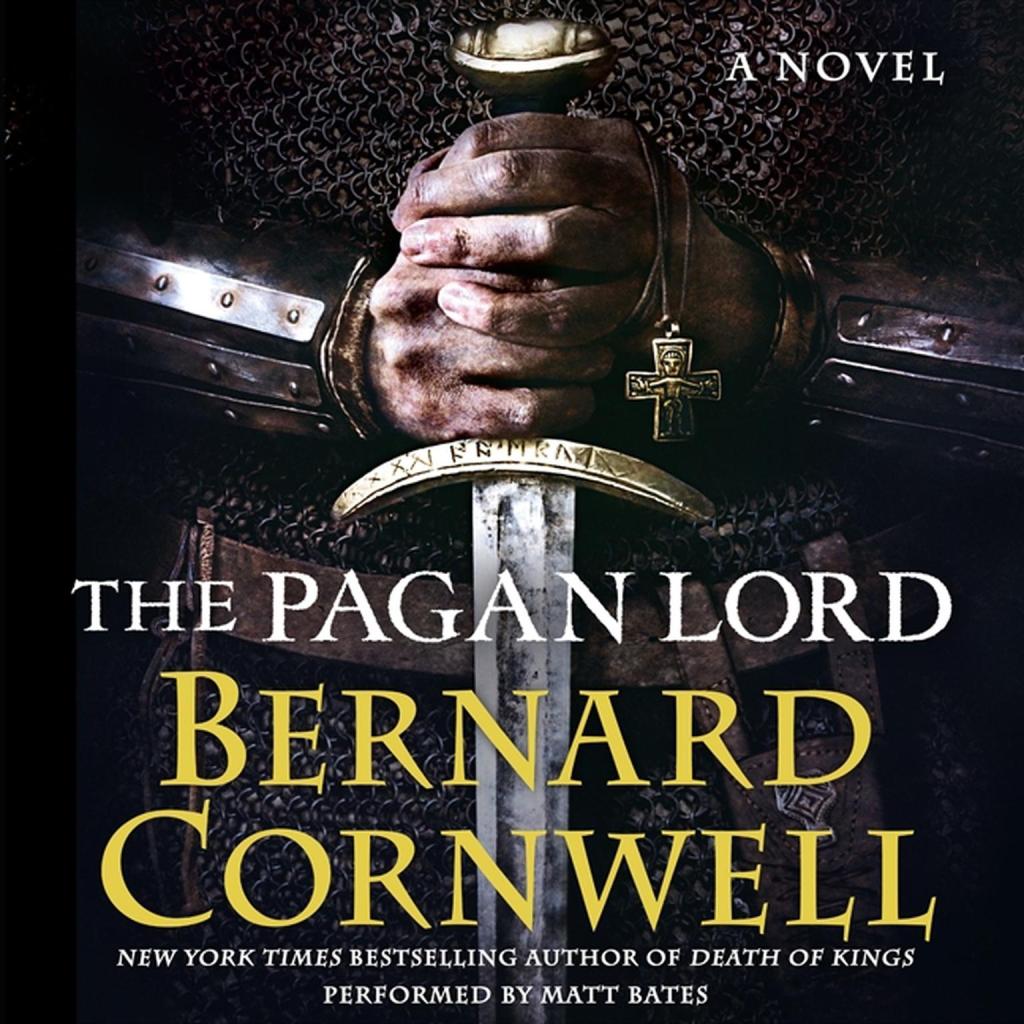
Book Review: THE PAGAN LORD grinds series progression to a halt

The Pagan Lord is the seventh book in The Last Kingdom series by Bernard Cornwell, and this has been my least favorite of the series so far.

This installment has all the trappings of a classic “middle book”: no major plot progression for Uhtred or other main characters, stagnant action that lacks excitement or real stakes, and no new characters to liven up the story.

After several years of relative peace, the Saxons and Danes feel restless and wary for the next war that most don’t truly believe is coming. Uhtred, as always, if on the lookout for the next war, and his instincts end up proving correct.

However, this book feels like a regression for Uhtred as a character, who makes a rash mistake that leads to him being outcast by the Saxon kingdoms. Uhtred is bitter in his old age and still clings to his dream of retaking Bebbanburg, which makes him more desperate than in previous stories.

The wisdom and growth as a leader we had seen from Uhtred in recent stories seems to have eroded, perhaps because he has been rudderless for several years. It is perhaps fitting that this story also feels largely rudderless, like its protagonist, but it does not make for a very enjoyable read.

With both of his sons grown into men, Uhtred’s successes and shortcomings as a father are also on display. He is ashamed of his eldest son for becoming a priest, but his actions are those of a petulant child who did not find his heir in a son whom he largely neglected as a child. His second son is a brave lad eager to prove himself as a warrior, but Uhtred does more to put him down than build him up. Uhtred’s daughter, Stiorra, another child to whom he hasn’t paid much attention, is also notably absent from his life.

This was a decent story, but I’m hoping Uhtred snaps out of his funk. The narrator was okay, but did not bring the same intensity to the story that previous narrators have. Here’s hoping book eight picks up the pace again and Uhtred finds his way.

Steve D

ANDOR takes the title for Best STAR WARS

I’ve recently caught up with and finished watching Andor, the latest show in the Star Wars universe on Disney+. Coming in a few weeks late to this show, I had heard good things about it, even if it wasn’t getting a ton of buzz. I came into this show with an open mind. The Mandalorian has been great. Boba Fett and Obi-Wan were decent, but flawed in their own ways. I felt like Andor had potential as a show that didn’t have to try to build around characters we already knew from the original trilogy, and I was excited by the show’s premise of focusing on the rebellion leading up to A New Hope.

With season one in the books, and a few days for me to think about it: Andor is the best that Star Wars has been to this point, from the storytelling, the writing, the world-building, and the meaning. I’ve watched it once through and am already watching it again with a friend who has yet to see it. I can barely contain my excitement to watch this show a second time, mere days after I’ve finished my first watch-through.

Spoilers ahead for Andor and for the movie it leads to, Rogue One.

Tony Gilroy, the writer/director behind the first three Bourne films and a ton of other action-thrillers, is the creative director and head writer for Andor. The 12-episode season is structured into four three-episode arcs, which presents an interesting ebb and flow of tension as the season progresses.

Let’s pause for one moment to appreciate that this show is a full 12 episodes, making it a legitimate season of television — not a 6-8-episode “limited series event” that feels like three C-average movies stuffed in a trench coat

I don’t want to go down the rabbit hole of summarizing the entire season. Just go watch it and be amazed. Instead, let’s talk about some key themes.

Cassian Andor, as the titular character played by Diego Luna, is ostensibly the protagonist, but when we meet him at the start of the season — five years before the events of Rogue One — he is a scavenger and thief who seems to have burned a lot of bridges and eroded the trust of those whom he cares about most. He argues with his adoptive mother, Maarva, and his ex-girlfriend and partner-in-smuggling, Bix, does not seem to trust him. How did this guy become an intelligence officer within the Rebel Alliance and a hero who sacrificed himself for the rebel cause?

The beauty of Andor, and its writing in particular, is that we see this arc develop for Cassian over the course of the season. He becomes a critical role-player in a heist on an imperial vault that he had only learned about days prior; he helps 5,000 fellow prisoners escape an inescapable prison; and he returns to his home planet, Ferrix, to help the people he had left behind. He’s not an expert rebel spy yet, but his character shows us a lot of grit and heart over 12 episodes.

Stellen Skarsgard is also stellar in his role as Luthen, a rare artifacts dealer in Coruscant-turned rebel ring-leader. It’s not quite clear how Luthen became involved in his own rebellious network against the Empire, but his connection to Saw Gerrera, played by Forrest Whitaker reprising his unique role from Rogue One, and knowledge of the various factions fighting the Empire indicate that Luthen has been in this war for a long time. That history is what has been missing from Star Wars, at least from the live-action movies and shows.

What Andor really demonstrates is the cost of a nascent rebellion. The Rebel Alliance doesn’t even exist yet. There are just a bunch of tiny factions fighting the Empire in their own ways, with no common goal yet identified. So why are they fighting? Luthen, along with Cassian, and another character, Kino Loy, played by the incomparable Andy Serkis, each take their turn delivering the thesis statement for this show, and for the rebellion at large — no one can fight fascism without sacrifice, without pulling together for the people next to you, and that sacrifice is worth it, even if the players themselves never get to see the dawn of a galaxy without the Empire in power.

The Best of Star Wars

I will not be able to do this show justice in a single post, and I may need to follow-up with a ranking of my favorite Star Wars stories.

All I know is that I’ve never heard dialogue in Star Wars like I have in Andor. I’ve never seen a Star Wars property as well-written and deliberate as this show. I’ve never felt like a story in this universe was this important, or this of-the-moment in our current culture.

A lot of Star Wars properties have reminded us of what we loved about the original trilogy, or tried to upend our expectations entirely. Andor manages to do both. It is an affirmation that these stories, in this universe, can say something meaningful about sacrifice, hope, suffering, love, light, and darkness. And it’s a challenge to every new series or film in this universe to be great, not just for a Star Wars story, but for a story of any genre. This show demonstrates the universality of Star Wars in a way I’ve never seen before.

I can’t stop thinking about it, and I can’t wait for season two.

Steve D

Book Review: DEATH OF KINGS ages the series gracefully

Death of Kings is the sixth book in the series of a thousand names… The Last Kingdom, The Saxon Stories, The Saxon Chronicles… This book serves as a nice change-up for the series at a point where the general arc of each story starts to feel predictable

  1. Uhtred clashes with his liege-lord, King Alfred of Wessex and yearns to be free of his oath.
  2. A Danish lord raises an army an threatens Wessex.
  3. Uhtred meets his army and kills the Dane in battle, bolstering his reputation.

That’s reductive and not really fair to a series I have greatly enjoyed, but it’s not hard to see how some readers might become bored of that type of formula.

Death of Kings plays with that formula a bit to lull both the reader and Uhtred, our protagonist, into a sense of complacency and end on a bit of a surprise. Yes, Uhtred must confront a Danish army, but he is now trying to do so in league with Edward, the newly raised king of Wessex, who is young and well-liked, but untested and uncertain.

The story proceeds and it feels as though our characters are approaching war… but the war doesn’t come. Uhtred is baffled by this, until he realizes a crucial piece of information, and the confrontational battle we’ve come to expect out of these books comes with a unexpected suddenness and a surprising turn of events.

This book is also an interesting advancement of Uhtred and several other characters. We meet an older Uhtred and walk with him through a changing of the guard, so to speak, among the leaders of both Saxon and Dane. There’s a lot of good character work with Uhtred, Aethelflaed, and Edward, and it’s clear that the relationship between these three will be pivotal going forward.

Steven Perring is a good narrator who brings a somewhat wiser and less intense voice to Uhtred. This feels appropriate given Uhtred’s Old Man Status (he’s 45 and describes himself as an old man with a graying beard), although I do miss Jonathan Keeble’s iconic narration from previous installments.

Steve D

See reviews of previous installments in this series here.

Book Review: THE OCEAN AT THE END OF THE LANE delivers a fantastic modern fairytale

The Ocean at the End of the Lane is my second foray into Neil Gaiman’s fantastical storytelling, and I am in awe once again, as I was when I read Stardust.

Gaiman has an otherworldly knack for telling modern fairytales, both as a writer and as a narrator. I listened to the audiobook version of this novel, which Gaiman himself narrates.

The Ocean at the End of the Lane is a fascinating exploration of memory, friendship, and the underpinnings of existence itself.

Told from the perspective of a jaded adult remembering a fantastical experience he had as a young boy, this story is full of wonder, fear, and anxiety about the world of grown-ups and other things as can only be seen through the eyes of a child.

The story begins when the protagonist, unnamed, goes on a drive to get away from the drudgery of a funeral he is attending.

He soon finds himself driving to the lane where he grew, where his house no longer stands, and at the old farmhouse at the end of the lane. He doesn’t quite understand why, but he seems to be drawn to this place. He speaks with the old woman over a spot of tea, then goes to sit by the pond out back, which the little girl he used to know there called an ocean. Then, the memories flood back to him.

This framework story toys with the idea of memory, why we remember the things we do and may be better off not, or remember the things we don’t when those things could change our lives, our very existence.

The Ocean at the End of the Lane is a rich story that weaves these concepts deftly in and out of the narrative, so you only ever feel like you’re hearing a fairytale, and not a lecture on childhood memory and the forgotten perceptions of adulthood.

Gaiman masterfully narrates the audiobook as well. Having listened to two of his novels on audiobook, and never having read the print copies, it’s actually difficult for me to imagine not hearing these stories told in his deliberate, inquisitive, and soothing narrative style. Other than Jonathan Keeble’s raucous delivery of The Saxon Stories, I can’t think of a narrator who so intrinsically captures the tone of the story they’re reading, let alone an author capturing their own work. Gaiman brings a level of depth to his characters, dialog, and descriptions that I might be able to conjure myself if I read the print version.

Steve D

Double Book Review: SWORD SONG and THE BURNING LAND and the narrator effect

After not achieving much on the reading front last month, I’ve powered through two consecutive books of The Saxon Stories series by Bernard Cornwell, upon which the Netflix series The Last Kingdom is based. I’ve slowly picked through this series over the last year or so after watching the Netflix show and hearing about the books from my in-laws.

I really enjoyed this series so far, but I’ve learned that my enjoyment of these books, more so than others I’ve listened to on Audible, really hinges on the narrator.

Sword Song, book 4 of The Saxon Stories

As the fourth book in the series, Sword Song may be my favorite yet. Uhtred has come into his lordship with household guards, an estate, servants, and a family, and he displays stern but fair leadership. Brash and arrogant as ever, he still does not hesitate to argue with or insult the other lords or clergy of Alfred’s court.

Sword Song winds through a closer character story where Uhtred is pulled between his oath to Alfred and his family, and a larger sense of duty to Wessex. This culminates in a battle for London, where the Saxons try to wrest control of the city from the Danes.

This book is also narrated by Jonathan Keeble, who is the best narrator for this series to this point. His various British accents feel authentic, he has an excellent tonal range, and his natural litheness with dialog brings a wit and charm to Uhtred’s character that really overpowers his cocky attitude and makes him likeable as a protagonist.

With the return of some old friends and a little more narrative room to breathe, Sword Song is a great catch-up that turns into a harrowing adventure. I enjoyed this book so much that I jumped immediately into the next installment in the series.

The Burning Land, book 5 of The Saxon Stories

The Burning Land is a less glory-filled story of Uhtred’s saga. Five books in, it’s not surprising that Uhtred’s fortunes start to take a turn for the worse, and that even his decision-making seems clouded by his own pride. This is a story of hubris, where Uhtred’s own comes back to bite him in harsh and tragic ways.

Uhtred tries to free himself of his oath to King Alfred of Wessex, and in doing so, finds himself int he company of the Danes of Northumbria. He dreams of retaking his ancestral home of Bebbanburg, but that dream makes him desperate, rather than savvy.

There are few exhilarating battles in this story. Rather, this story is weighed down by a more somber tone and drama-filled scenes as much of Uhtred’s character flaws catch up with him, even in ways he cannot control.

Unfortunately, this tone is made drab by the narration. Whereas Jonathan Keeble brought a humor and wit to Uhtred’s character and dialog, the narrator for The Burning Land was completely humorless. His narration style sounded more like a self-serious Shakespeare reading, which really dragged the story down for me.

I will definitely continue reading this series. However, this experience is making me wonder whether I really love these stories, or I just really love Keeble’s narration. I think the stories are good, but Keeble’s voicing brings an energy, an authenticity, and a weight to these books that I’m not sure I would find so readily on the page.

Steve D

Way-Too-Early Reactions to THE RINGS OF POWER

Another week, another multi-hundred million dollar budgeted TV show based on an iconic fantasy author’s universe.

The Rings of Power is the primary show I have been awaiting all year. Of all the MCU, Star Wars, and other mega-IP content to debut this year, I have had the highest hopes and most weighty expectations for Amazon’s foray into Tolkien’s universe.

Part of that is due to history. The massive narrative history of Middle Earth, and the surrounding historiography of it, is an obvious choice for “spin-offs”. Christopher Tolkien himself published stories based on unfinished drafts in his father’s notes.

Another part of my weighty expectations for this show come from a much more recent benchmark. Peter Jackson’s The Lord of the Rings trilogy is epic filmmaking at its finest, a wondrous cinematic adaptation that is just as affecting twenty years later as it was when I sat in the theater at thirteen for Fellowship.

The showrunners for The Rings of Power made a pretty big gamble when they decided to set their series in the Second Age of Middle Earth, thousands of years before most of the characters whom casual fans would know were alive. Middle Earth itself is quite different at this time.

Through two episodes (which is all I’ve seen so far) I’m already getting nostalgia-driven chills when I watch this show. The costumes, the music, the dialog, the settings all feel like Tolkien, and crucially, like the Tolkien we were introduced to in Jackson’s trilogy.

The Rings of Power, wisely, is speaking the same visual and emotional language as it’s cinematic predecessor. When I see characters in thematic clothes, I don’t just see generic fantasy brings. I know them as Noldor Elves, dwarfs of the line of Durin, and yes, even Harfoots, who feel just enough like their descendant hobbits to be recognizable, without feeling copied.

So, this show has already fixed itself squarely within the look and feel of Middle Earth.

I also find the beginning of the story and the characters driving it to be quite compelling.

As usual, I will not get into an episode recap, so I’ll just say that I already feel attached to and invested in Galadriel, Nori, and Arondir as they traverse differing plot lines that seem to be pointing in the same direction: the rise of the shadow after centuries of relative peace.

I don’t know how much more I can say without getting too deep into the details and ending up with 5,000 words for this post.

The showrunners took a big gamble with this show, especially with Amazon beating down their necks looking for a smash hit. Two episodes in, I feel like it’s already paying off.

I’m so excited to continue watching.

Steve D

Distraction in the form of City-Building

I am already exhausted by the news cycle from the previous week. Potential overturning of abortion rights. Legitimate threats to privacy rights and same-sex marriage on the horizon. This week has been a lot for me mentally and emotionally. I was straight-up infuriated for about four days.

I’m still angry, and I’m not letting go of that. I’m just trying to step back and evaluate what exactly I can do with this anger, aside rom throwing money at a political super-pac that might not get anything done.

In any case, I downloaded a new mobile game this week, and that has largely been keeping me sane.

Distracted in Designer City

I don’t play a lot of mobile games, aside from Pokemon Go while I walk my dog, but this past week I needed something to occupy my mind.

I looked at the mobile Sim City, but I didn’t want to download an EA game, under the assumption that I would have to suffer through endless ads or pay for in-game upgrades to really enjoy it, which I don’t do as a general rule.

Then I came upon Designer City, which was incredibly highly rated on Google Play. I downloaded it, played through a brief tutorial in which a small town was already built for me, and have since expanded this small town into a bustling cosmopolis.

Am I going to tell you about it? You bet I am. My city includes:

  • a central downtown that probably needs more love
  • a lakeside resort/campground at the western edge
  • an area of mixed agriculture, industrial, and residential use along the southwest
  • a posh urbanized neighborhood on the south end with tons of parks and a monorail station
  • a quaint suburb in the southeast
  • a nascent but expanding NEW downtown area with high-rise residences, museums, theaters, and other communal affects
  • and a more commercial-industrial northern end
  • a monorail connecting all of these neighborhoods
  • Oh, and I’ve expanded my land ownership halfway across the map to build a commercial port, some industrial buildings, and a railway connecting it to the city

I will definitely be adding a medieval castle district and a creepy haunted house-type district, because this game has those types of structures.

I might be addicted to this game, but it’s easy to play, completely unintrusive in terms of ads or asking you to spend real money, and can be creatively engaging if you allow it.

So what started as a political rant ended up as a positive review for Designer City. I’m going to call it a day.

Steve D