I don’t remember the circumstances under which I picked up Andrea Vernon and the Corporation for UltraHuman Protection, but it’s been sitting in my Audible library for a good while. So I finally decided to read it.
It was quite enjoyable.
Author Alexander Kane appears to have a knack for witty and compelling storytelling that does not get weighed down by exposition. This story moves quickly and demonstrates Kane’s deft plotting. No chapter felt cumbersome, and no character was throw-away.
Each character had a unique voice, perhaps in part thanks to Bahni Turpin’s excellent narration. Andrea, as the protagonist, had the strongest scenes and sense of growth. Other characters, like Ms. Oh, were interesting in their own right, but I often found myself anticipating Andrea’s next section more than any other POV character.
This is not necessarily my preferred style of storytelling, which veers between absurd cultural references and wise-cracking one-liners to keep the dialogue bouncing along, but I respect that Kane executed it so well.
There are two other books in the Andrea Vernon series, and I just may be tempted to pick them up.
I just finished listening to The Plotters by Un-Su Kim on audiobook, a story with the trappings of an action thriller and the tonal resonance of a slow-burning suspense novel.
This story wound through a methodical plot, at times jumping into the past to provide insight into the mind and life of the protagonist, Reseng. While the narrative focuses on Reseng’s time as an assassin and his growing discontent with his life and the people around him, this is really a story about making life choices and living with – or fighting against – the consequences. The reader finds themselves rooting for Reseng to find some semblance of understanding about his own life, even if he is not a heroic character.
The narrator had a sort of deep, droning voice for the protagonist. As the story proceeded, I think this tone worked to emphasize Reseng’s aimless resignation with his life, compared to other character who had much more distinctive voices and motivations.
I did not find this story to be suspenseful in that I was riveted to my seat, but every scene carried a latent tension that was difficult to grasp. Even the action sequences were described with such monotoned effect that they seemed to be happening in slow motion. It felt like the entire story was gradually building towards something, but the final reveal was inside the character’s head, rather than in the action surrounding them. I don’t know that I’ve ever read a story with that type of tension, and it was quite compelling.
This story asks readers to empathize with its characters despite, or perhaps, because of the horrible things they do. Really fascinating read.
I recently finished listening to The Great Train Robbery, by Michael Crichton, on audiobook. This is the second Crichton novel I’ve read, having started with Jurassic Park a couple years ago.
The Great Train Robbery is wholly different from Jurassic Park in both style and tone, but the level of detail and research poured into it is an obvious hallmark of Crichton’s I’ve already recognized.
This story recounts in meticulous detail the plot to pull off the greatest heist yet seen in Victorian England: the aptly named Great Train Robbery, masterminded by Edward Pierce in 1855.
The Great Train Robbery was a fascinating story combining court testimony of Edward Pierce’s trial, narrative dramatization of Pierce’s planning of the robbery, and historical context for Victorian England.
Because the story starts off with Edward Pierce giving his testimony in court, the suspense of this story comes from Pierce’s planning of the heist and the final outcome. While it’s obvious he had been caught and arrested, how the heist plays out, how Pierce was caught, and the result of the trial are all left as mysteries until the final chapters.
I found that I particularly enjoyed Crichton’s tangents into the culture and society of Victorian England surrounding the robbery and trial, even if these sometimes felt a little too far afield of the primary story. These sections reinforced my interest in Victorian England from a historical and sociocultural context that I’ve grown into recently. Crichton writes this story with the inquisitive eye and narrative flourish of an investigative journalist, which lends itself to a sweeping narrative that deftly weaves direct readings of the original court testimony with dramatized scenes of Pierce and his accomplices playing out their plot over the course of many months.
Narrator Michael Kitchens recounts the story like a documentary, seeming to speak directly to the listener and invite them into understanding every detail of Crichton’s meticulous research.
Although there were some moments of suspense, I was not necessarily riveted by the story. Still, I quite enjoyed its style and detail.
I picked up Tyll by Daniel Kehlmann, translated from German by Ross Benjamin, mainly because the cover caught my eye.
I didn’t really know what to expect with this story, except that it played on historical figures of the seventeenth century and was loosely based on an old German folk hero dating back to at least the sixteenth century.
It seemed right up my alley, if a bit different from what I usually read.
Tyll is a very well-written story with unique characterizations and an interesting confluence of themes between separate but overlapping tales. The first is a drawn out introduction to a tiny village in the Holy Roman Empire where the young son of Klaus Ulenspiegel is raised. The boy shows a knack for acrobatics and an interest in the occult from a young age, causing trouble for his family until he eventually runs away to escape the clutches of prying clergymen who come to his home.
From there, the story meanders between vignettes of different characters. I found myself interested in the detailed writing style, but wondering where this was all headed. Eventually, it becomes clear that it’s following several overlapping characters across time. Certain sections seem to be arranged non-chronologically, but it’s not difficult to follow.
I feel like I will need to reread this to see all of the connections in full, but I quite enjoyed it.
The Flame Bearer is the tenth book in Bernard Cornwell’s The Last Kingdom series, and it caps off a run of faster-paced stories in over the last few novels.
In this installment, Uhtred sees the budding rivalries between the West Saxons, the Danes, and the Scots in Northumbria as both a threat and an opportunity for his claim to Bebbanburg. acts on his ambitions from the previous story (Warriors of the Storm), and the result is a brutal battle.
Leading up to the climax, Uhtred blunders his way from one step to the next, always with some semblance of a plan in mind, but loose enough for the reader to think he’s on his way to disaster. As I was reading, this felt like an intentional plot point where Uhtred’s confidence leads to drastic measures for him to gather information. In retrospect, I think these sections were a little questionable.
Uhtred has shown in the past that his overconfidence or his desperation can cause him to act quickly, if not wisely. These chapters just felt a little out of character for the older, wiser Uhtred we’ve come to know. I’m okay with chalking it up to his desperation to retake Bebbanburg, though.
I also enjoyed seeing a few younger characters get more time and development on the page. Aethelstan has quickly grown into my favorite character, and his transition from a supposed bastard into a Prince of Wessex is fully realized here in the initiative he takes in the final act and the ultimate leadership he shows on the battlefield. Uhtred the younger also displays the cunning, bravery, and ferocity he’s learned from his father in surprising ways.
Overall, I really enjoyed this novel. It followed a familiar formula from previous books, but that is to be expected by this point in the series. I still feel like I’m learning something new about Uhtred and some of the other characters with each book, and that’s progress.
Spoiler warning: I was honestly surprised that this was not the final book of the series. However, I think Cornwell has laid the groundwork with the story of the Flame Bearer in previous novels well enough that this story does not feel like a sudden turn. I’m excited to see what further developments come in future books. Spoilers end.
I just finished listening to an audiobook of The King of Elfland’s Daughter, by Lord Dunsany. I’ve previously listened to a short story collection of his that I had enjoyed less than I could have, most likely because of the dull voice actor.
So I came into this novel hoping I could find more enjoyment out of it (and a better voice actor).
I really enjoyed this story. The King of Elfland’s Daughter follows a family, a human lord and his elfin wife and their son, as they each navigate the boundary between the human world and the realm of magic, Elfland. The story started slowly, but the shifting of perspectives between “the fields we know” and Elfland brought an interesting dichotomy between the worlds and how each character wrestles with their desires, the relationships to each other, and their home.
This story feels like a progenitor of modern twentieth-century fantasy. It leans quite heavily on mythical creatures that would have been quite familiar to an English reader in the early twentieth century: elfs, unicorns, witches, trolls, and an enchanted forest. Where Tolkien borrowed ideas and themes from Northern European (and other) mythologies and shaped them into his own distinct world, Dunsany inserts fantasy elements into a world that feels not so far removed from our own. Thus, his story reads as if it could have been a lost fairy tale of pre-modern England.
In that way, the tone of this story is solemn and full of wonder.
Throughout The King of Elfland’s Daughter, a pervading sense of yearning is captured between the different characters: yearning for love, for lost love, for home, for the hunt, for so many small things, and this helps the solemn tone feel earned, rather than overwrought. The reader yearns with the characters and feels their losses and gains.
Like in all classic fantasy, the theme of the realms of magic receding from human knowledge stands stark, and so the entire story feels like a lamenting and a yearning for that deeper connection to a world we have lost, or perhaps abandoned.
As I mentioned above, the voice actor for the audiobook version is also excellent, and has definitely endeared me to Lor Dunsany’s writing in a way that the previous stories I’d listened to did not. Now I know I will need to go back and read his other work, either in hard copy or with a different narrator.
I don’t read a lot of literary fiction, so I tend to pick these stories without knowing exactly what to expect. If I don’t know the author or haven’t heard or read much about the book, then I’m basically just going in blind hoping I find something to connect with.
I just finished listening to The Residue Years by Mitchell S. Jackson on audiobook. I primarily chose this book because it seemed like a perspective on drugs and addiction I had never really been exposed to before.
The Residue Years switches between the points of view of Champ and his mother, Grace. Following Grace’s stint in court-mandated rehab for her crack addiction, she and Champ try to reconnect with each other, with their family, and with the previous life and home they’d lost touch with. Champ, meanwhile, sells crack to support himself and his family, even as Grace tries to recover and find a new path in life.
Champ and Grace appear to want to change their lives, but they keep making poor decisions. As protagonists, you want Champ and Grace to succeed in reclaiming themselves and each other. However, Champ is too self-aware for his own good, convincing the reader that he knows that dealing crack cannot be his end-all-be-all, while continually making choices that pull him deeper into that life. Grace does all the right things on the surface. She gets out of rehab, finds a job, attends NA, finds a new church. She recognizes that she needs to stay away from the toxic people of her past and establish a new life, but she too easily allows herself to be dragged backward.
Jackson does an incredible job of making the reader root for these characters, to hope against all odds that they will break the cycle of crack, and to envision a better future for them. He does all this even as the characters make baffling decisions that just repeat the cycle.
This story is ultimately an intimate portrayal of the vicious cycle of addiction and how it erodes those bonds to family, stability, and love.
I don’t recall what made me buy this book initially, but I’m glad to have read it.
Book #8 of The Last Kingdom series, The Empty Throne returns to form after what I felt was a bit of a mid-series lull in The Pagan Lord, the previous installment.
This book started with a point-of-view section of Uhtred, the younger, the son of the Uhtred who carries the series to this point. I really enjoyed this glimpse into the mind of the young man who is trying to follow in his father’s footsteps as a warrior and a future lord.
Uhtred, the elder is older now, wounded, but wiser. Some of the bitterness of the previous story has fallen away, and Uhtred is starting to truly recognize his own limitations. In one battle sequence, Uhtred recognizes to himself, and the reader, that in his younger years he would have been one of the fierce young warriors in the fray of the fighting, but he stays back to be a leadership presence for his, knowing that his wound would make him a liability in the thick of the fighting.
This story focused quite a lot on Uhtred’s relationship with his children, Uhtred and Stiorra, and Aethelstan, the (non-)bastard son of Edward. While Uhtred’s regard for Aethelstan as an adopted son has become clear over the last few stories, his mentorship of whom he believes is a future king is on full display here.
This shift in tone is greatly welcome for a character whose brash decision-making was becoming tiresome, for the other characters, and for the reader. Uhtred is still confident, daring, and courageous, but he seems to have truly come into lordship not just as a warrior, but as a leader, and that transformation continues to be fascinating.
I’m also quite intrigued by the introduction of Sigtryggr. His character on The Last Kingdom TV series was a frightening and admirable, and I look forward to seeing how his character, and the Norse threat overall, develop going forward.
I was never out on this series, but I took a break after the last book. Now, I’m fully back in.
Another wonderful modern fairytale by Neil Gaiman. At this point, I have no excuse whatsoever for not poring through every single story that Gaiman has ever written, because each story feels impactful and poignant.
I listened to the full-cast production of The Graveyard Book on Audible. I’m used to Gaiman narrating his own stories and being a fantastic storyteller. The full-cast production of The Graveyard Book is stellar; each voice actor brings nuance and feeling to their character(s), and the voicing brings real life to the scenes in a way I normally do not expect from audiobooks.
This story follows a boy who was raised in a graveyard after his family were murdered when he was a toddler, and eventually learns how to survive in the world outside. The boy, Bod, short for Nobody Owens, also must ultimately learn about the man who killed his family.
Gaiman writes primarily from the boy’s perspective, and Bod’s narrative voice grows naturally as he ages, a credit to Gaiman’s writing, and the voice actor’s work. Bod develops a close if curious relationship with his guardian, a not-quite-human-being named Silas who has an uncanny ability to fade into the shadows. Silas does not express the usual paternal emotions for his charge, but throughout the book, the emotional bond Bod has with Silas, and the other residents of his graveyard, are unshakable.
Yet again, Gaiman masterfully inserts pieces of folklore into his story to make it feel supernatural and mysterious and familiar all at once.
This is the third Neil Gaiman story I’ve read, and he is quickly bounding to the top of my favorite authors list. I cannot rave about this story enough, so I’ll stop myself before this gets out of hand.
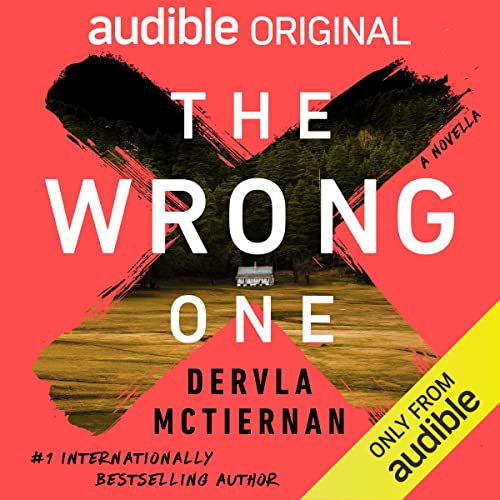
Audible recently offered The Wrong One as part of some kind of sale. I’ll always give free books a shot, and I could definitely not say no to a novella by Dervla McTiernan.
I’ve read the first couple installments of McTiernan’s more well-known Cormac Reilly series, following a Dublin-born detective trying to figure out his career in Galway as he solves often strange cases.
McTiernan’s crime stories always have a slow burning build, usually following multiple characters, until the threads twist into an intense third act. It may sound formulaic, but the characters are always well-developed, and the twists are enough to put a reader off-kilter.
So, I went into The Wrong One expecting to be hooked from the start. Admittedly, I was not. The Wrong One uses two voice actors to narrate the respective point-of-view narrators in the story, and I was not a fan of the first narrator. I’ll go into a little more detail below, in a section marked for spoilers.
This first narrator had an odd inflection to his voice that irked me. The second narrator was good, fitting for a teenaged boy who thinks he knows everything.
Despite my issues with one of the narrators (and the character they were playing), the story’s tension ramped up rapidly with a looming realization and twist that only McTiernan can deliver with such fluidity and emotional weight. I ended up enjoying this story quite a lot. Now I just want to go read more Cormac Reilly stories.
Steve D
Spoiler section with some further thoughts…
…
…
…
…
Alright, so I didn’t like the first narrator, playing Simon, had an inflection that made him sound emotionally vacant and like a know-it-all from the start, making him virtually unlikable. Then, as the story progressed, it becomes clear that Simon is more than full of himself — even delusional — about his advances towards Clara and her obvious (to everyone but him) complete disinterest in him. Then, his pathetic delusions became overbearing, then possessive, then manipulative, and then, holy shit it was him the whole time! Great twist. I’m telling myself that the strange voice-acting of the character was completely intentional to throw the reader off-balance from the start. Totally worked.


 Evening Satellite Publishing