Book Review: THE BRIGHT SWORD

The Bright Sword by Lev Grossman is a deeply intimate retelling of the Arthurian legend, of the rise and fall of dynasties, and of the meaning and power one person can hold over kingdoms, countries, and his dearest friends and relatives.

I picked up this book on Audible without any prior knowledge of it, and I greatly enjoyed it.

Grossman pulls all of the legends of the Arthurian tales – Bedivere, Gawain, Gallahad, Lancelot, Morgan, Morgase, Guinevere, and many others – and brings them into a grounded story of the final days of Arthur’s reign.

Without giving away any spoilers, Grossman does a great job of blending the main plot with flashback chapters to explain how each of the main characters got to where they are in the story. This structure served to drive the narrative forward while helping contextualize and humanize the larger-than-life figures one expects to meet in a tale of Arthur.

The story’s use of both fae and Christian mythology was fascinating and only added to the world-building. This is a true high fantasy tale, and the author (as he admits in his note) takes some liberties with historical accuracy.

This is all fairly smooth in the actual reading; the overarching plot and abundant appearance of magic mean there are no illusions about this attempting to be historical fiction.

Would definitely read again, as well as Grossman’s other novels.

Steve D

Book Review: THE MAP OF SALT AND STARS

I’ve had The Map of Salt and Stars by Zeyn Joukhadar in my Audible library for several months, and I finally got around to listening to it. This is one of those books that, despite the blurb, I wasn’t quite sure what to expect from it.

I was pleasantly surprised.

The Map of Salt and Stars is a powerful story of struggle, sorrow, hope, and love. The story follows Nour, a young girl whose family is forced out of their home in Homs, Syria by the outbreak of the civil war, and Rawiya, a tenacious girl centuries earlier who embarks on a journey across the Mediterranean.

The mirrored stories of Rawiya and Nour created a beautiful symmetry in the plot while deriving meaning from both. Nour, in trying to understand what is happening to her family, and through the grief of lost loved ones, discovers the true meaning of her family’s history, and what it means to find home after everything she knows is destroyed. Meanwhile, Rawiya, in becoming a mapmaker’s apprentice, finds the adventure she’d been seeking, and reveals her own power as a brave warrior and cunning tactician.

The characters’ journeys follow each other from one end of the Mediterranean to the other. This structure makes the overall narrative familiar, but the twists and turns that take each character from one location to the next propel the plot forward from chapter to chapter.

The very real circumstances around Nour’s family — war, hunger, a refugee crisis in the making — are contrasted well by the more fantastical dangers of Rawiya’s journey fraught with dashing princes, mythical creatures, and magical stones.

Zeyn Joukhadar is an emotive writer, whose prose was thoughtful and intricate without being overly embellished.

The audio version was fantastic, but I think this is a story worth reading on the page. This is definitely a candidate to buy in hard cover for the home bookshelf.

Steve D

Book Review: BLACKFISH CITY and the scarily real imaginings of our post-apocalyptic future

I’m way behind on posting this. Last month, I finished listening to Blackfish City by Sam J. Miller in audiobook.

This book had jumped out to me both for its stunning cover — cyberpunk feel with Indigenous artistic themes — and its intriguing synopsis.

Miller constructs a fascinating future world where refugees and oligarchs have fled or abandoned their fallen cities due to climate disasters. Miller deftly alludes to a multitude of climate disasters causing upheaval around the world, but really only goes into detail in one instance, as it affected a few of the characters.

Many of these refugees fled their homes for a newly built city in the Arctic Circle — an eight-armed floating city called Qaanaaq. The design of Qaanaaq is intricate and authentic. Miller describes geothermal pipes used to warm the entire city, and a highly computerized system that mostly runs the underlying infrastructure needs of the entire city.

Qaanaaq feels like a place that could very easily exist in a post-climate disaster world, both exploitative of the people who’ve lost everything and serving those who have profited from the chaos of a crumbling global civilization. It is technologically advanced and still not free of poverty, overcrowding, resource scarcity, and bureaucratic ignorance of real people’s issues that plagues rapidly growing cities.

I found it difficult to connect with the characters at first. I couldn’t quite place the age of most of the characters until much later int he story, so I assumed they were all Adults — this was not the case. Miller’s brilliance is in the way he slowly weaves interconnectedness between the characters, but this also requires patience from the reader to allow those connections and the wider story to unfold.

Fortunately, the world-building is what really kept me invested. Once some of the plot began to reveal itself, the pacing picked up, and I began to understand the wider narrative better.

This was a highly enjoyable story, and Miller is a fantastic writer. I genuinely hope to return to this world in future stories.

Steve D

Book Review: A KNIGHT OF THE SEVEN KINGDOMS

I finally picked A Knight of the Seven Kingdoms by George R.R. Martin off my bookshelf to read, and I ended up powering through most of it during our relaxing beach weekend.

I had always intended to read this story, a novel set within Martin’s world of Westeros that takes place a century before the events of A Song of Ice and Fire.

While I had little doubt that I would enjoy this story, as I’ve enjoyed Martin’s other Westerosi writings, A Knight of the Seven Kingdoms is an excellent example of the depth of Martin’s world-building in this series.

While the familiarity of the world brought me to this novel, the obvious joy with which Martin writes about Ser Duncan the Tall and Egg kept me reading. Dunk is an interesting protagonist in that he has traveled all over Westeros as both a squire to a former knight and a knight himself, and yet he doesn’t have much familiarity with the great houses of Westeros, except what he has seen himself or absorbed from the knight who had trained and knighted him. He provides a good counterpoint to the protagonists of A Song of Ice and Fire, many of whom are in positions of power, or come from families power.

Dunk has no power, except his sword, armor, and horses, and the optimistic chance that strangers on the road will recognize his knighthood. Egg, Dunk’s unlikely squire of noble birth, is a good foil to Dunk’s taciturn, blunt, but ultimately honorable nature. Egg comes from privilege but grows to respect Dunk and the experiences they have together as a hedge knight and squire with no permanent home. Dunk must choose to remain honorable, even in the face of corruption and cruelty from his fellow knights, or lords in whom he could find stability, comfort, and gold.

A Knight of the Seven Kingdoms is a good story in its own right, but I definitely feel like it enriches and is enriched by the wider world of Westeros. I also read this novel alongside The World of Ice and Fire, a literal encyclopedic history of the Seven Kingdoms co-authored by Maritn and beautifully illustrated by several artists. I was able to read the wider historical context of the period in which Dunk traveled Westeros to better understand some of the more minute plot details.

Like all great world-builders, Martin relishes the opportunity to write about people just trying to survive in this world, even if they are heroes whose legends have not yet grown. A Knight of the Seven Kingdoms is a testament to that joy. I’ll be looking forward to any future installments in this series.

Steve D

Book Review: A BLIGHT OF BLACKWINGS leaps above middle book syndrome

A Blight of Blackwings is the second installment of Kevin Hearne’s The Seven Kennings series, and I could not resist diving straight into it after I finished A Plague of Giants a few weeks back.

As with the first book, I greatly enjoyed A Blight of Blackwings, which felt somewhat different from its predecessor and deftly maneuvered around the dreaded middle book syndrome.

Hearne achieved this by lacing this book with its own somewhat contained narrative threads that appeared separate from the larger series plot. The introduction of characters like Pen, Hanima, and Koesha enriched the plot without making the reader feel over-burdened with new voices. After being given the proper time to develop in their own right, each new character ended up serving the larger narrative in their own ways, without becoming subsumed by it.

Where some middle books, especially in trilogies, struggle to maintain narrative momentum, Hearne provides tangible story progression that is not wholly divorced from the wider series, so the reader does not feel like they are just getting “filler” content before the finale.

Hearne also manages to hit similar emotional stakes in this book as the first. Grief, and the myriad ways in which characters process their grief, is a significant and explicit theme in the first book. Grief and loss play just as important a role in Blackwings, but in a much different way.

Where the first book used dramatic scenes to demonstrate the power of grief – and anger, and sorrow, and despair – Blackwings focuses this poignancy on smaller, more intimate scenes that deepen the reader’s connections with the characters.

In short, A Blight of Blackwings both inherits and expands upon its predecessor’s themes, creating a story that builds upon the series without feeling repetitive.

I’ve already started book three.

Steve D

Book Review: AMONG THE BEASTS AND BRIARS

I discovered this book somewhere on Audible and gave it a listen a few weeks ago. (I’m a bit behind on posting my book reviews.)

Among the Beasts and Briars by Ashley Poston is an enjoyable story about gardener’s daughter, Cerys, who is cursed with the magic of the dark forest that borders her home, and who must save her kingdom from the forest’s dark powers.

This was a classic quest/coming-of-age story with a strong underpinning of fairy tale lore – the dark forest, old gods, terrible curses, and young people reaping the sins of their forebears. There is a spot of romance throughout the narrative as well, but I would not describe this as a romance novel — it fits well with the plot. The story is well-paced, and there are enough little twists to keep the reader guessing as to the final resolution.

There is some surprisingly fantastical and frightening imagery as the characters survive and then confront the dark magic of the forest, and I think this story would translate well to an animated horror/fantasy treatment.

For the audiobook version, male and female narrators trade point-of-view sections for the two characters who end up becoming our protagonists. The dual narrators definitely provided interesting perspective, as the conflicted perspectives of particular scenes drove some of the conflict. However, I didn’t find that the narrators’ voices matched what I felt were much more intense or frightening scenes, especially in places where Cerys confronts gaunt and terrible visages of the people of her kingdom. I think there’s a version of this narration that could lean much more heavily into the horror aspects.

Still, this was an enjoyable standalone novel, and I’m curious about of Poston’s other work.

Steve D

May Write Day: Continuing the New Mode?

Yard work. Gardening plans. Summer-like weather. Some light air travel with our boys for the first time. April was a cool month, overall. Work was stressful for the first couple weeks, but it’s calmed down enough for me to catch my breath.

I’m still figuring out my day-to-day routine, but I feel like I’m making progress, in that I have ups and downs but generally get things done when I need to. I’m referring to my “new mode” of approaching Second Shift, family time, and my hobbies, which entails trying to stay up and active through the evenings and not falling into a pattern of laziness that ultimately leads to guilt/shame over not being “productive enough”.

It’s gone pretty well.

Last Month’s Goals

  1. Finish three books.
  2. Finish final chapter of New Earth and review story for overall chapter structure.
  3. Contemplate what my vision for my writing/publishing actually is.

Finish three books?

No, but I finished two: MCU: The Reign of Marvel Studios and His Last Bow, as part of the Sherlock Holmes omnibus I’m working my way through.

I’m still relishing the journey of Children of Time, and I’ve started on a nonfiction work about the marvelous world of fungi, called Entangled Lives. This is one of those books that is about science and microbiology and ecology on the surface, but really has some much deeper insights into our perceptions of life, sentience, intelligence, and the connectivity of all things. Both of these books will take me some time to get through and appreciate them in full, so I’m in no rush.

Finish New Earth and chapter overview?

Uuugggghhh no. This is one area I have not been able to work into a consistent routine. I’ve broken myself of the bad mental habit of only writing in long, dedicated sessions, which is a good start.

I was able to write in a couple spurts, but I’ve officially run into book-ending-syndrome, in which I find it impossible to write a suitable ending. I want to play out the scenes in my notes, but I keep watching the word count extend farther and farther over my intended count, and while that doesn’t actually matter, it absolutely distracts me from just writing the damn ending.

Contemplate writing/publishing vision?

Yes, and I haven’t made any firm decisions. I think I know what I would like my next four or five publications to be, which is a great start. Two of them would be the duology of novellas that are my current works-in-progress, and two would be full-length novels, which is obviously way more intimidating.

Identifying a tangible and achievable timeline to write and publish all those stories is the trick. At this point, I’m not even sure when I want to publish my novellas. I could just get them out into the world, but then it could be another few years at least before I publish anything else. What I can’t decide is whether I’m okay with that.

Similar to my previous workout life, spending 10+ hours per week exercising, I haven’t totally shed the notion of publishing at a pace more akin to a full-time writer. I’m not a full-time writer. At this point, I’m barely a hobbyist. But what does it mean for a hobbyist to publish occasionally? Should I try to prepare and publish several works in a shorter timeframe to try to drive real sales pivot into full-time writing? I’m not sure I’m ready for that either.

So, that is part of my dilemma at the moment. Not only the act of writing, but even what my medium- and long-term goals are. I require more contemplation.

Goals for May

  1. Finish three books. I already mentioned my current reads:
    • Children of Time by Adrian Tchaikovsky, and Entangled Lives by Merlin Sheldrake. I will likely finish both in the next couple weeks.
    • Likely next read: I’m eyeing Thor, Volume 1: The Goddess of Thunder for a change of pace, and because I never finished reading Jason Aaron’s run on the Thor comics. After that, I’m not sure.
  2. Finish New Earth, please? Focus on 15-minute writing sprints, a couple nights per week, and I should get this done.
  3. Continue to contemplate my writing/publishing vision. I went into more detail above than I had anticipated, so maybe I’ll end up writing about this more this month to get my thoughts onto virtual paper.

Steve D

April Write Day: Setting the New Mode

March definitely felt like typical early-spring time. Lots of goals and ambitions, lots of plans being made for later in the year, and lots of de-hibernation from the grey post-holiday winter.

Last Month’s Goals

  1. Read four books! Like I said, I’ve already finished two this month, and I’m well on my way to finishing two more, so I might as well go for it.
  2. Exercise every other day and get to the gym twice. Same.
  3. Finish New Earth ending and outline chapter structure. Alright, my online class is done, which opens up some time during my week. I fell out of the groove, so I just need to get back in it.

Read four books?

Yes! After a deficit of finishing books in February (but not a deficit of reading), I finally finished a couple of reads I had been progressing through for some time, and added a couple more for good measure.

  • I completed long-time audiobook read Black Leopard, Red Wolf, for which I will post my full review next week.
  • I finished my paperback reading of Last Child in the Woods: Saving Our Children from Nature-Deficit Disorder, which is deserving of its own review because of its thoughtfulness and how it’s influencing how I think about my kids playing in nature, and about gardening/landscaping our yard this year.
  • I read The Valley of Fear as part of my ongoing — and nearly completed — read of the entire Sherlock Holmes omnibus.
  • And I read No Good Men Among the Living, a fascinating and tragically true account of several Afghan individuals trying to survive the early years of the war in Afghanistan. Also worthy of its own review.

That’s a pretty good encapsulation of my overall reading interests: epic fantasy or sci-fi, some mystery/thriller and also classical literature, and thought-provoking nonfiction works about historical events or issues I care about.

I haven’t talked much about my reading of the entire Sherlock Holmes collection by Sir Arthur Conan Doyle. It is one gigantic audiobook that I’ve been picking away at story-by-story for about the last year-and-a-half. I knew I didn’t want to try to read the entire collection in one shot, so I’ve just kept the file downloaded on my phone and listened to individual stories piecemeal, trying to appreciate each one in its own right, rather than as a collection.

This is the only way I will listen to these types of collections going forward, and there are certainly other authors I want to tackle next. I’m nearly complete with the Holmes collection, and I’m already eyeing the next long-term collections to work my way through.

Exercise more plus go to the gym?

Not quite, and I think continuing to include this in my monthly goals posts is both distracting me from the real purpose of these posts and putting too much pressure on myself that just turns into guilt.

I’m trying to work exercise more into my day-to-day routine, and I’m getting there in little steps. I think I just need to live it. I keep thinking about exercise in terms of how I used to exercise, which was nearly everyday in dedicated 60-to-90-minute sessions. That’s not my life anymore, and I’m not aiming for that. I just don’t know quite what I’m aiming for at this point, except for more. And that’s not a goal I can reliably track, except with myself, on my own terms.

So I’m leaving it at that.

Finish New Earth ending and review chapter strucutre?

No, and this is one of those items I need to refocus on in this forum. I did make some progress on my final chapter, but I did not complete it.

I wrote last week about finding a new mode, where sheer boredom with doom-scrolling and also general frustration at not feeling like I was doing enough in general had me finding ways to focus on the things I actually need and want to focus on. This could be housework, spending time with the family, or just reading for more than 10 minutes.

The trend has largely held, so far. I just need to expand it to writing as well. One of my strategies to focus more on my writing is to find the time, and allow myself the space, to write in short bursts — 20 minutes, 15, 10, even, if that’s all I can give.

I think another issue I’ve been struggling with is my overall vision for my writing. I have lots of story ideas, but at the moment, it’s difficult for me to visualize actually getting them all done on any kind of tangible timeline. This makes it difficult for me to stick to medium- or long-term goals. So, I need to really evaluate what my medium- and long-term goals are with writing. Not just where I want to end up in some undefined future, but how I can get there from this month, over the next three months, six months, eighteen months.

I’m not committing to what that vision is, not right this second. But I am committing to thinking about it earnestly and honestly.

Goals for April

  1. Finish three books.
    • Current reads-in-progress: Children of Time by Adrian Tchaichovsky, and MCU: The Reign of Marvel Studios by Joana Robinson, Dave Gonzales, and Gavin Edwards.
    • Likely next read: His Last Bow (in the Sherlock Holmes omnibus)
  2. Finish final chapter of New Earth and review story for overall chapter structure. I can definitely do this, even if it takes me twenty tiny working sessions.
  3. Contemplate what my vision for my writing/publishing actually is. I know where I want to end up, but first I need to think about how I want to get there.

Steve D

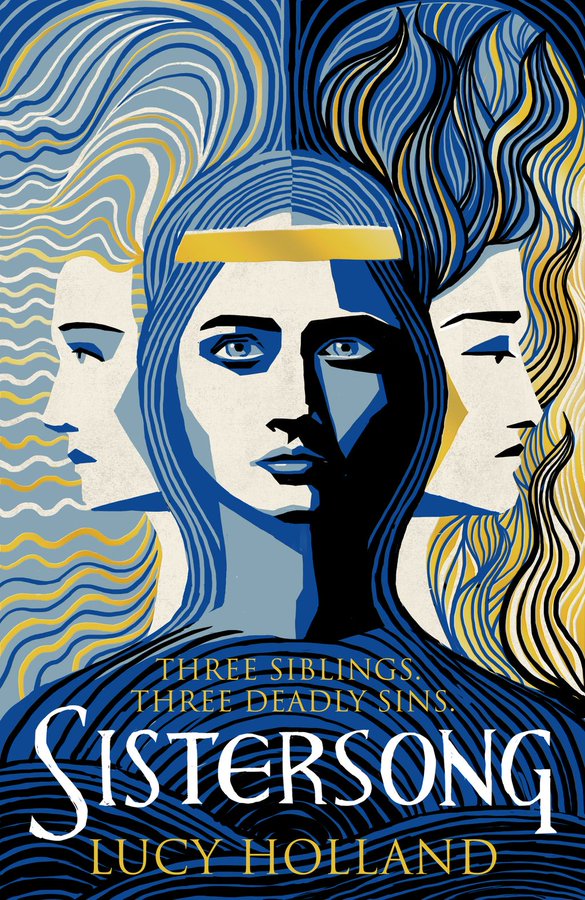
Book Review: SISTERSONG reignites old magic in Dark Age Britain

I recently listened to Sistersong by Lucy Holland on audiobook. I’m in the midst of an era kick, where I’m almost exclusively interested in historical fiction or fiction stories set in Dark Age Britain. So, I found this book as part of my keyword search on Audible, and it sounded intriguing.

I enjoyed it, overall.

This was a very intricately and well written story. Holland deftly weaves part fairy tale, part ballad about the stories we tell ourselves and how they come to define us. This story follows three siblings who are each struggling to understand or reconcile some part of themselves, or, in my ways, some part of their relationships with their parents and with each other.

Thus, the story quickly becomes part family reckoning, part coming-of-age, and part classical drama, all wrapped in a tale of lost magic and impending war.

Having known nothing so this story or author beforehand, I found it both surprising and familiar, in the way that classical storytelling forms often are. I recognized the beats as they came, but the characters’ lives were so vivid that their inner emotional turmoil drove the tension.

Each of the three siblings at the center of Sistersong has a unique voice that reflects the others, making their interactions poignant in every scene. Holland peppers her story with enough twists and interesting character turns to make it feel unique.

The soft magic system felt a bit all-powerful for my liking, but it was not a ‘deus ex machina’ effect. Magic permeated the narrative, but did not drive it completely.

Steve D

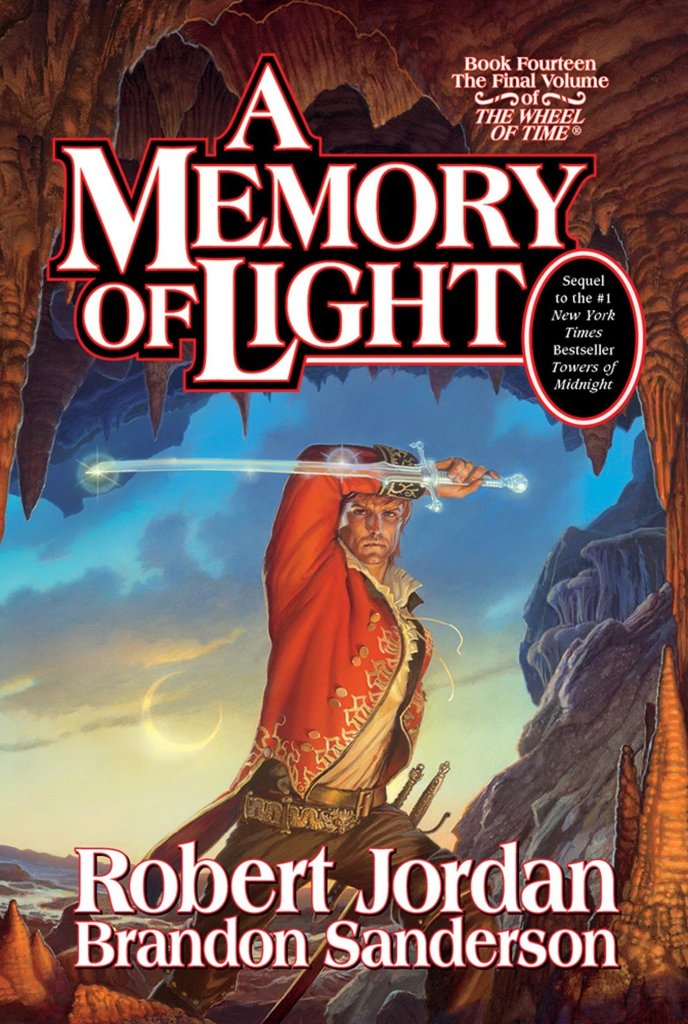
Book Review: A MEMORY OF LIGHT ends an epic series… abruptly

I don’t recall exactly when I first started reading The Eye of the World, the first novel in Robert Jordan’s A Wheel of Time series. My active Goodreads usage only goes back to about 2016, when I had read The Fires of Heaven (book five).

It has likely been 10 years since I first started reading this series, and to finally have reached the end feels like an achievement on its own.

Overall, A Mermory of Light is a great ending to an exceptional series. The Last Battle plays out with stunning complexity over 100-some pages. All of the major characters and plot threads were tied off from a narrative, and there were still plenty of surprises. Where character stories were not tied off in as much detail as I would have hoped were in the surviving characters dealing with the trauma and the aftermath of such a momentous event as the Last Battle. There was very little time spent on the emotional resonance of everything that had happened in the final act of the book.

Having read this series over the course of years, I at times felt both overwhelmed and bored by the drawn-out narrative, the twisting plot lines, and the ever-expanding cast of characters with seemingly dubious purpose in the story.

This book, and the two preceding it to include Sanderson’s completion of Jordan’s story, managed to balance the incredible web of characters Jordan had created with the streamlining necessary to bring this series to a meaningful conclusion.

Even still, while the primary plots were drawn to a close, I think the ending was rather abrupt and left too many unanswered questions about the aftermath. I fully acknowledge that the lack of definitive aftermath leaves it open to interpretation for each reader. I also recognize that a 900+ page book might not want to dedicate a ton of space to what comes after the Last Battle.

I just wanted a little more closure for the characters who were left behind — their grief and mourning, and their recovery and ambitions for rebuilding their world.

I truly enjoyed this book. And I still have questions to which I will need to devise my own answers, it seems.

Steve D