Book Review: THE LAST VIKING and the rhythm of narrative history

I am woefully behind on posting book reviews, which is perhaps a good thing. It means I’ve at least been keeping up with my reading. So here goes an attempted book review for a book I finished almost a month ago.

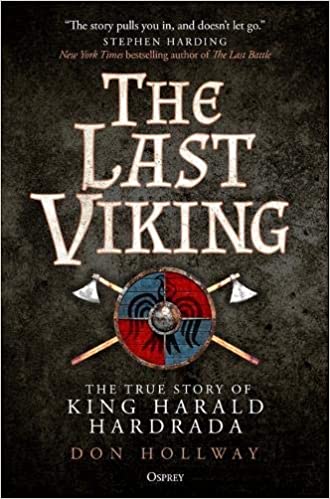
I listened to The Last Viking: The True Story of King Harald Hardrada by Don Hollway on audiobook, and it reminded me of the pleasing rhythm of well-constructed narrative history.

King Harald Hardrada was, as Hollway argues, the last great figure of the Viking age of Norse history. After his older brother, King Olaf of Norway, is killed in battle, the young Harald embarks on a wild life’s journey that takes him opposite corners of Europe, until his death in 1066.

Hollway uses a combination of historical sources and dramatized dialogue and exposition to weave together this history of Harald Hardrada’s life. His open discussion of his sources (or lack thereof, at times) and their veracity lends credibility to his understanding of Harald’s life. We have to take the information we have about a person who appears larger than life. Hollway then builds a narrative and life journey fit for a figure who appeared to be legendary in his own time.

To open the book, Hollway cleverly sets the scene for the battle of Stamford Bridge in England, 1066, where King Harald Hardrada of Norway met King Harold the Saxon, of Wessex.

Before the battle begins, Hollway winds the clock back to Harald’s youth. Following the death of his brother, the book follows Harald as he makes his way down the Volga and ultimately to Constantinople, becomes embroiled in the imperial court, and escapes as the reign of Constantine II collapses.

Harald then returns to his homeland and attempts to conquer parts of Sweden and Denmark from his seat in Norway, before finally embarking on his expedition to conquer England. This framing leads to a surprisingly climactic end for Harald, in which Hollway deservedly places him among the most influential figures of his time.

The Last Viking is an excellent read for anyone interested in the early medieval period of Northern Europe or the Byzantine period. For me personally, this book tugged at multiple threads in the history of side of my brain, and only reinforces my growing obsession with the early-Medieval period in Britain, and now Scandanavia.

Steve D

Book Review: THE MAP OF SALT AND STARS

I’ve had The Map of Salt and Stars by Zeyn Joukhadar in my Audible library for several months, and I finally got around to listening to it. This is one of those books that, despite the blurb, I wasn’t quite sure what to expect from it.

I was pleasantly surprised.

The Map of Salt and Stars is a powerful story of struggle, sorrow, hope, and love. The story follows Nour, a young girl whose family is forced out of their home in Homs, Syria by the outbreak of the civil war, and Rawiya, a tenacious girl centuries earlier who embarks on a journey across the Mediterranean.

The mirrored stories of Rawiya and Nour created a beautiful symmetry in the plot while deriving meaning from both. Nour, in trying to understand what is happening to her family, and through the grief of lost loved ones, discovers the true meaning of her family’s history, and what it means to find home after everything she knows is destroyed. Meanwhile, Rawiya, in becoming a mapmaker’s apprentice, finds the adventure she’d been seeking, and reveals her own power as a brave warrior and cunning tactician.

The characters’ journeys follow each other from one end of the Mediterranean to the other. This structure makes the overall narrative familiar, but the twists and turns that take each character from one location to the next propel the plot forward from chapter to chapter.

The very real circumstances around Nour’s family — war, hunger, a refugee crisis in the making — are contrasted well by the more fantastical dangers of Rawiya’s journey fraught with dashing princes, mythical creatures, and magical stones.

Zeyn Joukhadar is an emotive writer, whose prose was thoughtful and intricate without being overly embellished.

The audio version was fantastic, but I think this is a story worth reading on the page. This is definitely a candidate to buy in hard cover for the home bookshelf.

Steve D

Book Review: BOUDICA: DREAMING THE HOUND

As expected from my earlier goals post, I finished Boudica: Dreaming the Hound, the third book of this series by Manda Scott, and am well on my way with the fourth.

I’ve already reviewed books one and two.

As book three of a four-book series, it was not too surprising to find that Dreaming the Hound had a minor case of middle book syndrome. The plot dragged a bit more than its predecessors, and both the characters and the reader are left waiting for momentous changes to happen: the Roman invasion of Mona, for instance.

Even still, there was some interesting character development in this story, particularly for Valerius and Cunomar. Valerius steps into his redemption arc, while Cunomar finally takes some initiative to become the warrior for which he has always overreached.

The ending of Breaca’s time with the Eceni, under Roman rule, comes swiftly and shockingly. I will spare the details, but the confrontational sequence towards the end of this arc is brutal and traumatic. Its purpose in the story is to portray what little historical evidence there exists for these events, as explained by Scott in the afterword. In the moment, though, it left a poor feeling.

I am still definitely enjoying this series overall, but I was somewhat relieved for this book to be over. Given Scott’s deft plot development and skilled character building, I was also optimistic to begin the fourth and final installment. That optimism has already paid off, and I’m greatly looking forward to seeing how this epic series ends.

Steve D

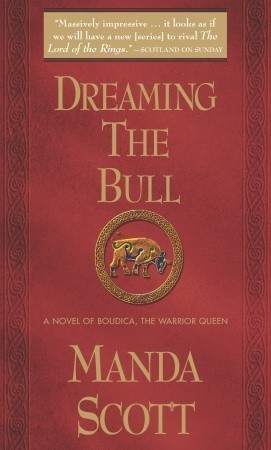
Book Review: BOUDICA: DREAMING THE BULL

As anticipated from my review of Boudica: Dreaming the Eagle by Manda Scott, I quickly picked up and pored through book two of this series.

I actually finished reading (listening to) Boudica: Dreaming the Bull at the end of May, but I’m just now getting around to posting my review.

Everything I loved about the first book – the writer’s elegant prose, the depth of historical world-building, the poignant interplay of the characters’ dialogue and gestures – carried through in book two.

While I missed spending as much time with Breaca as in the first novel, I was surprised and riveted by the stories of some of the other characters. The continued fall into darkness of Julius Velarius was not what I had looked forward to about this novel, but his chapters were compelling.

Scott did an excellent job showing how one can empathize with Julius, even when one disagrees with and even despises the choices he makes. His tragedy becomes the centerpiece for this book that still carries the reader through, without bogging them down in despair or anger. Those emotions are certainly felt, but they don’t hold back enjoyment of the wider story. Dubornos was another surprisingly interesting character in this novel.

This book was enjoyable overall. The consistency in writing style and attention to detail is a testament to Scott’s skill as a writer. As of this writing, I’m already 75% done with book three.

Steve D

Book Review: BOUDICA: DREAMING THE EAGLE and intricate narratives

Among my greatest literary addictions is historical fiction, especially that of pre-Norman Britain. Thus, it was only a matter of time before I came across, immediately bought, and read Boudica: Dreaming the Eagle, by Manda Scott.

This is the epic telling of Boudica, the Warrior Queen of the Celts who led the Celtic tribes of Britain against Rome’s second invasion in the first century BCE.

One of my favorite acknowledgments of this book is when Scott describes that very little – almost nothing, in fact – is actually known about who Boudica was, so most of the story of her life, her family, and the people whose lives she influenced are fictional.

Even still, this is a period in history that is so well-researched that the world comes to life from the very first chapter. Scott fully acknowledges the immensity of historical and archaeological resources and experts she leans on to construct this work. The payoff is a style of world-building and character-driven exposition that feels organic and does not overwhelm the reader yet completely envelops them.

The story generally follows the young Boudica – before she earns that title – and various members of her tribe as they prepare for the Roman legions to return to their shores. The characters’ connection to each other, through inter-tribal politics and vows of personal honor, drive the emotional weight of the story.

This book has brutal depictions of war, but Scott deftly works around the gory details to paint the tapestry of a battle from the perceptions of those involved. The reader can see the battle play out in their mind’s eye but does not need to be told about every stroke of a blade or every spurt of blood. The horrors of war are apparent without being gratuitous.

Scott’s narrative is incredibly detailed with not a single word or metaphor wasted. Her prose is elegant and precise, where dialogue between characters does not have to reveal every single thought in order to convey deep meaning.

This is flat out one of the best epic novels I’ve read. I’m already reading book two, Boudica: Dreaming the Bull.

Steve D

Book Review: A BLIGHT OF BLACKWINGS leaps above middle book syndrome

A Blight of Blackwings is the second installment of Kevin Hearne’s The Seven Kennings series, and I could not resist diving straight into it after I finished A Plague of Giants a few weeks back.

As with the first book, I greatly enjoyed A Blight of Blackwings, which felt somewhat different from its predecessor and deftly maneuvered around the dreaded middle book syndrome.

Hearne achieved this by lacing this book with its own somewhat contained narrative threads that appeared separate from the larger series plot. The introduction of characters like Pen, Hanima, and Koesha enriched the plot without making the reader feel over-burdened with new voices. After being given the proper time to develop in their own right, each new character ended up serving the larger narrative in their own ways, without becoming subsumed by it.

Where some middle books, especially in trilogies, struggle to maintain narrative momentum, Hearne provides tangible story progression that is not wholly divorced from the wider series, so the reader does not feel like they are just getting “filler” content before the finale.

Hearne also manages to hit similar emotional stakes in this book as the first. Grief, and the myriad ways in which characters process their grief, is a significant and explicit theme in the first book. Grief and loss play just as important a role in Blackwings, but in a much different way.

Where the first book used dramatic scenes to demonstrate the power of grief – and anger, and sorrow, and despair – Blackwings focuses this poignancy on smaller, more intimate scenes that deepen the reader’s connections with the characters.

In short, A Blight of Blackwings both inherits and expands upon its predecessor’s themes, creating a story that builds upon the series without feeling repetitive.

I’ve already started book three.

Steve D

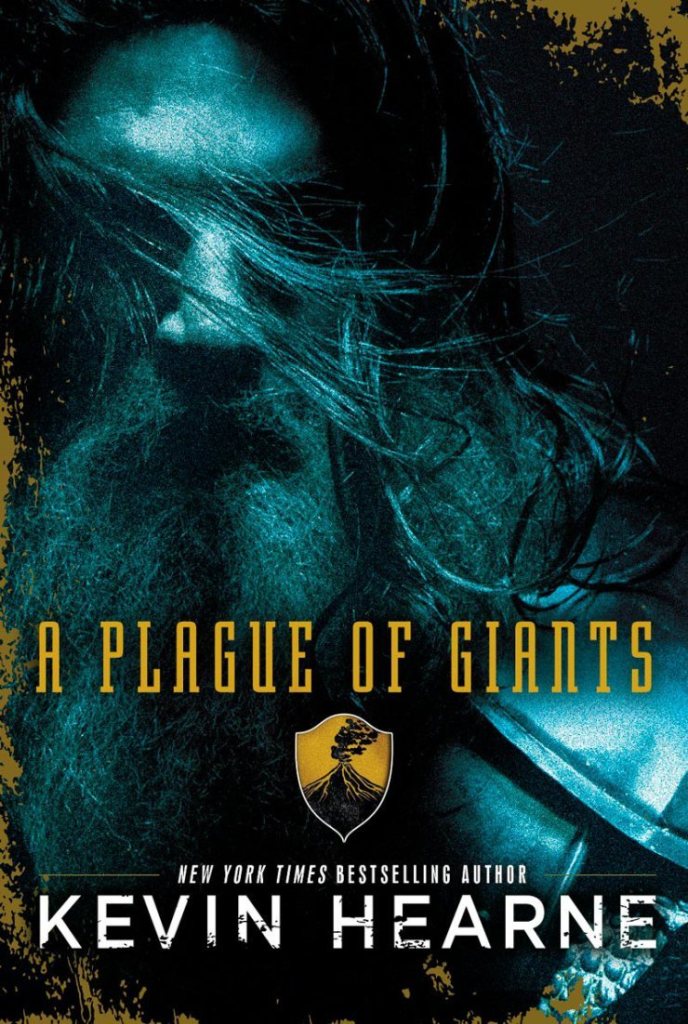
Book Review: A PLAGUE OF GIANTS is a superbly intricate story

A Plague of Giants by Kevin Hearne, the first in his Seven Kennings series, has been on my radar for far too long. I finally got this book on audiobook, and man, I can’t believe I neglected to read this sooner.

A Plague of Giants is a highly enjoyable read. This is perhaps one of the most well-rounded fantasy stories I’ve read.

The world-building is superbly intricate and layered into the plot in a way that’s accessible to the reader. This is introduced to the read through a framework structure, where a bard is recounting stories of a recent war to a crowd of refugees who had fled from it. The bard, through his “kenning” – the system of magic in this universe – can take the appearance and voice of whoever’s story he is telling. Thus, we’re treated to multiple voices through the voiceover narration of Luke Daniels and Xe Sand in turn.

The plot is well paced, and the multiple point-of-view narratives keep the voicing dynamic. This is the type of story where the first third feels to come from multiple unrelated angles, but each of the POV narrators end up building towards a larger theme.

The framework style of storytelling is effective and introduces its own plot mechanics that add depth to the main narrative. The bard and a local scholar spend time together between recountings of the tale, so that the scholar can record the bard’s oral history in writing.

And the characters feel authentic. This book carries weighty themes of grief and loss without burdening the reader with them, instead allowing each character to experience these feelings in unique ways. The characters wrestle with their own perspectives or histories even as they’re experiencing new waves of loss with the onset of this war, forcing the characters to react and reassess their own values in real time.

A Plague of Giants is one of the best fantasy novels I’ve read in recent memory. I cannot wait to start book 2 in this series.

Steve D

March Write Day: Plans to Execute

The shortest month of the year is through, and I half-heartedly wish I had a few more days. It’s been a good month overall, I just had a lull in the middle.

But an ending is also a beginning, and I’m pleased that a new month is starting.

Last Month’s Goals

  1. Complete my first round of revisions on Uprooted, The Herb Witch Tales #1.
  2. Read three books.
  3. Exercise at least three times a week.

Complete first round of revisions on Uprooted?

No. I’ve gotten about halfway through my draft. This is the primary lull I mentioned above. I just didn’t sit down enough nights to read through my story. Sometimes revisions, just like writing, is about number of sessions as much as productivity per session.

The good news is that halfway through, I like this story. The pacing is a little disorienting at first, which is intentional, and I can feel it slowing down into its middle rhythm. This first revision pass-through is about the overall flow, so feeling through those ebbs and flows is a good sign of how readers might engage with the story.

This revision process is also highlighting likely next steps for me. I think I want to complete this read-through of Uprooted, focused on overall flow and only obvious edits, and then read through again to trace scene placement and length.

Examining the scene placement and length per scene will help me determine whether particular scenes are unbalanced against others, or where natural breaks in the narrative occur. I wrote this story into ten chapters, but do the chapter breaks make sense? Are they too long? Because this is a novella, I’m starting to think that I should have more numerous but shorter chapters to help make the story more digestible.

I just want to validate that idea with a second read-through.

Once I have a good handle on the overall narrative flow and the scene breakdown of Uprooted, I’ll switch gears and follow the same process for New Earth, allowing me to ensure that the two stories make sense together as well as independently.

Read three books?

No, but I read two and started a third. I also made more progress on A Memory of Light. I got stuck on a longer nonfiction book, Dawn of the Code War, which is a bit of an oral history of the FBI’s, and the US’s, initial foray into cyber attacks. Really interesting read, but not the type of thing I can power through in a weekend.

I’m currently reading a short thriller, The Wrong One, by Dervla McTiernan. I’ve read a few of her Cormac Reilly books, so I did not hesitate to pick up this short story on Audible.

Next, I’m looking for some fantasy / historical fiction. Might be going back to Bernard Cornwell’s The Last Kingdom series… I’m on book eight.

Exercise three times per week?

YES at least in the back half of the month. I finally bit the bullet and paid for a workout app program thing. I chose Asana Rebel, since they had a one-year subscription deal and I kept seeing their ads. (Your Instagram marketing campaign worked on me, Asana Rebel! Curse you!)

I started with their intro program and am moving onto full yoga sets. It’s not terribly difficult for me to find 10-15 minutes of exercise time in a day. 20-30 minute sessions will be tougher. I’m thinking I’ll intersperse their yoga sessions with resistance training and… dare I say it? Sprinting.

I’m not into running, although I’ve been told I’m built like a runner. I’m not interested in long-distance running, but sprinting to build leg strength sounds okay. I just need to figure out what that type of workout looks like.

Asana Rebel is nice, because they push notifications to you about a weekly goal — mine is three workouts per week — and quiz you on your mood and what types of exercises may help you in the moment. At the moment, I like the structure it provides. I just need to be disciplined in building on top of it, so that’s what March will be about.

Goals for March

  1. Revisions for Uprooted, The Herb Witch Tales #1. I need to complete my first read-through focused on narrative flow and pacing.
    • Then I need to complete a second read-through to reverse engineer scene structure and chapter layout.
  2. Read three books. Pretty straightforward. I also want to continue making good progress on A Memory of Light. I’m at the point where some narrative chips are starting to fall, and it is both dreadful and exciting.
  3. Exercise at least three times a week. The app is making me do three workouts per week, at minimum. So that’s baseline. I also want to start adding in other forms of training, so I’m mentally aiming for 4-5 workouts per week, and I’ll see how my routine develops from there.

Steve D

3 Elements to Revise in an Early Draft

Creativity Sessions writing process. Evening Satellite Publishing.

I’ve started a full revision of The Herb Witch Tales this month. I’m currently revising the third draft of Uprooted, and will move straight into revising the second draft of New Earth.

These novellas form a duology, so it’s important to me that the characters, plots, and narrative themes align between them. I had written the first part in full, started the second part, and then decided to rewrite part one. Now that I’ve finished a subsequent rewrite of part two, I’m taking the time to revise both parts together.

Thus, my focus for this revision phase is first on consistency of those big pieces, knowing I’ll likely have to come back again to revise for smaller details.

That got me thinking about which elements are important to focus on during a given revision phase.

I’ll start by looking at what to focus on when revising an early draft.

3 Elements to Revise in an Early Draft

I’m using the term “early draft” here, because every writer drafts at a different pace. Some take three drafts to get a polished story; others take ten, or fifty. An early draft could be a discovery draft, where you’re just getting words onto paper, or it could be a draft that has already gone through a couple of revisions, but still feels raw.

In any case, you have a completed draft that you know needs some work. Where to begin? I’d like to highlight three places to start.

1 – Scene Development

This might seem obvious, but an early draft likely has a lot of plot holes to fill. Read through your draft with a questioning mind. From scene to scene, are there any questions left unanswered about how your characters are behaving, jumps in time, or events that are not presented to the reader directly?

It’s okay to leave some of these things for the reader to interpret, but that should be an intentional decision. If you’ve skipped a ton of scene development for the purpose of getting that draft finished, then many parts of the story may feel unfinished when you’re revising.

With every scene you revise, ask yourself:

  • Does this scene transition well from the previous scene?
  • Does the scene demonstrate new or reinforce established information about the characters, the plot, or the world they’re in?
  • Does it transition well into the next scene in a way that readers can follow?

2 – Character Consistency

Pay attention to the way your main characters may change – or not change – over the course of the story.

  • Do their attitudes shift, and do these changes serve the narrative?
  • Does each character have consistent voicing — the way the speak, act, fidget, or think?
  • Do their decisions align with what the reader knows about their fears, their motives, and what’s happening around them?
  • Does each character have agency, able to make decisions in reaction to what’s happening around them, rather than being buffeted through each scene like a toy doll in a hurricane?

Similarly, do your side characters have a purpose in your story? These are the folks who may only appear in a few scenes, or in the background of whatever the main characters are doing, but they should be there for a reason. A character who just reacts to what’s going on around them – a child who only complains to their parents, or a sidekick who only cheers on their leader – will fall flat. If you’re taking the time to create a character and place them in a scene, then give them something to contribute.

3 – Narrative Flow

This follows on element number one above, but forces you to take a step back and view your story not just for each individual scene, but for how the entire piece comes together.

  • If the story is intense with drama or action, are there moments of quiet and calm, or is the reader constantly pushed from one crisis into another with no respite?
  • Does the narrative meander from one scene to another, taking random expository detours that last for pages on end?
  • Does the plot flow naturally, or will the reader feel jolted along due to unexpected time jumps, or sudden changes of place?

Finding Your Story’s Intention

None of these things are bad to have in a story, but they should be intentional. Revising an early draft should give you the opportunity to understand, and improve on, the tone, pacing, and style of your story.

And don’t fret the details of Editing or Proofreading just yet. That will come in later revision phases.

Steve D