August Write Day: Nearly There

Our summer took an unexpected turn when our oldest son, through absolutely no fault of his own, was kicked out of daycare. The daycare messed up and had too many kids for the summer.

We’ve been scrambling to find things for him to do during the week for a month, and we’re now just two weeks away from the start of his schoolyear. I have never in my life been this excited for school to start.

We have one more family trip ahead of us, which is greatly needed for all of us, perhaps most of all just to break us out of our week-to-week schedules for some quality time.

Last Month’s Goals

  1. Finish three books.
  2. Small acts – Exercise.
  3. Small acts – Writing. 
  4. Continue daily meditation/affirmation.

Finish three books?

I finished two books in July. I’ve already reviewed Boudica: Dreaming the Hound by Manda Scott here, and I finished Star Wars Legends Collection: The Empire, Vol 1 what feels like ages ago. That was not my first entry into Star Wars comics, but I appreciated the deeper focus on Vader and his conflicted state of mind in the early years of the Empire.

I don’ think I’m ready to jump head-first into the vast back-catalogue of Star Wars comics and novels. It’s too much to even think about wading through, to be honest. However, I have enjoyed the smattering of stories I’ve picked up as one-offs.

Perhaps I will take a similar tack with the Warhammer 40,000 novels. I had tried to get into The Horus Heresy series some years back, and found it overwhelming in its lore depth.

Small acts – exercise, meditation, writing?

Not much to say in any of these categories. I’ve been active in different ways, but no real routine to speak of.

I think I’ve done okay with posting haiku each Sunday, mostly. I’m starting to think that until I really start writing fiction again, I will probably stick to book reviews for my Wednesday posts.

I would like to start writing regularly again. I’ve just been pre-occupied. My sons have started playing video games a couple times per week – Super Mario Bros. Wonder, and Mario Kart 8, primarily. This has reignited my love for casual gaming, so that has been my hobby of late.

No regrets. It just means I’ve spent evenings doing that than almost anything else.

I will have some downtime while we’re traveling for our upcoming trip, and I’m optimistic that I can write in my journal a bit.

Goals for August

  1. Finish three books.
    • Current reads: Boudica: Dreaming the Bull by Manda Scott; A Promised Land by Barack Obama; The Essential Tales and Poems of Edgar Alan Poe, by Edgar Alan Poe and Benjamin Franklin Fisher (editor)
    • Likely next reads: No idea.
  2. Survive until the start of school. It will be camps for us next summer.
  3. Enjoy our last big trip for the summer. We’re taking the train to Boston. It will be the boys’ first real train ride, so we’re excited.
  4. Try to exercise and stretch. I stretch just about every day. Still looking for the right motivation to exercise consistently.

Steve D

Book Review: A CLOSED AND COMMON ORBIT lands as cozy sci-fi with intimately personal stakes

After gulping down the audiobook form of The Long Way to a Small, Angry Planet, Becky Chambers’s first in the Wayfarer series, I did not hesitate to pick up book 2: A Closed and Common Orbit.

I had thoroughly enjoyed the first series entrant as a galaxy-crossing sci-fi adventure, so I was a caught a bit off guard to discover that I would spend all of book 2 with characters who were only a footnote in book 1.

Part of this is my fault, because I neglected to read the blurb before purchasing and beginning A Closed and Common Orbit. So I was a bit surprised, a little confused, and then curious.

This book follows Pepper, a tech whom the crew of The Wayfarer encounter in book 1, and Sidra, a conscious AI placed into a human-like body. Pepper’s and Sidra’s stories meshed well and approached themes of identity, predestination, and humanity with thoughtfulness. The two spend much of the book trying to navigate their own senses of self, while also figuring out how to integrate Sidra into Personhood and the local society of pepper’s home city.

Pepper’s story also looks backward, beginning with her life a child to explore how she got where she is. I was intrigued by Pepper’s hardships as a teenager, and I felt that her transition from that life into the one she built for herself was glossed over. However, her backstory clearly focused on and succeeded with explaining why she has such an affinity for advanced AI’s and their personhood.

Both character arcs are effective in demonstrating and resolving their respective emotional journeys.

Surrounding these very intimate themes of identity, the story barely touched on how Pepper’s and Sidra’s society did not accept AI’s as People, and what that might mean for Sidra. I would have liked to understand more about how technology and sapient AI was viewed and treated in the Galactic Commons at large.

Rich world-building surrounds this story, but it’s a little too focused on the characters’ internal struggles. I kept looking for a broader view to balance the intense personal stakes of the story. Similar to its predecessor, A Closed and Common Orbit excels in displaying what life is like for people on this planet, a sort of cozy sci-fi setting for these poignant themes.

Still, this was very much worth the read, and I’m interested in continuing this series in the near future.

For the audiobook, I found the narration stilted with unnatural inflection in many places, especially with dialogue. I think this may have been intentional by the narrator to reflect Sidra’s voice as an AI, but it honestly became more and more grating as the story proceeded.

Steve D

Book Review: AMONG THE BEASTS AND BRIARS

I discovered this book somewhere on Audible and gave it a listen a few weeks ago. (I’m a bit behind on posting my book reviews.)

Among the Beasts and Briars by Ashley Poston is an enjoyable story about gardener’s daughter, Cerys, who is cursed with the magic of the dark forest that borders her home, and who must save her kingdom from the forest’s dark powers.

This was a classic quest/coming-of-age story with a strong underpinning of fairy tale lore – the dark forest, old gods, terrible curses, and young people reaping the sins of their forebears. There is a spot of romance throughout the narrative as well, but I would not describe this as a romance novel — it fits well with the plot. The story is well-paced, and there are enough little twists to keep the reader guessing as to the final resolution.

There is some surprisingly fantastical and frightening imagery as the characters survive and then confront the dark magic of the forest, and I think this story would translate well to an animated horror/fantasy treatment.

For the audiobook version, male and female narrators trade point-of-view sections for the two characters who end up becoming our protagonists. The dual narrators definitely provided interesting perspective, as the conflicted perspectives of particular scenes drove some of the conflict. However, I didn’t find that the narrators’ voices matched what I felt were much more intense or frightening scenes, especially in places where Cerys confronts gaunt and terrible visages of the people of her kingdom. I think there’s a version of this narration that could lean much more heavily into the horror aspects.

Still, this was an enjoyable standalone novel, and I’m curious about of Poston’s other work.

Steve D

Book Review: STAR WARS: TARKIN sheds light on enigmatic character

I listened to the audiobook version of Star Wars: Tarkin by James Luceno, a story of one of Tarkin’s endeavors in the early years of the Empire that helped him rise to prominence. This is essentially his backstory for the opening of A New Hope, and it was a solid read about an otherwise enigmatic character in Star Wars lore.

I’ve never read any novel in this universe, and this seemed like a relatively innocuous place to start — a bit in the middle in terms of timeline, but likely not explicitly connected to any other stories, aside from the obvious background/lore pieces.

Tarkin effectively follows Moff Tarkin as he oversees a secret project for the emperor and tries to track down suspicious attacks across the galaxy. Simultaneously, the reader is introduced to Tarkin’s upbringing that made him the ruthless, calculating strategist that he is.

Darth Vader plays a surprisingly prominent role throughout the story, effectively teaming up with Tarkin to track down the “dissidents”, and I found their relationship highly engaging, as Tarkin tries to understand Vader, whose identify he believes he knows, and Vader largely remains a mysterious personality.

As a first-time reader of the Star Wars canon, this was a solid entry point. There were references to things about the universe I’m unaware of, but they did not stand in the way of the main plot, which had a clear trajectory for Tarkin and the growth of the Empire at large.

This book has me interested enough to continue reading Star Wars lore. I’m just not sure which direction I’ll go next: back to the High Republic, or these interwar years.

Steve D

LOKI Season 2 Bookends the Best of Recent MCU Stories

I’m a couple of weeks late writing this post, because I did not watch Loki season 2 as it was released on DIsney+. I mostly watched over the last two weeks, and then binged both episodes five and six last week.

Since then, I’ve been mulling over the season (and series?) finale while listening to a couple of my favorite podcasts’ coverage of the show. And I’ve come to a simple conclusion.

Loki is the best story that the MCU has told since Avengers: Endgame.

I will not spoil this show, just as I try not to spoil books I read and review. But through 12 episodes and two seasons of television, the titular character follows an arc that must be compared with similar heavyweight arcs of Thor or Iron Man in the Infinity Saga.

Loki enters season one as a villain, freshly time-jumped from the end of Avengers, when he tried to invade New York City with an interdimensional alien army. Through his experiences at the Time Variance Authority and witnessing other timelines — other pasts and possible futures — Loki changes and evolves into something other than the conquering Asgardian god of mischief.

I have been mostly underwhelmed and occasionally disappointed with the MCU TV shows over the last few years. They have primarily felt like movies that were stretched too thin or longer television seasons that were crammed into tighter spaces, with no obvious direction to point towards in terms of building a story around the next big villain.

Loki, the character, is not that next big villain, but Loki, the show takes Big Villain Stakes that most of the recent MCU properties have been missing, and boils them down to emotional, dramatic storytelling between characters.

And the climactic finale, rather than being a CGI punch-fest, is a stunning and spectacular moment of agency for one character to choose his path.

The series ends so resolutely, so satisfyingly, that Marvel could end the series, put a period on Loki’s character journey, and I would be content. If nothing else, I can go read the comic run that inspired this show.

However Marvel came to execute Loki as a storytelling vision, I hope they follow a similar path for TV and movies going forward.

Steve D

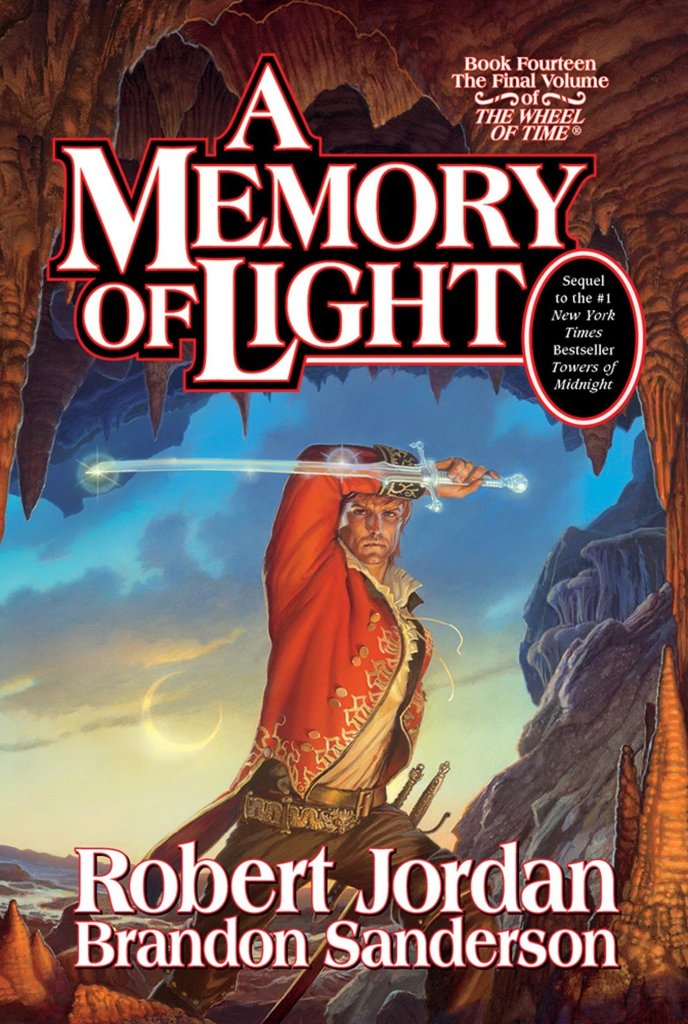
Book Review: A MEMORY OF LIGHT ends an epic series… abruptly

I don’t recall exactly when I first started reading The Eye of the World, the first novel in Robert Jordan’s A Wheel of Time series. My active Goodreads usage only goes back to about 2016, when I had read The Fires of Heaven (book five).

It has likely been 10 years since I first started reading this series, and to finally have reached the end feels like an achievement on its own.

Overall, A Mermory of Light is a great ending to an exceptional series. The Last Battle plays out with stunning complexity over 100-some pages. All of the major characters and plot threads were tied off from a narrative, and there were still plenty of surprises. Where character stories were not tied off in as much detail as I would have hoped were in the surviving characters dealing with the trauma and the aftermath of such a momentous event as the Last Battle. There was very little time spent on the emotional resonance of everything that had happened in the final act of the book.

Having read this series over the course of years, I at times felt both overwhelmed and bored by the drawn-out narrative, the twisting plot lines, and the ever-expanding cast of characters with seemingly dubious purpose in the story.

This book, and the two preceding it to include Sanderson’s completion of Jordan’s story, managed to balance the incredible web of characters Jordan had created with the streamlining necessary to bring this series to a meaningful conclusion.

Even still, while the primary plots were drawn to a close, I think the ending was rather abrupt and left too many unanswered questions about the aftermath. I fully acknowledge that the lack of definitive aftermath leaves it open to interpretation for each reader. I also recognize that a 900+ page book might not want to dedicate a ton of space to what comes after the Last Battle.

I just wanted a little more closure for the characters who were left behind — their grief and mourning, and their recovery and ambitions for rebuilding their world.

I truly enjoyed this book. And I still have questions to which I will need to devise my own answers, it seems.

Steve D

Book Review: 1984, and Truth against totalitarianism

I just finished reading 1984 by George Orwell for the first time. Somehow, this book was not part of my high school reading curriculum. I feel like my high school English class had a huge reading list, and each class read only a selection — friends of mine read 1984, and my class read Brave New World, which I loved.

This book is a must-read for anyone who feels compelled to understand the psyche of fascism and totalitarianism.

If a reader comes to this book looking for character development, reasonable plot pacing, or much scene work beyond didactic dialogue, they will not find it. They will also be missing the point. From a story perspective, I really enjoyed the section focusing on Winston and Julia’s relationship, even if their time together ended rather abruptly.

Orwell’s story is a mechanism to explain the idea that totalitarianism seeks control as an end itself. The ideology doesn’t matter. Control over every aspect of life – even over thought, if it can be achieved – is the entire aim of the totalitarian system. To gain power over people and keep it is the only goal.

This book is a product of its time and timeless, as applicable a warning against fascism now as it was seventy years ago. As a lover of history, I was interested in the alternative rendering of the post-WW2 order, but I know there are likely other stories where this is the focal point, rather than the exposition dump Orwell uses. This section was particularly frightening to me as the end of the book drew near, as it provided a view into a world where Truth does not matter – even upon learning the truth about your reality, a totalitarian system’s entire existence is predicated on controlling you in spite of it.

Steve D

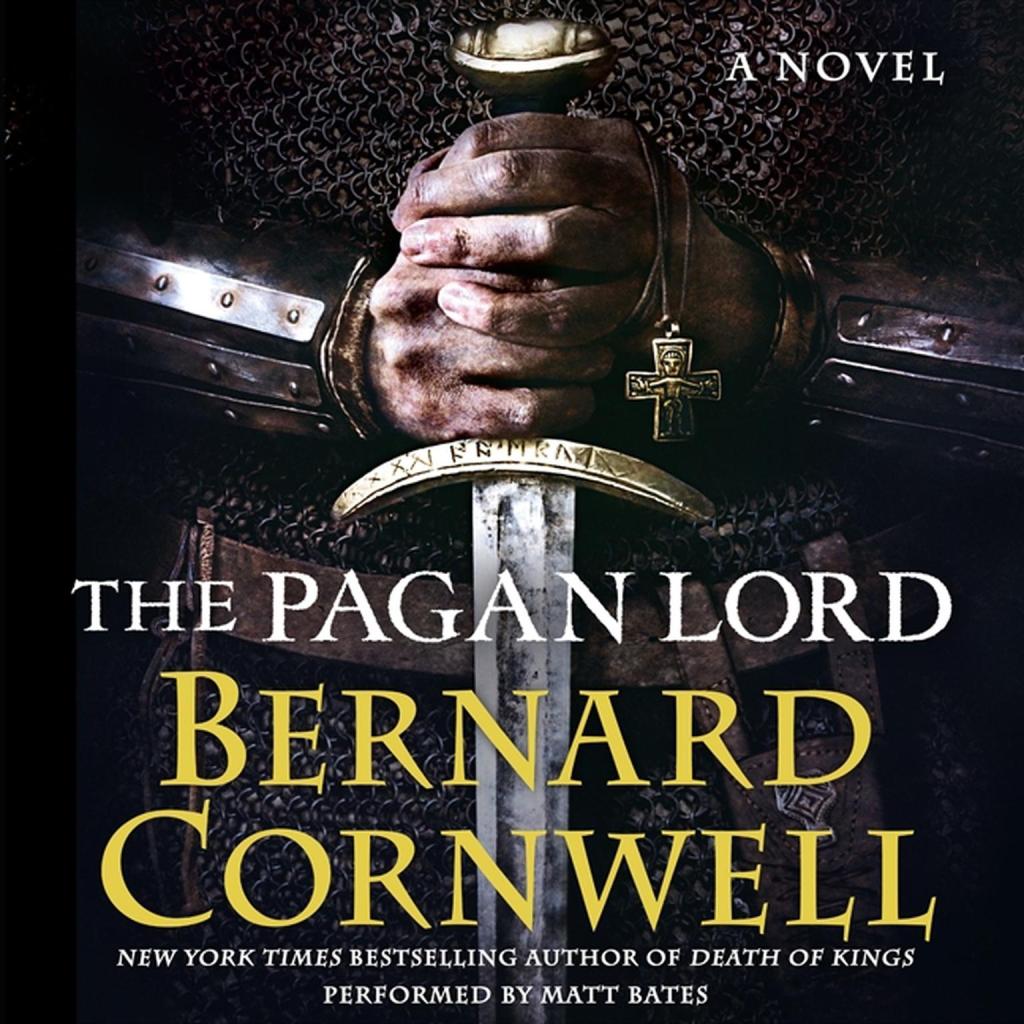
Book Review: THE PAGAN LORD grinds series progression to a halt

The Pagan Lord is the seventh book in The Last Kingdom series by Bernard Cornwell, and this has been my least favorite of the series so far.

This installment has all the trappings of a classic “middle book”: no major plot progression for Uhtred or other main characters, stagnant action that lacks excitement or real stakes, and no new characters to liven up the story.

After several years of relative peace, the Saxons and Danes feel restless and wary for the next war that most don’t truly believe is coming. Uhtred, as always, if on the lookout for the next war, and his instincts end up proving correct.

However, this book feels like a regression for Uhtred as a character, who makes a rash mistake that leads to him being outcast by the Saxon kingdoms. Uhtred is bitter in his old age and still clings to his dream of retaking Bebbanburg, which makes him more desperate than in previous stories.

The wisdom and growth as a leader we had seen from Uhtred in recent stories seems to have eroded, perhaps because he has been rudderless for several years. It is perhaps fitting that this story also feels largely rudderless, like its protagonist, but it does not make for a very enjoyable read.

With both of his sons grown into men, Uhtred’s successes and shortcomings as a father are also on display. He is ashamed of his eldest son for becoming a priest, but his actions are those of a petulant child who did not find his heir in a son whom he largely neglected as a child. His second son is a brave lad eager to prove himself as a warrior, but Uhtred does more to put him down than build him up. Uhtred’s daughter, Stiorra, another child to whom he hasn’t paid much attention, is also notably absent from his life.

This was a decent story, but I’m hoping Uhtred snaps out of his funk. The narrator was okay, but did not bring the same intensity to the story that previous narrators have. Here’s hoping book eight picks up the pace again and Uhtred finds his way.

Steve D

ANDOR takes the title for Best STAR WARS

I’ve recently caught up with and finished watching Andor, the latest show in the Star Wars universe on Disney+. Coming in a few weeks late to this show, I had heard good things about it, even if it wasn’t getting a ton of buzz. I came into this show with an open mind. The Mandalorian has been great. Boba Fett and Obi-Wan were decent, but flawed in their own ways. I felt like Andor had potential as a show that didn’t have to try to build around characters we already knew from the original trilogy, and I was excited by the show’s premise of focusing on the rebellion leading up to A New Hope.

With season one in the books, and a few days for me to think about it: Andor is the best that Star Wars has been to this point, from the storytelling, the writing, the world-building, and the meaning. I’ve watched it once through and am already watching it again with a friend who has yet to see it. I can barely contain my excitement to watch this show a second time, mere days after I’ve finished my first watch-through.

Spoilers ahead for Andor and for the movie it leads to, Rogue One.

Tony Gilroy, the writer/director behind the first three Bourne films and a ton of other action-thrillers, is the creative director and head writer for Andor. The 12-episode season is structured into four three-episode arcs, which presents an interesting ebb and flow of tension as the season progresses.

Let’s pause for one moment to appreciate that this show is a full 12 episodes, making it a legitimate season of television — not a 6-8-episode “limited series event” that feels like three C-average movies stuffed in a trench coat

I don’t want to go down the rabbit hole of summarizing the entire season. Just go watch it and be amazed. Instead, let’s talk about some key themes.

Cassian Andor, as the titular character played by Diego Luna, is ostensibly the protagonist, but when we meet him at the start of the season — five years before the events of Rogue One — he is a scavenger and thief who seems to have burned a lot of bridges and eroded the trust of those whom he cares about most. He argues with his adoptive mother, Maarva, and his ex-girlfriend and partner-in-smuggling, Bix, does not seem to trust him. How did this guy become an intelligence officer within the Rebel Alliance and a hero who sacrificed himself for the rebel cause?

The beauty of Andor, and its writing in particular, is that we see this arc develop for Cassian over the course of the season. He becomes a critical role-player in a heist on an imperial vault that he had only learned about days prior; he helps 5,000 fellow prisoners escape an inescapable prison; and he returns to his home planet, Ferrix, to help the people he had left behind. He’s not an expert rebel spy yet, but his character shows us a lot of grit and heart over 12 episodes.

Stellen Skarsgard is also stellar in his role as Luthen, a rare artifacts dealer in Coruscant-turned rebel ring-leader. It’s not quite clear how Luthen became involved in his own rebellious network against the Empire, but his connection to Saw Gerrera, played by Forrest Whitaker reprising his unique role from Rogue One, and knowledge of the various factions fighting the Empire indicate that Luthen has been in this war for a long time. That history is what has been missing from Star Wars, at least from the live-action movies and shows.

What Andor really demonstrates is the cost of a nascent rebellion. The Rebel Alliance doesn’t even exist yet. There are just a bunch of tiny factions fighting the Empire in their own ways, with no common goal yet identified. So why are they fighting? Luthen, along with Cassian, and another character, Kino Loy, played by the incomparable Andy Serkis, each take their turn delivering the thesis statement for this show, and for the rebellion at large — no one can fight fascism without sacrifice, without pulling together for the people next to you, and that sacrifice is worth it, even if the players themselves never get to see the dawn of a galaxy without the Empire in power.

The Best of Star Wars

I will not be able to do this show justice in a single post, and I may need to follow-up with a ranking of my favorite Star Wars stories.

All I know is that I’ve never heard dialogue in Star Wars like I have in Andor. I’ve never seen a Star Wars property as well-written and deliberate as this show. I’ve never felt like a story in this universe was this important, or this of-the-moment in our current culture.

A lot of Star Wars properties have reminded us of what we loved about the original trilogy, or tried to upend our expectations entirely. Andor manages to do both. It is an affirmation that these stories, in this universe, can say something meaningful about sacrifice, hope, suffering, love, light, and darkness. And it’s a challenge to every new series or film in this universe to be great, not just for a Star Wars story, but for a story of any genre. This show demonstrates the universality of Star Wars in a way I’ve never seen before.

I can’t stop thinking about it, and I can’t wait for season two.

Steve D