Book Review: BOUDICA: DREAMING THE EAGLE and intricate narratives

Among my greatest literary addictions is historical fiction, especially that of pre-Norman Britain. Thus, it was only a matter of time before I came across, immediately bought, and read Boudica: Dreaming the Eagle, by Manda Scott.

This is the epic telling of Boudica, the Warrior Queen of the Celts who led the Celtic tribes of Britain against Rome’s second invasion in the first century BCE.

One of my favorite acknowledgments of this book is when Scott describes that very little – almost nothing, in fact – is actually known about who Boudica was, so most of the story of her life, her family, and the people whose lives she influenced are fictional.

Even still, this is a period in history that is so well-researched that the world comes to life from the very first chapter. Scott fully acknowledges the immensity of historical and archaeological resources and experts she leans on to construct this work. The payoff is a style of world-building and character-driven exposition that feels organic and does not overwhelm the reader yet completely envelops them.

The story generally follows the young Boudica – before she earns that title – and various members of her tribe as they prepare for the Roman legions to return to their shores. The characters’ connection to each other, through inter-tribal politics and vows of personal honor, drive the emotional weight of the story.

This book has brutal depictions of war, but Scott deftly works around the gory details to paint the tapestry of a battle from the perceptions of those involved. The reader can see the battle play out in their mind’s eye but does not need to be told about every stroke of a blade or every spurt of blood. The horrors of war are apparent without being gratuitous.

Scott’s narrative is incredibly detailed with not a single word or metaphor wasted. Her prose is elegant and precise, where dialogue between characters does not have to reveal every single thought in order to convey deep meaning.

This is flat out one of the best epic novels I’ve read. I’m already reading book two, Boudica: Dreaming the Bull.

Steve D
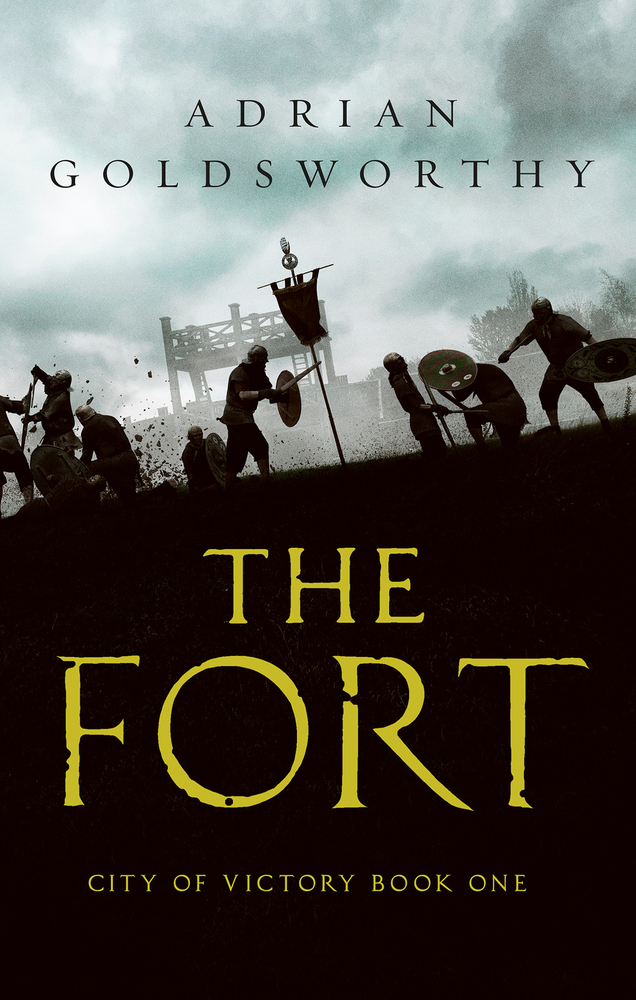
Book Review: THE FORT, continues Goldsworthy’s run of compelling Roman military fiction

The Fort, City of Victory Book One is the first in what I assume is a new series of Roman military fiction novels by Adrian Goldsworthy, author of The Vindolanda Saga. I had read and thoroughly enjoyed that trilogy last year, so I jumped at the chance to read Goldsworthy’s newest work, only released in June.

I further hoped that this series would continue the saga of Flavius Ferox, the Roman Centurion and Prince of the Silures of Britannia whose dual-lives are always in conflict as he serves Rome.

The Fort once again follows Ferox, who has just arrived to a new posting in Dacia, a Roman province long troubled by local tribes and in which the Emperor Trajan had only recently established a more permanent foothold.

This continuation of the saga of Flavius Ferox is well written and narrated. The plot beats will feel very familiar to readers of Vindolanda, but I did not find the story as compelling as Goldsworthy’s earlier series. Ferox arrives in his new post in command of a detachment of Brigantes, all sworn to their new Queen Claudia Anica (herself sworn to Rome and now Ferox’s wife), and expecting a battle against the Dacians. The battle comes, of course, and becomes a siege of the fort whose name I can neither spell nor find online. (It’s possible this was fabricated for Goldsworthy’s story, like the titular fortification of Vindolanda of the previous series.)

Aside from mainstays like Vindex, Claudia Anica, and Sulpichia Lepidina, there is a largely new cast of characters. I found the politicking of Roman bureaucrats a bit dull in this story and even difficult to follow. It seemed like several characters were introduced and then discarded before the end of the story, except for Hadrian, tribune sent to Dacia, nephew of Trajan, and (for anyone who knows a bit of Roman history) the future emperor. Without giving away the ending to The Fort, Hadrian’s relationship with Ferox is likely drive much of the personal and political conflict in upcoming stories, and that is something to look forward to.

Other than that, I found myself leaning pretty heavily on Ferox’s interactions with his three close friends to stay attached to this story. I think the best scenes were those between Ferox and Claudia Anica, who lightened the tone of the story while carrying great narrative weight as a character.

The scenes which followed Brassus, a leader among the Dacians, were interesting but only scratched the surface of that people. I don’t feel I really know anything about the Dacians except that they obsess over “ascending” and “purity”, supposedly sacred concepts that are tossed around with no real explanation.

Overall, I enjoyed the story but pretty much knew what to expect from Goldsworthy’s writing and narrative.

The narration in the audiobook version (on Audible) was good, although the pronunciations have all changed. The narrator used softer s sounds in place of the Roman c, which I’m not here to quibble about. It’s just an interesting choice after the strictly Latin pronunciations in the Vindolanda stories.

Steve D