“Mirror”
Take some small comfort
in light of parenting peers,
who share your chaos.
Steve D


Take some small comfort
in light of parenting peers,
who share your chaos.
Steve D
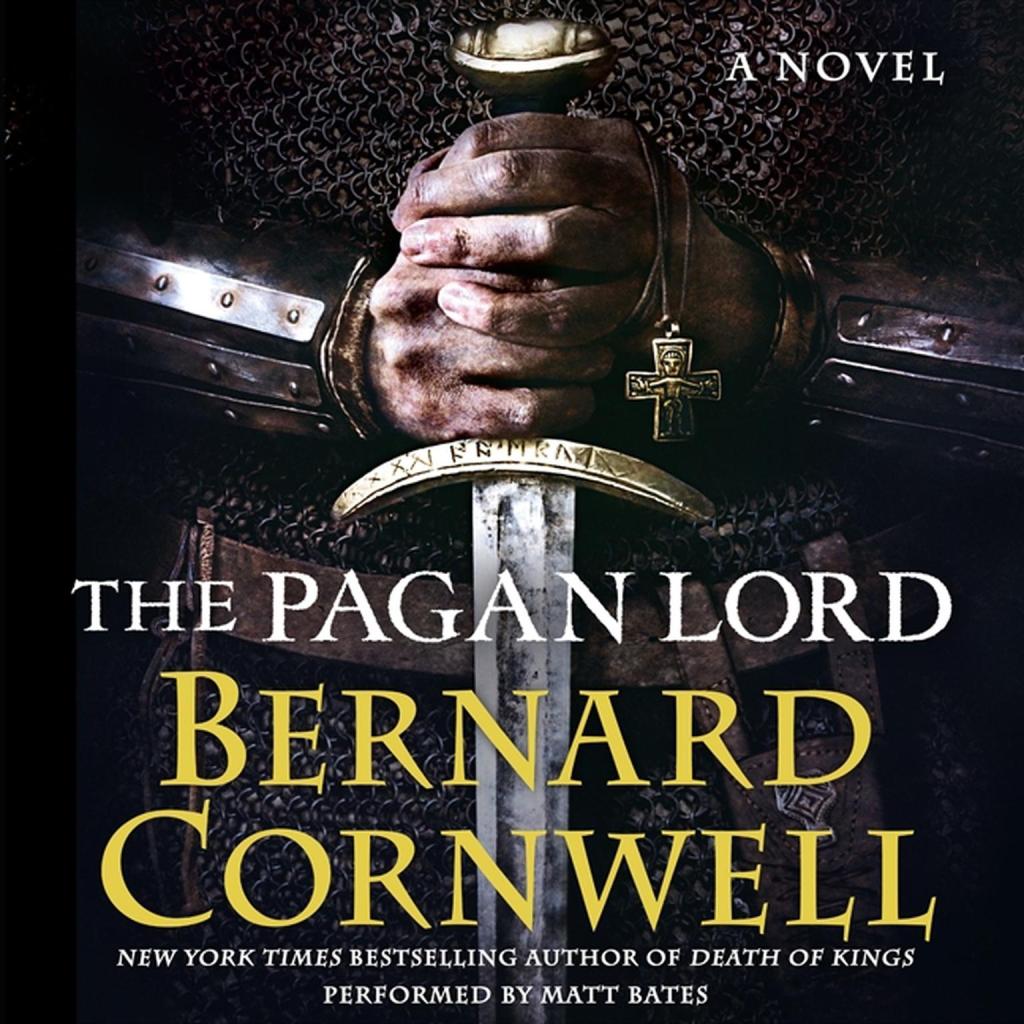
The Pagan Lord is the seventh book in The Last Kingdom series by Bernard Cornwell, and this has been my least favorite of the series so far.
This installment has all the trappings of a classic “middle book”: no major plot progression for Uhtred or other main characters, stagnant action that lacks excitement or real stakes, and no new characters to liven up the story.
After several years of relative peace, the Saxons and Danes feel restless and wary for the next war that most don’t truly believe is coming. Uhtred, as always, if on the lookout for the next war, and his instincts end up proving correct.
However, this book feels like a regression for Uhtred as a character, who makes a rash mistake that leads to him being outcast by the Saxon kingdoms. Uhtred is bitter in his old age and still clings to his dream of retaking Bebbanburg, which makes him more desperate than in previous stories.
The wisdom and growth as a leader we had seen from Uhtred in recent stories seems to have eroded, perhaps because he has been rudderless for several years. It is perhaps fitting that this story also feels largely rudderless, like its protagonist, but it does not make for a very enjoyable read.
With both of his sons grown into men, Uhtred’s successes and shortcomings as a father are also on display. He is ashamed of his eldest son for becoming a priest, but his actions are those of a petulant child who did not find his heir in a son whom he largely neglected as a child. His second son is a brave lad eager to prove himself as a warrior, but Uhtred does more to put him down than build him up. Uhtred’s daughter, Stiorra, another child to whom he hasn’t paid much attention, is also notably absent from his life.
This was a decent story, but I’m hoping Uhtred snaps out of his funk. The narrator was okay, but did not bring the same intensity to the story that previous narrators have. Here’s hoping book eight picks up the pace again and Uhtred finds his way.
Steve D

Unassuming word,
in a song somewhere, carries
historic greetings.
Steve D
I’ve recently caught up with and finished watching Andor, the latest show in the Star Wars universe on Disney+. Coming in a few weeks late to this show, I had heard good things about it, even if it wasn’t getting a ton of buzz. I came into this show with an open mind. The Mandalorian has been great. Boba Fett and Obi-Wan were decent, but flawed in their own ways. I felt like Andor had potential as a show that didn’t have to try to build around characters we already knew from the original trilogy, and I was excited by the show’s premise of focusing on the rebellion leading up to A New Hope.
With season one in the books, and a few days for me to think about it: Andor is the best that Star Wars has been to this point, from the storytelling, the writing, the world-building, and the meaning. I’ve watched it once through and am already watching it again with a friend who has yet to see it. I can barely contain my excitement to watch this show a second time, mere days after I’ve finished my first watch-through.
Spoilers ahead for Andor and for the movie it leads to, Rogue One.
Tony Gilroy, the writer/director behind the first three Bourne films and a ton of other action-thrillers, is the creative director and head writer for Andor. The 12-episode season is structured into four three-episode arcs, which presents an interesting ebb and flow of tension as the season progresses.
Let’s pause for one moment to appreciate that this show is a full 12 episodes, making it a legitimate season of television — not a 6-8-episode “limited series event” that feels like three C-average movies stuffed in a trench coat
I don’t want to go down the rabbit hole of summarizing the entire season. Just go watch it and be amazed. Instead, let’s talk about some key themes.
Cassian Andor, as the titular character played by Diego Luna, is ostensibly the protagonist, but when we meet him at the start of the season — five years before the events of Rogue One — he is a scavenger and thief who seems to have burned a lot of bridges and eroded the trust of those whom he cares about most. He argues with his adoptive mother, Maarva, and his ex-girlfriend and partner-in-smuggling, Bix, does not seem to trust him. How did this guy become an intelligence officer within the Rebel Alliance and a hero who sacrificed himself for the rebel cause?
The beauty of Andor, and its writing in particular, is that we see this arc develop for Cassian over the course of the season. He becomes a critical role-player in a heist on an imperial vault that he had only learned about days prior; he helps 5,000 fellow prisoners escape an inescapable prison; and he returns to his home planet, Ferrix, to help the people he had left behind. He’s not an expert rebel spy yet, but his character shows us a lot of grit and heart over 12 episodes.
Stellen Skarsgard is also stellar in his role as Luthen, a rare artifacts dealer in Coruscant-turned rebel ring-leader. It’s not quite clear how Luthen became involved in his own rebellious network against the Empire, but his connection to Saw Gerrera, played by Forrest Whitaker reprising his unique role from Rogue One, and knowledge of the various factions fighting the Empire indicate that Luthen has been in this war for a long time. That history is what has been missing from Star Wars, at least from the live-action movies and shows.
What Andor really demonstrates is the cost of a nascent rebellion. The Rebel Alliance doesn’t even exist yet. There are just a bunch of tiny factions fighting the Empire in their own ways, with no common goal yet identified. So why are they fighting? Luthen, along with Cassian, and another character, Kino Loy, played by the incomparable Andy Serkis, each take their turn delivering the thesis statement for this show, and for the rebellion at large — no one can fight fascism without sacrifice, without pulling together for the people next to you, and that sacrifice is worth it, even if the players themselves never get to see the dawn of a galaxy without the Empire in power.
I will not be able to do this show justice in a single post, and I may need to follow-up with a ranking of my favorite Star Wars stories.
All I know is that I’ve never heard dialogue in Star Wars like I have in Andor. I’ve never seen a Star Wars property as well-written and deliberate as this show. I’ve never felt like a story in this universe was this important, or this of-the-moment in our current culture.
A lot of Star Wars properties have reminded us of what we loved about the original trilogy, or tried to upend our expectations entirely. Andor manages to do both. It is an affirmation that these stories, in this universe, can say something meaningful about sacrifice, hope, suffering, love, light, and darkness. And it’s a challenge to every new series or film in this universe to be great, not just for a Star Wars story, but for a story of any genre. This show demonstrates the universality of Star Wars in a way I’ve never seen before.
I can’t stop thinking about it, and I can’t wait for season two.
Steve D
Snail’s pace caravan,
crawl through stop signs, parking lots,
finish the checklist.
Steve D

Death of Kings is the sixth book in the series of a thousand names… The Last Kingdom, The Saxon Stories, The Saxon Chronicles… This book serves as a nice change-up for the series at a point where the general arc of each story starts to feel predictable
That’s reductive and not really fair to a series I have greatly enjoyed, but it’s not hard to see how some readers might become bored of that type of formula.
Death of Kings plays with that formula a bit to lull both the reader and Uhtred, our protagonist, into a sense of complacency and end on a bit of a surprise. Yes, Uhtred must confront a Danish army, but he is now trying to do so in league with Edward, the newly raised king of Wessex, who is young and well-liked, but untested and uncertain.
The story proceeds and it feels as though our characters are approaching war… but the war doesn’t come. Uhtred is baffled by this, until he realizes a crucial piece of information, and the confrontational battle we’ve come to expect out of these books comes with a unexpected suddenness and a surprising turn of events.
This book is also an interesting advancement of Uhtred and several other characters. We meet an older Uhtred and walk with him through a changing of the guard, so to speak, among the leaders of both Saxon and Dane. There’s a lot of good character work with Uhtred, Aethelflaed, and Edward, and it’s clear that the relationship between these three will be pivotal going forward.
Steven Perring is a good narrator who brings a somewhat wiser and less intense voice to Uhtred. This feels appropriate given Uhtred’s Old Man Status (he’s 45 and describes himself as an old man with a graying beard), although I do miss Jonathan Keeble’s iconic narration from previous installments.
Steve D
See reviews of previous installments in this series here.
Both captivated,
vocalizations and drums,
embed in their minds.
Steve D
November felt very full, and it also flew by. The holidays have been more fun this year since our 4-year-old is starting to understand the holiday season a bit. He loves all the lights and decorations on houses in our neighborhood.
I’ve been distracting myself from stress at work with some new shows and books, so that’s been interesting, too.
Yes, and I finished them so early in November that I forgot I had done them. I created 9-section outlines for five main characters in The Warden of Everfeld: Legacy, most of whose story arcs intertwine with the others. It’s not perfect, but it gives me a general plot direction for each character.
This exercise helped me understand that I’m conflicted about one of my characters. I think their arc will provide some much needed perspective about a particular conflict, but I’m still not sure how their arc will end. So I’ll need to figure that out.
No, but I’ve gotten closer, and that’s good. With really only the final resolutions to cover, I’ve been proactively outlining as I go. I will usually take a few notes at the bottom of my document, but more recently I’ve gotten into the habit of writing several lines about the next few beats I want to make in the story.
That has helped focus my writing energy on the immediate plot, rather than side-quests. I do love a good story side-quest, though.
Yes, and I nearly read four. I’m still working through A Memory of Light, and I’ve started working through the Sherlock Holmes series, stories I’ve never actually read before.
Recently? Yes. For all of November? No. I’ve gone completely minimalist in my routine, because something is better than nothing until I figure this out. A few calisthenics type exercises for one muscle group – 10 or 15 minutes, tops. If I can find 20 minutes for a real yoga session, fantastic. That’s where I’m at right now.
Steve D
Safe space, quiet time.
Stow away toys and stories.
A place to treasure.
Steve D
Over-produce, consume,
coffer-stuffing ritual,
until nothing’s left.
Steve D
 Evening Satellite Publishing