“Playroom”
A trike and a ball.
Cement floors to roam, unchecked.
Safe zone for wild boys.
Steve D

A trike and a ball.
Cement floors to roam, unchecked.
Safe zone for wild boys.
Steve D
January was a long month. I don’t know that is was particularly fast or slow, but I definitely don’t remember the first half. We spent those couple weeks mostly traveling and recovering from the holidays. The last two weeks have been much quieter, in a good way.
February is promising more on the quieter front, which I’m okay with, too.
No, but I got my days mixed up! For some reason I thought Monday, January 31 was actually February 1, so I took the day off from writing. How embarrassing.
I wrote 8,616 words in January, so if I had sat down Monday evening, I could have easily beaten my goal. Ugh. Oh well. I did manage to finish the month on a surge after not writing much for the first week or so, so that’s good news for my February writing goal.

Check out my progress on my NaNoWriMo goal tracker. You can see I only had two writing sessions in the first half of the month, but I still managed to nearly catch up with several sessions of 500+ words. I felt like I hit a rhythm, too, so it became easier to write larger chunks at a time. Maintaining that rhythm is the key.
I read two books in January, but one of them was a fairly dense historical audiobook about the Ancient Celts, so I’m okay with it.
I had started reading Towers of Midnight, book 13 of The Wheel of Time, but fell off for some reason. I am definitely still reading the book, but for whatever reason, I found it easier to do audiobooks in January.
Kind of, but I don’t really feel like I have a routine yet. I have a plan in my head for more consistent exercise, but it includes cleaning out the garage and buying some boxing equipment. Really, I just need a free weekend. And to buy the equipment, of course.
I’m still into yoga, but I haven’t been doing it as much, or only in shorter sessions to stretch out. And simple resistance workouts are easy enough to fit into my days. Boxing was always a great workout for me, and I definitely need to find something aerobic again, so I’m on the lookout for a double-end bag.
Steve D
The trustiest tool
until needed urgently,
then ne’er to be found.
Steve D
Each of the last couple years I’ve started January with big ideas for what I wanted to accomplish for that year. My goals tend to be ambitious, but still within the realm of possibility. Still, I’ve learned that it’s difficult for me to project progress on any long-term project more than a few months out–or sometimes more than a few weeks out.

Looking at my annual goals posts from 2020 and 2021 may give the impression of a writer who overshoots and under-delivers, and that’s not inaccurate. I have had some big goals in mind over the last couple of years, notably the publishing of my still-in-progress novellas in The Herb Witch Tales series. I just also know that there have been other factors at play. The usual suspects come to mind: family, work, existential dread, a global pandemic.
As I mentioned earlier, it’s tough for me to project my progress on something more than a few months out. Projecting how much I can write in a year is a murky endeavor. Trying to throw the entire editing, revising, proofreading, and publishing process on top of that is basically insane.
At least, that’s what I’ve learned over the last couple years.
I’ve also learned that I am not the publish-something-every-year-or-two type of writer. My last meaningful publication was my 12-part short story, “The Grand Mythos of Úr’Dan“, which I ran as an experimental monthly serial throughout 2019. It’s probably more like every “few” years, depending on when I click Publish next. Basically, I’m closer to Patrick Rothfuss than Brandon Sanderson–in publishing cycles, not skill level!
That all is to say that I will not be posting an ambitious book marketing/publishing post this year. I definitely have goals, and I will detail them through my monthly Write Day posts. What has changed for me recently is that those monthly goals are enough for me at this moment in my life.
My long-term goals have necessarily and totally predictably shifted to bigger things: navigating the whole *waves arms emphatically* world right now; raising two boys, one of whom has learned the f-word from daycare (yea!); beginning the house-hunting process in the next year; family and friends and holidays, which all require a lot of extra planning and consideration and fuckin’ caution than they used to.
It’s a lot, and it means that thinking about where I might be in the publishing process in autumn 2022 is just not a concern for me today.
However, that all doesn’t mean I haven’t picked up on a few of my writing habits…
That’s really my only writing goal this year–not to write 120,000 words on the dot, but to aim for 10,000 words each month, to build consistently and steadily until, come December 31, 2022, I will have written a whole hell of a lot.
I’m currently on pace for about 9,000 words in January, so maybe in February or March I aim for 11,000. The point is, it doesn’t matter much right now.
I’m moving forward. I know what the ultimate goal is, but I also know I need to focus on the day-to-day first.
Steve D
Two wide-eyed gazes
meet each other, a stare-down.
One breaks, they both laugh.
Steve D
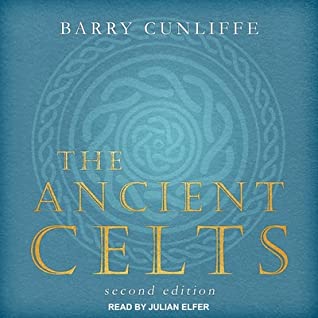
The Ancient Celts audiobook occupied my listening time during a couple of recent weekend road trips, and it turned out to be enjoyable and informative.
The Ancient Celts is an excellent historical framework through which to view and discuss the identity and meaning of the term Celtic and the ancient peoples to whom it can be applied. This is the type of history where author Barry Cunliffe strays into several other topics in order to build his primary case.
Ancient Greece, Rome, the Scythians, and Phoenicians all make appearances as Cunliffe traces a millennium of migrations and conflicts across Europe involving various Celtic groups. Cunliffe focuses on the material archaeological record for his study, but he does not hesitate to pull in writings of the Classical era, and previously established linguistic evidence to build his case.
Cunliffe’s ultimate case is that the Celts can be identified as a distinct cultural and linguistic group from the Middle Danube region from the end of the Bronze Age, who had a stark impact on the Classical civilizations of Europe and spread as far south as Egypt, as far East as modern Turkey, and as far west as the Atlantic coast of Europe, and whose cultural remnants can still be seen today.
Interestingly, Cunliffe bookends his study with discussions on the revival of Celtic identity over the last few centuries, and what this might mean in relation to the Ancient Celts he tries to understand. He posits the subjective question of who the Celts were and who they are today, and answers with a surprisingly simple, yet effective statement: anyone who considers themselves Celtic, whether that is through spoken language, material culture, or more ephemeral forms of identity.
Steve D
Weekend getaways,
something to get through each week…
or just now and then.
Steve D

The Gathering Storm may be the best novel of The Wheel of Time series to this point (book 12 of 14). This is the first book Brandon Sanderson co-authored after Robert Jordan’s passing, and it is simply incredible.
While Sanderson’s own writing style is markedly different from that of Jordan’s, the climactic narratives of two of the most important characters in the series are what stand out about this volume. The Gathering Storm soars as it brings the arcs of two of its primary characters to stunning crescendos.
Sanderson’s writing style is more befitting a modern fantasy audience, which is likely why he is one of the most popular fantasy authors of the last decade, if not longer. Compared to Jordan’s verbose prose that strains the limits of sentence structure and pays homage to the classical high fantasy authors that preceded him, Sanderson’s writing is concise and emotive. I don’t necessarily prefer Sanderson’s writing style to Jordan, but his punchier phrasing lends a sense of urgency to the story.
The Gathering Storm is ultimately the first part of a three-part conclusion to this epic series. Sanderson wrote it this way intentionally, taking Jordan’s outline for his finale, A Memory of Light, and splitting it into three volumes to capture all of the threads that Jordan wanted to weave into the final tapestry.
This is seen most starkly in the stories of Rand and Egwene. I will not go into detail, but I will say that The Gathering Storm really focuses on these two, separated geographically by hundreds of leagues or more, and narratively by nine or ten books, but linked as they each approach the Last Battle. It can easily be argued that they are the two most important characters in the series, and Sanderson and Jordan emphasize their place by weaving their first steps in the final act of the series together, independently, but in duality.
Several of the dragging plot lines of the middle part of this series are also tied off, often in ways that are surprising or shocking, but that serve the story and the characters. I’ve questioned all along how such a sprawling series could be ended cleanly, and with two books to go I can already see the blueprint. Sanderson utilizes all of the characters Jordan created, the minute storylines he laid out, to push the main groups of characters in the same direction: towards the Last Battle.
The reader feels the impending doom of this legendary confrontation laced throughout the book, throughout each character’s interactions with the others. Everyone, including the reader, knows what’s coming, and we collectively dread the moment and quiver in anticipation. The Gathering Storm is triumphant, even as it tells of only the opening salvos of the final conflicts to come.
I’ve already started reading Towers of Midnight.
Steve D
Whispers of cold air
seeping through tiny fissures,
stealing warmth away.
Steve D

Man, another month, another year. December was a solid month. Our holidays were festive with plenty of time spent with family. We also got to experience our first real Christmas through our oldest son, who is three and at the perfect age to get excited for Santa and presents and Christmas lights and all that.
It was a decent month on the goals front as well.
So how did I do?
Not quite. I tried to cram a bunch of writing into the final week of the month and came up short at just over 7,000 words. Still a decent output, overall. The first half of December had me stressing a bit about getting everything ready for our holiday celebrations, which knowingly kept me away from writing. I thought I could make up for it in the final week, but no such luck.
I still did all right, though.
New Earth, The Herb Witch Tales #2 is progressing nicely at around 15,000 words, and I’ve hit a stretch where I already have a lot of content from my first draft I can pull from. That should help me stay on track and catch up a bit this month. I just want to get off to a stronger start and not fall behind again.
I did start to find a writing schedule again, slotting in time right after putting my oldest to bed, and then knuckling down on the weekends for bigger word count gains.
I seriously forgot about this goal. December was a busy month! I definitely want to complete this read-through, so perhaps I’ll have to pay to print it out — all 70-some pages of it – so I can focus on it when I’m away from my computer.
I’m going to say yes…? But let me check my Goodreads first.
Success! I finished three books in December, including book 12 of The Wheel of Time series, The Gathering Storm. Look out for that review next week. Spoiler alert: I loved it.
I also achieved my Goodreads 2021 goal of reading 24 books. That may sound paltry based on a lot of the book blogs I read, but that’s a lot for me, damn it! I’m aiming for 26 in 2022.
I feel like I rushed through this post, but this might be a good indication of where my head is at currently. I have a lot I want to achieve in the next few months, primarily finishing a solid draft of New Earth, and I just want to get down to it.
Happy New Year!
Steve D
 Evening Satellite Publishing