WAR LORD rings true for THE LAST KINGDOM series and Uhtred’s legacy

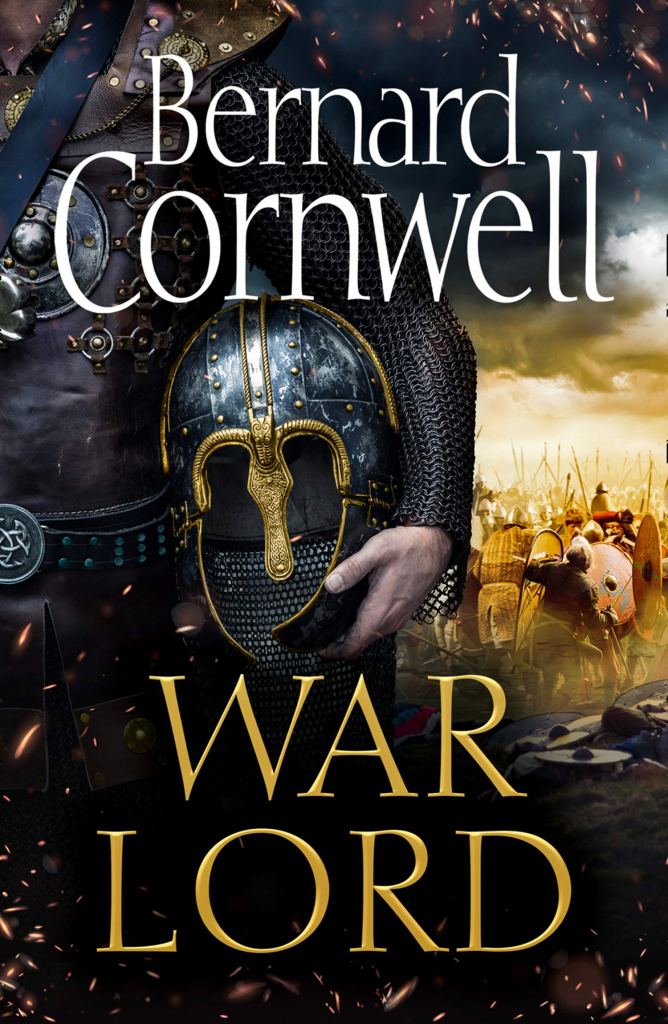
A couple weeks back (this post is delayed because life happened), I finished reading War Lord.

This final installment of The Last Kingdom series by Bernard Cornwell is a perfect ending for what has been a highly entertaining series.

In this story, Uhtred is old, and the only thing he wants is to die at Bebbanburg. He has lived a life of war, and politics, and striving desperately to reclaim the home he had lost as a child. Now he has, and he only wants peace. But war stirs to the north and south, and Uhtred must decide whether to fight for King Aethelstan or Constantine of Alba.

Uhtred’s age in this story make any significant fighting on his part a bit farfetched. That’s why the most ingenious part of this book is how Uhtred mostly becomes a battlefield spectator to be awed by a younger generation of warriors making their own reputations. He is the elder warlord whose experience and presence certainly help shape the battle, a general who commands the respect of those who follow him and tries to fight beside them as best as he can. But he no longer seeks out battle–the sword song–as he did in his younger days.

Uhtred’s relationship with King Aethelstan comes to fruition in this story as Aethelstan pays respect to the man who raised him, and Uhtred recognizes Aehtelstan for the noble and fearsome warrior king he has become.

I greatly appreciated Cornwell’s historical note to close the book, and I’ll be looking into his other historical fiction works.

Steve D

Book Review: SWORD OF KINGS demonstrates Uhtred’s ability to rise above humiliation

I’m very rapidly making my way through the final books in Bernard Cornwell’s The Last Kingdom series. I finished reading book #12 of 13 last week, Sword of Kings.

I greatly enjoyed this story after feeling like its predecessor, War of the Wolf, felt overly contrived.

Sword of Kings follows Uhtred as he makes mistake after mistake. For the first time really in the entire series, Uhtred’s penchant for impetuous decision-making and lack of communication with anybody significant in his life stacks up against him.

A similar trail of mistakes followed in Uhtred’s wake in War of the Wolf. The difference in Sword of Kings is that in the moment, every single one of Uhtred’s mistakes makes sense. He rationalizes to the reader as he proceeds, but events turn against him for various reasons, and by the time you reach the final confrontation, you’re left wondering a) how the hell did we get here, and b) how the hell is Uhtred getting out of this one alive?

Uhtred ultimately faces the most humiliating moment of his life. The shame, regret, and fear he demonstrates thereafter is poignant as a side of Uhtred we’ve never seen. After several books of seeming invincibility to anyone else’s ambitions and his own brashness, Uhtred is brought as low as possible, and he has to be convinced by those closest to him to either give in or fight for his own dignity.

My only nitpick is the quite flippant disposal of a few characters in Uhtred’s life, treated with little more than a footnote at the end of the story. Without giving away anything, I think these characters had lost their own purpose in Uhtred’s stories, and perhaps made room for new characters and narrative developments, but these are not realized until the next book.

This is perhaps one of the best novels of the series.

Book Review: WAR OF THE WOLF has points of interest, falls flat

I’m working my way through the final three books of Bernard Cornwell’s The Last Kingdom series. War of the Wolf posits an interesting question: what sorts of adventures / wars does Lord Uhtred get drawn into after he’s achieved his ultimate goal?

The answer, it seems, is getting tricked into fighting a war in someone else’s land.

While I always enjoy The Last Kingdom series to some extent, this installment felt too formulaic. The book opens with Uhtred outside of Bebbanburg, the nigh impenetrable fortress of which he is lord, for a dubious reason. Someone lured him there with a lie to try to ambush and kill him. Without giving away any spoilers, the rest of the narrative follows with similarly dubious decision-making by our usually cunning Uhtred.

There were some notable emotional stakes here that helped Uhtred’s individual development, and his fealty to King Sigtryggr of Eoforwic makes for some interesting politics. Aethelstan remains a compelling character, but his presence in this story merely feels like set-up for future stories.

This was not my favorite story in this series, but it was still entertaining.

Steve D

Book Review: THE FLAME BEARER stumbles to a satisfying ending

The Flame Bearer is the tenth book in Bernard Cornwell’s The Last Kingdom series, and it caps off a run of faster-paced stories in over the last few novels.

In this installment, Uhtred sees the budding rivalries between the West Saxons, the Danes, and the Scots in Northumbria as both a threat and an opportunity for his claim to Bebbanburg. acts on his ambitions from the previous story (Warriors of the Storm), and the result is a brutal battle.

Leading up to the climax, Uhtred blunders his way from one step to the next, always with some semblance of a plan in mind, but loose enough for the reader to think he’s on his way to disaster. As I was reading, this felt like an intentional plot point where Uhtred’s confidence leads to drastic measures for him to gather information. In retrospect, I think these sections were a little questionable.

Uhtred has shown in the past that his overconfidence or his desperation can cause him to act quickly, if not wisely. These chapters just felt a little out of character for the older, wiser Uhtred we’ve come to know. I’m okay with chalking it up to his desperation to retake Bebbanburg, though.

I also enjoyed seeing a few younger characters get more time and development on the page. Aethelstan has quickly grown into my favorite character, and his transition from a supposed bastard into a Prince of Wessex is fully realized here in the initiative he takes in the final act and the ultimate leadership he shows on the battlefield. Uhtred the younger also displays the cunning, bravery, and ferocity he’s learned from his father in surprising ways.

Overall, I really enjoyed this novel. It followed a familiar formula from previous books, but that is to be expected by this point in the series. I still feel like I’m learning something new about Uhtred and some of the other characters with each book, and that’s progress.

Spoiler warning: I was honestly surprised that this was not the final book of the series. However, I think Cornwell has laid the groundwork with the story of the Flame Bearer in previous novels well enough that this story does not feel like a sudden turn. I’m excited to see what further developments come in future books. Spoilers end.

Steve D

Book Review: WARRIORS OF THE STORM

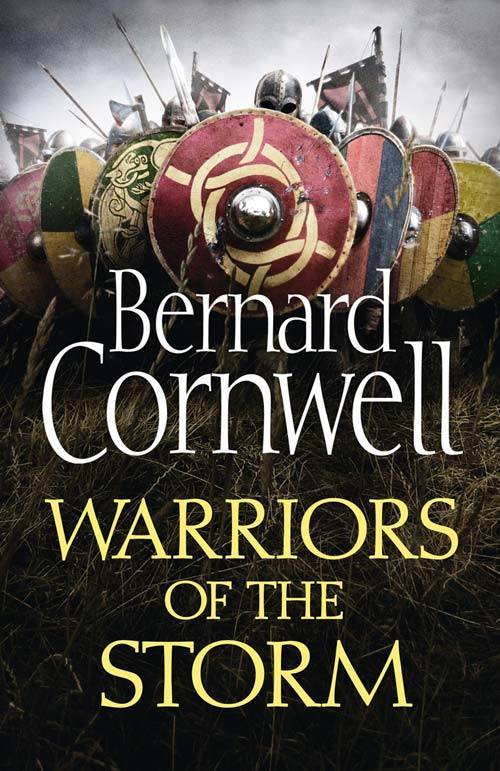
I’ve continued my listening to The Last Kingdom series by Bernard Cornwell with Warriors of the Storm. This 9th entrant in The Last Kingdom series really brought all of the elements I enjoy about this story together.

In this story, Uhtred has entered his second “prime” as a lord serving Aethelflaed, the Lady of Mercia.

Uhtred has reestablished his relationships with his children and the young Aethelstan, and he builds on these relationships in Warriors of the Storm in meaningful ways, demonstrating that he is no longer the absent father as when his children were younger. He is a father and a leader of young people, who finds young boy servants he knows can learn from him and join the ranks of his warriors as they become men.

Uhtred’s own ambitions have also been reseeded after seeming lost for a time. Through the middle few books of this series, Uhtred appears mostly aimless. He always pines to retake his ancestral home at Bebbanburg, but he has very little idea of how to accomplish that, so he is buffeted from conflict to conflict against a constant tide of new enemies. Warriors of the Storm feels like the first time in several books that Uhtred shows real ambition, where he takes proactive steps to make his claim to Bebbanburg.

This ambition gets Uhtred into some trouble with an army of Norsemen, hearkening back to his younger brasher days. But as a veteran warlord, and with some good allies, he makes his stand.

This story called back a lot of themes from previous stories, helping it feel quite familiar: a Northern threat; a mysterious sorceress; a hair-brained quest; and a last-ditch battle. It was a great story overall that reminded me of why I love this series.

The narration is serviceable, but the tone of this narrator feels underwhelming to me. I suppose nothing compares to the bellowing and growling of Jonathan Keeble, who narrated the first few stories of this series.

Steve D

Book Review: THE EMPTY THRONE gets the series back on track

Book #8 of The Last Kingdom series, The Empty Throne returns to form after what I felt was a bit of a mid-series lull in The Pagan Lord, the previous installment.

This book started with a point-of-view section of Uhtred, the younger, the son of the Uhtred who carries the series to this point. I really enjoyed this glimpse into the mind of the young man who is trying to follow in his father’s footsteps as a warrior and a future lord.

Uhtred, the elder is older now, wounded, but wiser. Some of the bitterness of the previous story has fallen away, and Uhtred is starting to truly recognize his own limitations. In one battle sequence, Uhtred recognizes to himself, and the reader, that in his younger years he would have been one of the fierce young warriors in the fray of the fighting, but he stays back to be a leadership presence for his, knowing that his wound would make him a liability in the thick of the fighting.

This story focused quite a lot on Uhtred’s relationship with his children, Uhtred and Stiorra, and Aethelstan, the (non-)bastard son of Edward. While Uhtred’s regard for Aethelstan as an adopted son has become clear over the last few stories, his mentorship of whom he believes is a future king is on full display here.

This shift in tone is greatly welcome for a character whose brash decision-making was becoming tiresome, for the other characters, and for the reader. Uhtred is still confident, daring, and courageous, but he seems to have truly come into lordship not just as a warrior, but as a leader, and that transformation continues to be fascinating.

I’m also quite intrigued by the introduction of Sigtryggr. His character on The Last Kingdom TV series was a frightening and admirable, and I look forward to seeing how his character, and the Norse threat overall, develop going forward.

I was never out on this series, but I took a break after the last book. Now, I’m fully back in.

Steve D

Book Review: THE PAGAN LORD grinds series progression to a halt

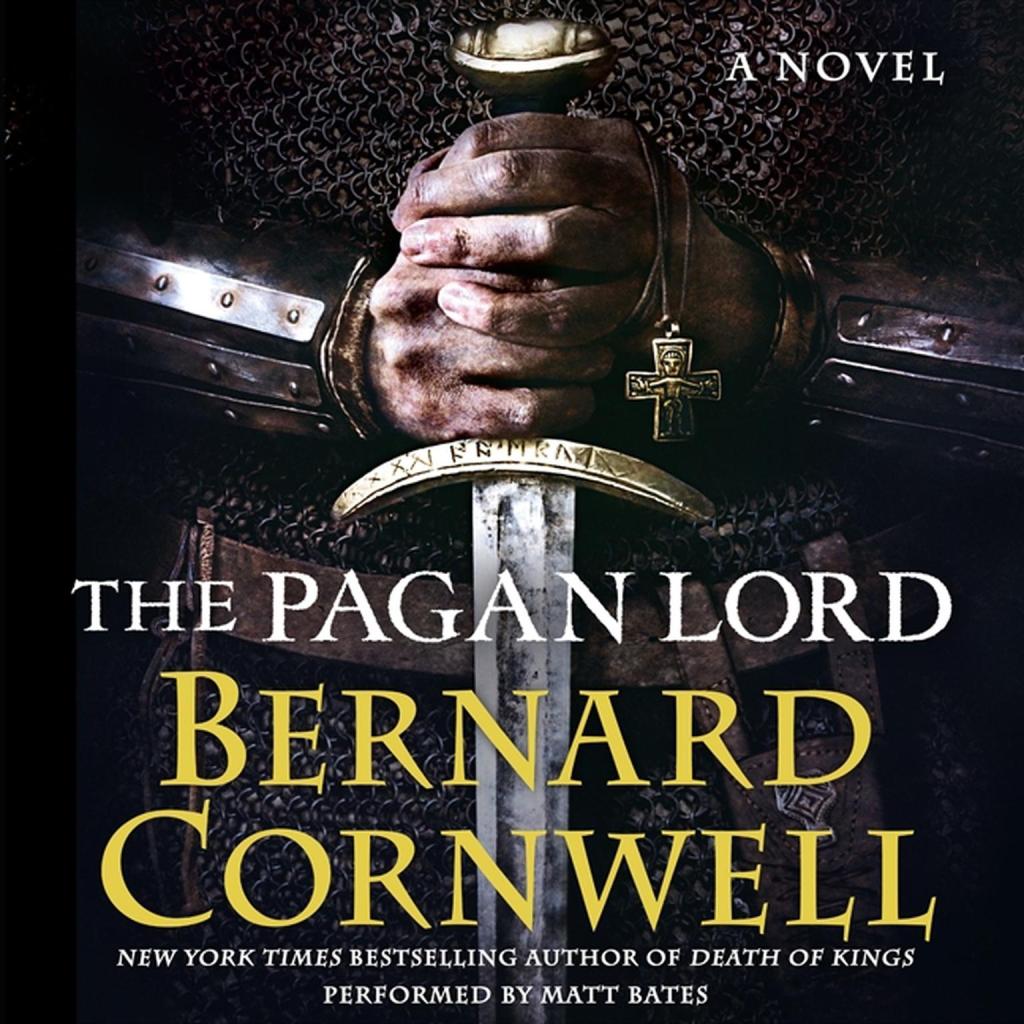
The Pagan Lord is the seventh book in The Last Kingdom series by Bernard Cornwell, and this has been my least favorite of the series so far.

This installment has all the trappings of a classic “middle book”: no major plot progression for Uhtred or other main characters, stagnant action that lacks excitement or real stakes, and no new characters to liven up the story.

After several years of relative peace, the Saxons and Danes feel restless and wary for the next war that most don’t truly believe is coming. Uhtred, as always, if on the lookout for the next war, and his instincts end up proving correct.

However, this book feels like a regression for Uhtred as a character, who makes a rash mistake that leads to him being outcast by the Saxon kingdoms. Uhtred is bitter in his old age and still clings to his dream of retaking Bebbanburg, which makes him more desperate than in previous stories.

The wisdom and growth as a leader we had seen from Uhtred in recent stories seems to have eroded, perhaps because he has been rudderless for several years. It is perhaps fitting that this story also feels largely rudderless, like its protagonist, but it does not make for a very enjoyable read.

With both of his sons grown into men, Uhtred’s successes and shortcomings as a father are also on display. He is ashamed of his eldest son for becoming a priest, but his actions are those of a petulant child who did not find his heir in a son whom he largely neglected as a child. His second son is a brave lad eager to prove himself as a warrior, but Uhtred does more to put him down than build him up. Uhtred’s daughter, Stiorra, another child to whom he hasn’t paid much attention, is also notably absent from his life.

This was a decent story, but I’m hoping Uhtred snaps out of his funk. The narrator was okay, but did not bring the same intensity to the story that previous narrators have. Here’s hoping book eight picks up the pace again and Uhtred finds his way.

Steve D

Book Review: DEATH OF KINGS ages the series gracefully

Death of Kings is the sixth book in the series of a thousand names… The Last Kingdom, The Saxon Stories, The Saxon Chronicles… This book serves as a nice change-up for the series at a point where the general arc of each story starts to feel predictable

  1. Uhtred clashes with his liege-lord, King Alfred of Wessex and yearns to be free of his oath.
  2. A Danish lord raises an army an threatens Wessex.
  3. Uhtred meets his army and kills the Dane in battle, bolstering his reputation.

That’s reductive and not really fair to a series I have greatly enjoyed, but it’s not hard to see how some readers might become bored of that type of formula.

Death of Kings plays with that formula a bit to lull both the reader and Uhtred, our protagonist, into a sense of complacency and end on a bit of a surprise. Yes, Uhtred must confront a Danish army, but he is now trying to do so in league with Edward, the newly raised king of Wessex, who is young and well-liked, but untested and uncertain.

The story proceeds and it feels as though our characters are approaching war… but the war doesn’t come. Uhtred is baffled by this, until he realizes a crucial piece of information, and the confrontational battle we’ve come to expect out of these books comes with a unexpected suddenness and a surprising turn of events.

This book is also an interesting advancement of Uhtred and several other characters. We meet an older Uhtred and walk with him through a changing of the guard, so to speak, among the leaders of both Saxon and Dane. There’s a lot of good character work with Uhtred, Aethelflaed, and Edward, and it’s clear that the relationship between these three will be pivotal going forward.

Steven Perring is a good narrator who brings a somewhat wiser and less intense voice to Uhtred. This feels appropriate given Uhtred’s Old Man Status (he’s 45 and describes himself as an old man with a graying beard), although I do miss Jonathan Keeble’s iconic narration from previous installments.

Steve D

See reviews of previous installments in this series here.

Double Book Review: SWORD SONG and THE BURNING LAND and the narrator effect

After not achieving much on the reading front last month, I’ve powered through two consecutive books of The Saxon Stories series by Bernard Cornwell, upon which the Netflix series The Last Kingdom is based. I’ve slowly picked through this series over the last year or so after watching the Netflix show and hearing about the books from my in-laws.

I really enjoyed this series so far, but I’ve learned that my enjoyment of these books, more so than others I’ve listened to on Audible, really hinges on the narrator.

Sword Song, book 4 of The Saxon Stories

As the fourth book in the series, Sword Song may be my favorite yet. Uhtred has come into his lordship with household guards, an estate, servants, and a family, and he displays stern but fair leadership. Brash and arrogant as ever, he still does not hesitate to argue with or insult the other lords or clergy of Alfred’s court.

Sword Song winds through a closer character story where Uhtred is pulled between his oath to Alfred and his family, and a larger sense of duty to Wessex. This culminates in a battle for London, where the Saxons try to wrest control of the city from the Danes.

This book is also narrated by Jonathan Keeble, who is the best narrator for this series to this point. His various British accents feel authentic, he has an excellent tonal range, and his natural litheness with dialog brings a wit and charm to Uhtred’s character that really overpowers his cocky attitude and makes him likeable as a protagonist.

With the return of some old friends and a little more narrative room to breathe, Sword Song is a great catch-up that turns into a harrowing adventure. I enjoyed this book so much that I jumped immediately into the next installment in the series.

The Burning Land, book 5 of The Saxon Stories

The Burning Land is a less glory-filled story of Uhtred’s saga. Five books in, it’s not surprising that Uhtred’s fortunes start to take a turn for the worse, and that even his decision-making seems clouded by his own pride. This is a story of hubris, where Uhtred’s own comes back to bite him in harsh and tragic ways.

Uhtred tries to free himself of his oath to King Alfred of Wessex, and in doing so, finds himself int he company of the Danes of Northumbria. He dreams of retaking his ancestral home of Bebbanburg, but that dream makes him desperate, rather than savvy.

There are few exhilarating battles in this story. Rather, this story is weighed down by a more somber tone and drama-filled scenes as much of Uhtred’s character flaws catch up with him, even in ways he cannot control.

Unfortunately, this tone is made drab by the narration. Whereas Jonathan Keeble brought a humor and wit to Uhtred’s character and dialog, the narrator for The Burning Land was completely humorless. His narration style sounded more like a self-serious Shakespeare reading, which really dragged the story down for me.

I will definitely continue reading this series. However, this experience is making me wonder whether I really love these stories, or I just really love Keeble’s narration. I think the stories are good, but Keeble’s voicing brings an energy, an authenticity, and a weight to these books that I’m not sure I would find so readily on the page.

Steve D

THE LAST KINGDOM Finale: Epic TV storytelling

The Last Kingdom TV series recently debuted its fifth and final season, which I caught on Netflix.

The show follows Uhtred of Bebbanburg, a Saxon lordling captured and raised by Danes who rises to become an important warrior and warlord during the reigns of Kings Alfred and Edward of Wessex. This show is the reason I’ve started reading the book series by Bernard Cornwell that it’s based on.

Having now finished season 5 and gotten confirmation that it is, indeed, the last of the series, I find myself reflecting on what, to me, has been a truly great show.

While much of the story of Uhtred himself is fictionalized, the show is realized with impeccable detail in the settings, the sets, and the costumes. Individual fight scenes are well choreographed and the battle scenes are mostly good if not great.

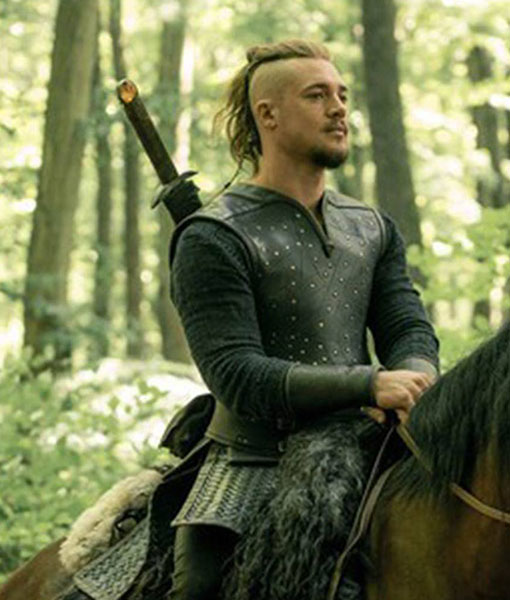
I’ve watched this show from the beginning, and had eagerly anticipated each of the last three seasons in particular as the show really hit its stride. Alexander Dreymon’s portrayal of Uhtred evolved from that of an arrogant, if skilled, young warrior into a admirable, honorable, and relentless lord who manages to fight both for what is right and for what he is owed.

The rest of the cast is stellar to the point that you might as well read through the cast list on IMDB, because I don’t think there is a poor actor in the entire series. This is the type of show where I recognized basically none of the actors when I first saw them, and now I can only think many of them will go on to do incredible things in television and film.

Alright, that’s enough reflecting. The main element of this show I wanted to call out is the storytelling.

Beware spoilers for season 5, including the season and series finale.

The Last Kingdom’s Epic Storytelling

The main arc of the story centers on Uhtred in his quest to reclaim his ancestral seat as the lord of Bebbanburg. Throughout the first four seasons of the show, Uhtred is desperate to retake his homeland, but is always called by duty, by oath, by extortion, or by his heart to fight different battles. These are so often at the behest of King Alfred of Wessex that by season four, it is almost laughable, except the relationship between Alfred and Uhtred has grown into the dearest of friendships, and you can’t really blame Uhtred for being loyal to one of his biggest patrons.

Season 5 presents a key opportunity for Uhtred to attack Bebbanburg – held by his estranged cousin – at the head of the armies of Wessex and Mercia, now joined under King Edward (Alfred’s son and Uhtred’s liege lord).

In the season and series finale, Uhtred fights to take Bebbanburg, Edward’s armies are nearly thrown over a cliff into the sea, and the enemy they fight tries to burn Bebbanburg to the ground.

This is the moment that any long-time watcher of this show has been waiting for, and recognizes what the show is doing. They literally and figuratively bring Uhtred to his knees, so close to achieving his lifelong destiny, within the walls of his home, and it burns to ashes in front of him.

And then the show takes another predictable turn that is just perfect. They show a montage of previous scenes from the show, focusing on Uhtred’s friends, allies, family, all lost in the turmoil of the previous five seasons (and some 20 years) of Uhtred’s life.

Going into this episode, I was not aware that season five was to be the final chapter of this show. But this montage was so perfectly executed and attuned to the emotional weight of the moment that I immediately knew that this was the end of the series.

After the montage, the sky breaks open into rain, drowning out the flames that would engulf Uhtred’s home, and in a last desperate act, Uhtred and King Edward’s forces emerge victorious. Uhtred claims Bebbanburg and becomes Lord of Northumbria.

This moment would have been meaningless – or perhaps cheap – if the show had not had the patience to lead the viewer through five seasons of loss, failure, and shortcomings with Uhtred. Or if they had tried to drag the show out to extra seasons for no reason. They chose their moment to end the story, and they stuck the landing, something that more than a few shows in recent memory have failed to accomplish.

Finale Thoughts

I did not go into season 5 of this show expecting to write a review on it. I think I’ve only mentioned it in passing before on this site. That finale hit home to me, to the point that I’d like to rewatch the entire show at some point.

I’m also even more stoked to continue my read of the book series.

Please watch this show, if for nothing else, to give me someone to talk about it with!

Steve D