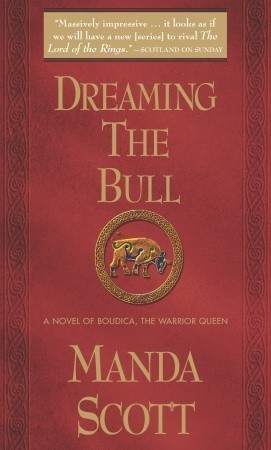
Book Review: BOUDICA: DREAMING THE BULL

As anticipated from my review of Boudica: Dreaming the Eagle by Manda Scott, I quickly picked up and pored through book two of this series.

I actually finished reading (listening to) Boudica: Dreaming the Bull at the end of May, but I’m just now getting around to posting my review.

Everything I loved about the first book – the writer’s elegant prose, the depth of historical world-building, the poignant interplay of the characters’ dialogue and gestures – carried through in book two.

While I missed spending as much time with Breaca as in the first novel, I was surprised and riveted by the stories of some of the other characters. The continued fall into darkness of Julius Velarius was not what I had looked forward to about this novel, but his chapters were compelling.

Scott did an excellent job showing how one can empathize with Julius, even when one disagrees with and even despises the choices he makes. His tragedy becomes the centerpiece for this book that still carries the reader through, without bogging them down in despair or anger. Those emotions are certainly felt, but they don’t hold back enjoyment of the wider story. Dubornos was another surprisingly interesting character in this novel.

This book was enjoyable overall. The consistency in writing style and attention to detail is a testament to Scott’s skill as a writer. As of this writing, I’m already 75% done with book three.

Steve D

Book Review: BOUDICA: DREAMING THE EAGLE and intricate narratives

Among my greatest literary addictions is historical fiction, especially that of pre-Norman Britain. Thus, it was only a matter of time before I came across, immediately bought, and read Boudica: Dreaming the Eagle, by Manda Scott.

This is the epic telling of Boudica, the Warrior Queen of the Celts who led the Celtic tribes of Britain against Rome’s second invasion in the first century BCE.

One of my favorite acknowledgments of this book is when Scott describes that very little – almost nothing, in fact – is actually known about who Boudica was, so most of the story of her life, her family, and the people whose lives she influenced are fictional.

Even still, this is a period in history that is so well-researched that the world comes to life from the very first chapter. Scott fully acknowledges the immensity of historical and archaeological resources and experts she leans on to construct this work. The payoff is a style of world-building and character-driven exposition that feels organic and does not overwhelm the reader yet completely envelops them.

The story generally follows the young Boudica – before she earns that title – and various members of her tribe as they prepare for the Roman legions to return to their shores. The characters’ connection to each other, through inter-tribal politics and vows of personal honor, drive the emotional weight of the story.

This book has brutal depictions of war, but Scott deftly works around the gory details to paint the tapestry of a battle from the perceptions of those involved. The reader can see the battle play out in their mind’s eye but does not need to be told about every stroke of a blade or every spurt of blood. The horrors of war are apparent without being gratuitous.

Scott’s narrative is incredibly detailed with not a single word or metaphor wasted. Her prose is elegant and precise, where dialogue between characters does not have to reveal every single thought in order to convey deep meaning.

This is flat out one of the best epic novels I’ve read. I’m already reading book two, Boudica: Dreaming the Bull.

Steve D

Book Review: BLACKFISH CITY and the scarily real imaginings of our post-apocalyptic future

I’m way behind on posting this. Last month, I finished listening to Blackfish City by Sam J. Miller in audiobook.

This book had jumped out to me both for its stunning cover — cyberpunk feel with Indigenous artistic themes — and its intriguing synopsis.

Miller constructs a fascinating future world where refugees and oligarchs have fled or abandoned their fallen cities due to climate disasters. Miller deftly alludes to a multitude of climate disasters causing upheaval around the world, but really only goes into detail in one instance, as it affected a few of the characters.

Many of these refugees fled their homes for a newly built city in the Arctic Circle — an eight-armed floating city called Qaanaaq. The design of Qaanaaq is intricate and authentic. Miller describes geothermal pipes used to warm the entire city, and a highly computerized system that mostly runs the underlying infrastructure needs of the entire city.

Qaanaaq feels like a place that could very easily exist in a post-climate disaster world, both exploitative of the people who’ve lost everything and serving those who have profited from the chaos of a crumbling global civilization. It is technologically advanced and still not free of poverty, overcrowding, resource scarcity, and bureaucratic ignorance of real people’s issues that plagues rapidly growing cities.

I found it difficult to connect with the characters at first. I couldn’t quite place the age of most of the characters until much later int he story, so I assumed they were all Adults — this was not the case. Miller’s brilliance is in the way he slowly weaves interconnectedness between the characters, but this also requires patience from the reader to allow those connections and the wider story to unfold.

Fortunately, the world-building is what really kept me invested. Once some of the plot began to reveal itself, the pacing picked up, and I began to understand the wider narrative better.

This was a highly enjoyable story, and Miller is a fantastic writer. I genuinely hope to return to this world in future stories.

Steve D

Book Review: A KNIGHT OF THE SEVEN KINGDOMS

I finally picked A Knight of the Seven Kingdoms by George R.R. Martin off my bookshelf to read, and I ended up powering through most of it during our relaxing beach weekend.

I had always intended to read this story, a novel set within Martin’s world of Westeros that takes place a century before the events of A Song of Ice and Fire.

While I had little doubt that I would enjoy this story, as I’ve enjoyed Martin’s other Westerosi writings, A Knight of the Seven Kingdoms is an excellent example of the depth of Martin’s world-building in this series.

While the familiarity of the world brought me to this novel, the obvious joy with which Martin writes about Ser Duncan the Tall and Egg kept me reading. Dunk is an interesting protagonist in that he has traveled all over Westeros as both a squire to a former knight and a knight himself, and yet he doesn’t have much familiarity with the great houses of Westeros, except what he has seen himself or absorbed from the knight who had trained and knighted him. He provides a good counterpoint to the protagonists of A Song of Ice and Fire, many of whom are in positions of power, or come from families power.

Dunk has no power, except his sword, armor, and horses, and the optimistic chance that strangers on the road will recognize his knighthood. Egg, Dunk’s unlikely squire of noble birth, is a good foil to Dunk’s taciturn, blunt, but ultimately honorable nature. Egg comes from privilege but grows to respect Dunk and the experiences they have together as a hedge knight and squire with no permanent home. Dunk must choose to remain honorable, even in the face of corruption and cruelty from his fellow knights, or lords in whom he could find stability, comfort, and gold.

A Knight of the Seven Kingdoms is a good story in its own right, but I definitely feel like it enriches and is enriched by the wider world of Westeros. I also read this novel alongside The World of Ice and Fire, a literal encyclopedic history of the Seven Kingdoms co-authored by Maritn and beautifully illustrated by several artists. I was able to read the wider historical context of the period in which Dunk traveled Westeros to better understand some of the more minute plot details.

Like all great world-builders, Martin relishes the opportunity to write about people just trying to survive in this world, even if they are heroes whose legends have not yet grown. A Knight of the Seven Kingdoms is a testament to that joy. I’ll be looking forward to any future installments in this series.

Steve D

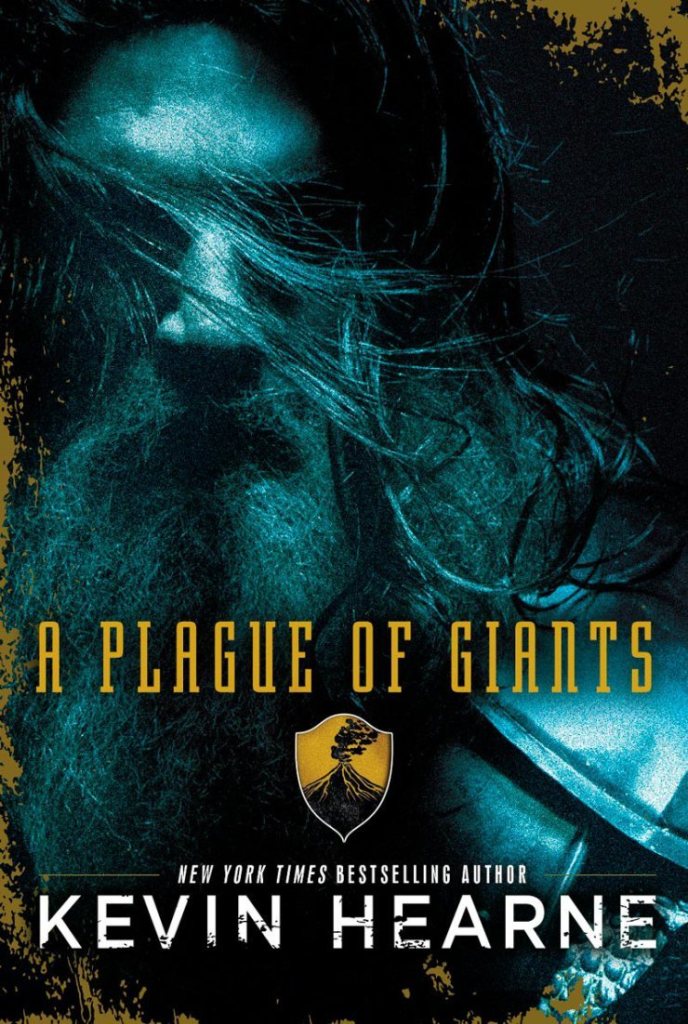
Book Review: A PLAGUE OF GIANTS is a superbly intricate story

A Plague of Giants by Kevin Hearne, the first in his Seven Kennings series, has been on my radar for far too long. I finally got this book on audiobook, and man, I can’t believe I neglected to read this sooner.

A Plague of Giants is a highly enjoyable read. This is perhaps one of the most well-rounded fantasy stories I’ve read.

The world-building is superbly intricate and layered into the plot in a way that’s accessible to the reader. This is introduced to the read through a framework structure, where a bard is recounting stories of a recent war to a crowd of refugees who had fled from it. The bard, through his “kenning” – the system of magic in this universe – can take the appearance and voice of whoever’s story he is telling. Thus, we’re treated to multiple voices through the voiceover narration of Luke Daniels and Xe Sand in turn.

The plot is well paced, and the multiple point-of-view narratives keep the voicing dynamic. This is the type of story where the first third feels to come from multiple unrelated angles, but each of the POV narrators end up building towards a larger theme.

The framework style of storytelling is effective and introduces its own plot mechanics that add depth to the main narrative. The bard and a local scholar spend time together between recountings of the tale, so that the scholar can record the bard’s oral history in writing.

And the characters feel authentic. This book carries weighty themes of grief and loss without burdening the reader with them, instead allowing each character to experience these feelings in unique ways. The characters wrestle with their own perspectives or histories even as they’re experiencing new waves of loss with the onset of this war, forcing the characters to react and reassess their own values in real time.

A Plague of Giants is one of the best fantasy novels I’ve read in recent memory. I cannot wait to start book 2 in this series.

Steve D

Book Review: Spectacular World-Building in CHILDREN OF TIME

I got Children of Time by Adrian Tchaikovsky as a gift from my brother-in-law, who thought I might enjoy it. I had heard of Tchaikovsky before in passing, but was otherwise unfamiliar with his work.

The description of this book certainly piqued my interest, and I didn’t want it to languish on my to-be-read shelf for ages, so I dug in.

Children of Time is a fantastic read that encapsulates both the awe-inspiring technological dreams of epic science fiction and the remarkably grounded perspectives and emotional weight of human stories.

This story is described as “evolutionary world-building”, and it takes place over literal millennia as a ship of human survivors of a destroyed Earth search for and try to claim a terraformed Earth-like world as their own. Only a select few humans aboard this ship are awakened at various intervals to deal with the potentially-catastrophic problems that can befall any deep-space mission. Simultaneously, a new race of beings are evolving on the terraformed world at a super-charged pace, thanks to a bioengineered nanovirus to accelerate their advancement in preparation for their human-creators’ arrival.

This brilliantly “symbiotic” narrative alternates over nearly incomprehensible lurches in time. One human aboard the ark ship is awakened from cryo-sleep several times over the course of millennia, facing new challenges or threats each time in what to him feels like only weeks. On the terraformed world, the narrative follows successive generations of characters as they advance and reach for the stars in their own right.

The first portion of the story is a little jarring, perhaps intentionally so, and the reader is flung from one moment in time to the next, separated by centuries or more. Once the reader figures out this rhythm, though, it is quite enjoyable to see how the dueling plots advance over such inhuman time spans.

Much of the world-building focuses on how such a world could be terraformed, how a massive ark ship carrying the remnants of human civilization survives for millennia, and how a nanovirus can advance a civilization. This is all endlessly fascinating, toeing the line between believability and awe.

The story, however, is an entirely human one, focused on the very existence of one civilization or another. This book delves into what it means to be both the first and the last of a great civilization, to survive and continue living as the world appears to be collapsing around you, and to harness or reject the breakneck pace of social and technological advancement.

I loved this book, and there appear to be two more in this series already. I will absolutely be picking up the next installment, Children of Ruin, in the near future.

Steve D

On FOUR LOST CITIES and Building this Fantasy Town

This post is not a real book review, at least, not entirely. I just finished listening to Four Lost Cities: A Secret History of the Urban Age by Annalee Newitz, and it got me thinking and rethinking the way I design and evolve cities in my fantasy universe.

A running theme in my world-building — and one of my pervading interests in history and anthropology — touches on the rise and fall of cities and civilizations. For years, I had the reductionist viewpoint that great cities rose and fell in linear patterns, and with clear markers for their demise.

When I learned that the far more common pattern is for cities (or civilizations) decay for years or decades or centuries before fading from prominence, I wanted to explore that in my storytelling.

Four Lost Cities provides a really interesting investigation into the formation and decline of cities across human history. Newitz uses archeological evidence to make the case that the evolution and dissolution of cities is not a linear path, that the very definition of a “city” and its growth are defined more by socio-cultural forces of its time than by rigid and often arbitrary models based solely on commerce.

What would this look like in a setting of my making? Would I be able to capture the uncertain rise and long decay of a city or a people in character-centric stories?

My current work-in-progress, the duology I’ve been referring to as The Herb Witch Tales, spawned from this theme. Before I knew who my characters were, I wanted to explore a city’s evolution from small port town, to sprawling tent camp of migrant settlers, to developed population center.

The story developed from the idea of the city, and I found characters to fit that initial blueprint. The duology is now much more grounded than that much broader idea, but I’ve tried to pay particular attention to the ways in which the characters perceive and interact with place — the places they’ve lost, left, or found.

Although The Herb Witch Tales is currently a duology, I can easily imagine future stories where the growth of this family is inextricably tied with the growth of the place they come to call home.

So, I must recommend Four Lost Cities, because it is informative, thought-provoking, and inspiring in a world-building kind of way.

Steve D

The Quintessential World-Building Tool

Creativity Sessions writing process. Evening Satellite Publishing.

If you know anything about me, you probably know that I like to use spreadsheets to organize myself, whether it’s story outlines, word count trackers (until recently), or timelines, the spreadsheet is my bread-and-butter organization tool.

So you’d better damn believe I have a spreadsheet laying out the entire millennia-spanning timeline of my fantasy universe, Úr’Dan.

Which brings me to the quintessential world-building tool, in my view: the Historical Timeline.

The Historical Timeline

When I talk about a historical timeline as a world-building tool, I’m not really referring to the timeline as a tool for the reader. It is a tool for you, the writer, to aid in your efforts to give depth to your fantasy universe.

Even if you only have a few key events laid out that underpin your fantasy universe — a recent war, a plague that is sweeping the countryside, or the death of a prominent figure — it is essential that you understand not just how and why these events happened, but when.

And a simple timeline, or an outline of a timeline, can help you organize key events to tell your story accurately. After all, referencing historical events in the course of your story through dialogue or, where appropriate, exposition adds greater depth to your fantasy universe, but only if you can consistently describe when and how something happened.

My Historical Timeline

As I said at the top, I use a spreadsheet to organize a millennia-spanning historical timeline for my entire fantasy universe, called Úr’Dan. This spreadsheet is organized into four columns:

  • Year, or whatever reckoning of time is used in your fantasy universe. There are actually four distinct calendars used in Úr’Dan, so my timeline references each.
  • Name of the event. How is this event known in your story? Consider whether different groups refer to the same event by different names.
  • Peoples involved, referring to which larger ethno-cultural groups in my story were involved in or impacted by a particular event.
  • Description, providing just a few sentences summarizing what the event was, and maybe what it’s immediate impact was.

Additionally, I use color-coding to provide a quick visual differentiator between general types of events:

  • Events referred to only in myth or legend
  • Wars, battles, or other conflicts
  • Founding or construction of cities, fortifications, or other significant places
  • Birth/Death of prominent figures
  • Treaties or alliances
  • Other significant events, trends, discoveries. This is a catch-all category that can include things like mass migrations of people, the invention or prevalent use of a particular type of technology, or notable weather events.

Finally, I also include rows for each of my stories, just so it’s obvious where they each fit into my timeline.

All told, I have 91 rows in my timeline so far, spanning about 1,000 years of “history”, plus significant events of myth, such as those covered in my mythology of Úr’Dan. Many of these events are focused on a few ethno-cultural groups or time periods that I’ve already put a lot of thought into, so one of my ongoing goals is to add more events and flesh out the histories of all of the peoples of my fantasy universe.

The more historical events you can talk about from your timeline, the more space you have for potential stories.

Steve D

Story Lessons from THE LORD OF THE RINGS, part 3

Creativity Sessions writing process. Evening Satellite Publishing.

After some lackluster reading recently, I am embarking on an epic quest: to reread The Lord of the Rings! I will not be reviewing these stories in a critical sense, because how could I? Instead, I will share some storytelling insights I pick up as I go along.

This will be primarily focused on the books, but I will also reference the films by Peter Jackson to compare the stories as they are told between these two media. See part 1 and part 2.

It’s been nearly two months since my last entry in this mini-series, so I thought I’d provide some additional thoughts. I am almost halfway through The Return of the King and only just now realizing that I read through all of The Two Towers without a single post like this. Oh well. I’ll try to highlight some story lessons from the last book-and-a-half and then perhaps wrap up this mini-series once I’ve completed book three.

Like last time, I’m just going to jump in. I’ll try to keep these in chronological order relative to the sections/chapters that inspired them.

Glimpses of the Wider World

Tolkien is obviously known for his world-building prowess, but I think there are several examples of this that are not talked about often, and which particularly intrigued me.

The first is several references between books 2 and 3 to the “war in the north”, a large assault that Sauron sent from the Black Gate to the kingdoms of Dale and Erebor, where the descendants of Dane and Bard had to hold their own against virtual annihilation. I haven’t yet read the appendices at the end of The Return of the King, but I know this is referenced somewhere in there.

Still, it’s astonishing to me that a massive part of the War of the Ring is mentioned only in passing. I want to read about the war in the north! Can you imagine how long this series would have been if Tolkien had actually included the different battlefronts? That would have been at least two additional books.

Anyway, I think this point is lost on movie viewers. Peter Jackson’s films, by necessity, focus on the immediate battles shown in the books, but to casual viewers, it makes it seem like the war was fought and won in exactly two battles — four if you count the skirmishes between Faramir’s forces and the Haradrim, and the last defense of Osgiliath.

The second time I really felt the wider world was in the third book when the Rohirrim are marching to Gondor. They apss through the woods, where Wild Men guide them in secret past additional forces Sauron had sent into Rohan, thus allowing them to reach Minas Tirith in the midst of its siege.

Story Lessons

  1. Demonstrate scale of events, not just place. In a previous post I mentioned the sense of scale of the world itself, such as a 10-day journey to pass over/under one mountain. The first example I mentioned above, the “war in the north”, lends scale of a different sort to the story. This is a scale of events. This massive war, the one that would define the end of the Third Age of Middle Earth and set the stage for the Fourth, had to have more than just a few battles or a few primary actors. Even though we don’t get much detail about the defense of Dale and Erebor against Sauron, the fact that we hear about it tells us that this is not just a war for Gondor. It truly is a war for all of Middle Earth, and the Free Peoples are too scattered to fight side-by-side. This is a war of immense proportions, and Tolkien allows the reader to imagine what that looked like.
  2. Diversity within smaller geographic regions. I think this is a point that a lot of fantasy misses. Most peoples in a given region or “nation” are shown as monolithic cultures with little internal diversity, unless the story is specifically detailing internal political strife between different groups. “The Ride of the Rohirrim” shows us that although Rohan is a powerful kingdom, they are not the only cultural group within their own borders. The Wild Men have a history of conflict with both Rohan and Gondor, but they find common cause against the orcs that are rampaging across Rohan.

Characters Who Feel Too Small for the Moment

In the chapters leading up to the Battle of the Pelennor Fields, both Merry and Pippin express to various characters that this coming war feels too big for them to have any real part. This is exemplified in Pippin’s offer of service to Denethor, where he admits that his service may be of little use to the Steward of Gondor, and when Merry pleads with Theoden to allow him to ride with the Rohirrim to battle and is subsequently denied.

Not only did these characters feel the dread leading up to the battle, but they also could not believe their experiences after the fact. Pippin sits with Merry in “The Houses of Healing”, where Merry expresses his own insignificance in this war:

Still there are things deeper and higher; and not a gaffer could tend his garden in peace but for them, whether he knows about them or not.”

Tolkien, J.R.R. The Return of the King, Ballantine Books, 1965, pp. 179.

Story Lessons

  1. Allow your characters to feel emotional distress in the moment. Even in the lead-up to the war and the immediate aftermath, when there is still much for the characters to accomplish, these moments of both vulnerability and uncertainty of their own place in the story makes them feel relatable. How could we expect a hobbit from the cozy, protected country of the Shire to fully grasp a conflict of this scale, even as they are witnessing an event as momentous as the return of the King to Gondor. I think this is what endears the hobbits to readers so much. They are the most human of all the characters because of these vulnerabilities.
  2. Allow your characters to feel the weight of their actions after the fact. I always enjoy retrospective moments from characters in stories, a chance for both the character and the reader to process what has happened. These scenes often reveal much more about the characters than the more action-packed scenes that usually precede them. I think they also help maintain the emotional tone of the story. After several chapters of speeches and foreboding and war songs, a simple conversation between two friends helps the reader marvel at the previous 100+ pages of politicking and battle.

I intended for this post to be shorter than previous installments and it somehow ended up longer. I’m cutting myself off.

Steve D

Story Lessons from THE LORD OF THE RINGS, part 2

Creativity Sessions writing process. Evening Satellite Publishing.

After some lackluster reading recently, I am embarking on an epic quest: to reread The Lord of the Rings! I will not be reviewing these stories in a critical sense, because how could I? Instead, I will share some storytelling insights I pick up as I go along.

This will be primarily focused on the books, but I will also reference the films by Peter Jackson to compare the stories as they are told between these two media. See part 1 here.

I finished reading The Fellowship of the Ring over the weekend, and I was eager to jump right into The Two Towers. Instead, I decided to take a couple days and absorb The Fellowship in its own right. So this post is just a collection of thoughts through the rest of that novel.

Description

This one may seem kind of obvious to anyone who has read or heard anything about Tolkien’s world. If nothing else, he is known for world-building. His intricate description of the land through which his characters travel provides a vivid image in the reader’s mind and sets the scene for every interaction with the characters.

Has this imagery been informed in my mind by the stunning New Zealand landscapes used in the filming of The Lord of the Rings? Definitely. But Tolkien’s descriptions also serve the story.

In Book II, Chapters 3 and 6 — “The Ring Goes South” and “Lothlorien”, respectively — the Company first try to pass over the mountain of Caradhras, and then manage to pass under it. As they approach the mountain from the west, hope to traverse its high pass, the peak glares at them red-stained in the morning sunlight, a warning of the peril they are about to face. The mountain defeats them with a mighty snowstorm and rockslide that only seems to occur on the narrowest spot of the pass as they try to cross.

Three chapters later the Company emerges from Moria on the east side of the mountain. As they continue southward towards Lothlorien, they give one last look to the mountain that caused them so much suffering, both at its height and in its very depths. Now, Caradhras glows with golden sunlight, as if mocking them with its serenity.

I don’t need an illustration to picture the foreboding peak of Caradhras in my mind, and the colors that evoke so much emotion to the characters in a single glance.

Story Lessons

  1. Description of the environment can evoke scale. Although only a matter of days passes between the two images of Caradhras, that book-end demonstrates how much the Company has been through in that time. It also shows how far the Company has to travel just to get to the other side of the mountain, thus scaling out the world and making the journey ahead seem all the more arduous.
  2. Description of the environment can reflect the characters’ emotions. As in the example above, the mirrored descriptions of Caradhras also mirror how the Company feels about it: first as a symbol of foreboding, and then as a symbol of mockery, even shame for what they lost by passing under the mountain, rather than over it.

Presence

I think it can be too easy sometimes to get caught up in the action or the drama of a story and keep the plot surging forward. This up-tempo pace can be enthralling for a reader, but sometimes it’s just as important to let the characters, and the reader, breathe.

One of the most effecting sections of The Fellowship for me came during such a moment, when Aragorn speaks to Frodo about Lothlorien:

‘Here is the heart of Elvendom on earth,’ he said, ‘and here my heart dwells ever, unless there be a light beyond the dark roads that we still must tread, you and I. Come with me!’ And taking Frodo’s hand in his, he left the hill of Cerin Amroth and came there never again as living man.

Tolkien, J.R.R. The Fellowship of the Ring, Ballantine Books, 1965, pp. 456.

This quote does two things. First, it gives both Aragorn and Frodo a sense of presence within the story. After several chapters of danger and suspense, they come at last to place where they can rest. It’s thus natural that the characters would want to pause and marvel at their ethereal surroundings. Secondly, the end of this section implies a dark road for Aragorn and forces the reader to ask: why does he never return? Where does his journey take him that he can never see Cerin Amroth again?

Story Lesson

  1. Use a characters’ present moments to punctuate their arc. To put the above another way, I think it’s often in quiet moments that a character feels their sense of place within a story, within their world. It also allows the reader to step back, briefly, from the immediate plot and see their characters as more than just actors in a particular scene; here especially, Aragorn feels like a living soul whose present and future are wrapped into this singular moment of wonder and awe. He has a life to lead, and we are catching only a glimpse of his journey.

This post is (slightly) shorter than part 1, and this definitely does not represent everything I am taking from The Fellowship of the Ring. I just wanted to share some things that really jumped out to me.

Onto The Two Towers!

Steve D