Book Review: A PLAGUE OF GIANTS is a superbly intricate story

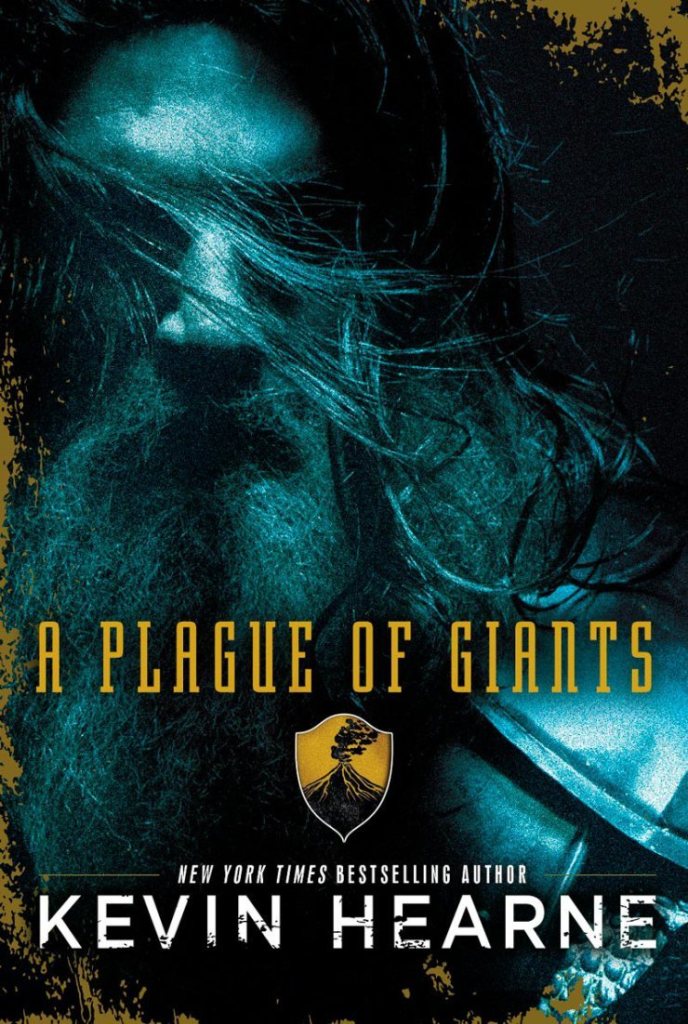
A Plague of Giants by Kevin Hearne, the first in his Seven Kennings series, has been on my radar for far too long. I finally got this book on audiobook, and man, I can’t believe I neglected to read this sooner.

A Plague of Giants is a highly enjoyable read. This is perhaps one of the most well-rounded fantasy stories I’ve read.

The world-building is superbly intricate and layered into the plot in a way that’s accessible to the reader. This is introduced to the read through a framework structure, where a bard is recounting stories of a recent war to a crowd of refugees who had fled from it. The bard, through his “kenning” – the system of magic in this universe – can take the appearance and voice of whoever’s story he is telling. Thus, we’re treated to multiple voices through the voiceover narration of Luke Daniels and Xe Sand in turn.

The plot is well paced, and the multiple point-of-view narratives keep the voicing dynamic. This is the type of story where the first third feels to come from multiple unrelated angles, but each of the POV narrators end up building towards a larger theme.

The framework style of storytelling is effective and introduces its own plot mechanics that add depth to the main narrative. The bard and a local scholar spend time together between recountings of the tale, so that the scholar can record the bard’s oral history in writing.

And the characters feel authentic. This book carries weighty themes of grief and loss without burdening the reader with them, instead allowing each character to experience these feelings in unique ways. The characters wrestle with their own perspectives or histories even as they’re experiencing new waves of loss with the onset of this war, forcing the characters to react and reassess their own values in real time.

A Plague of Giants is one of the best fantasy novels I’ve read in recent memory. I cannot wait to start book 2 in this series.

Steve D

Book Review: AMONG THE BEASTS AND BRIARS

I discovered this book somewhere on Audible and gave it a listen a few weeks ago. (I’m a bit behind on posting my book reviews.)

Among the Beasts and Briars by Ashley Poston is an enjoyable story about gardener’s daughter, Cerys, who is cursed with the magic of the dark forest that borders her home, and who must save her kingdom from the forest’s dark powers.

This was a classic quest/coming-of-age story with a strong underpinning of fairy tale lore – the dark forest, old gods, terrible curses, and young people reaping the sins of their forebears. There is a spot of romance throughout the narrative as well, but I would not describe this as a romance novel — it fits well with the plot. The story is well-paced, and there are enough little twists to keep the reader guessing as to the final resolution.

There is some surprisingly fantastical and frightening imagery as the characters survive and then confront the dark magic of the forest, and I think this story would translate well to an animated horror/fantasy treatment.

For the audiobook version, male and female narrators trade point-of-view sections for the two characters who end up becoming our protagonists. The dual narrators definitely provided interesting perspective, as the conflicted perspectives of particular scenes drove some of the conflict. However, I didn’t find that the narrators’ voices matched what I felt were much more intense or frightening scenes, especially in places where Cerys confronts gaunt and terrible visages of the people of her kingdom. I think there’s a version of this narration that could lean much more heavily into the horror aspects.

Still, this was an enjoyable standalone novel, and I’m curious about of Poston’s other work.

Steve D

Book Review: MCU illuminates the history of Marvel’s films

I recently listened to MCU: The Reign of Marvel Studios on audiobook. I heard about the book, because one of the co-authors, Joanna Robinson, has a podcast I frequently listen to (House of R), and she talked a bit about the book in the run-up to its release late last year.

I’ve enjoyed Marvel films over the years and admire what they had achieved through the Infinity Saga. I also really enjoy documentary-style storytelling with behind-the-scenes insights. This book excels at this type of storytelling.

With plenty of quotes and perspective from the people who were involved with these films over the decades, it’s clear that the authors spent tons of hours conducting interviews with all kinds of folks, from production assistants on 20-year-old films, to directors, set/costume/effects designers, to the major actors, to Kevin Feige himself. There are countless anecdotes about snap decisions made in one era of the studio’s history that directly shape how the movies came together years later.

The book is paced and structured like a documentary, with most chapters focusing on a particular film, or a particular piece of the MCU machine, such as visual effects. It begins in the very earliest days of Marvel’s forays into film and television in the 60s and 70s, with projects and people I had scarcely been aware of, and then really picks up in the early 2000s, when superhero films started appearing in greater numbers.

The authors did a good job balancing fair criticism of various parts of the studio’s process with genuine appreciation of its accomplishments. The chapters on The Infinity Saga are rightfully tinged with admiration at how those films were pulled off, while the chapter on visual effects speaks to the issues that VFX artists have faced in dealing with the tight deadlines, scant budgets, and long hours demanded by their contracts with Marvel Studios.

My one critique is that the closing sections felt a little too concise. If this is a history of the MCU – and it certainly reads like one – then I would have wanted a little more summation on this era of Marvel Studios and what the future looks like.

Still a great read, and definitely worth picking up again to absorb all the nuggets of information spread throughout.

Steve D

Book Review: OATH AND HONOR presents frightening account of Jan. 6

When I saw Liz Cheney’s memoir, Oath and Honor: A Memoir and a Warning, available for preorder, I knew I had to read it. While I did not closely follow Cheney’s political career, I had a vague sense of respect for her; she seemed like the type of politician who stood by her principles.

I got this sense in the aftermath of Jan. 6 and during the news cycle around the Select Committee in the House of Representatives to investigate the events that allowed the insurrection to occur.

I have even more respect for her now, having read this..

Oath and Honor is a frightening narrative of the January 6 insurrection. I have felt since that day that Trump and his supporters in Congress were somehow culpable, that they should be held accountable. I now have no lingering doubts. Trump and the members of his administration and Congress who supported his attempted insurrection must all be held accountable.

Cheney discusses in detail the amorphous uncertainty she had around Trump’s administration in the weeks between the 2020 election and the planned inauguration of President Biden. According to her narrative, she had a feeling and even had conversations with others in power that something was not right.

Her account of the insurrection itself is harrowing; to know that the organizers behind the mob had planned to lay siege to the Capitol and return armed after dark is a nightmare scenario I won’t soon forget.

Cheney then lays out what came to pass over the following eighteen months, her involvement in the Select Committee, and her bid for reelection in Wyoming, which she lost to a Trump-supporting election denier.

This moment in US history is still too near, too real and present, for me to take the critical view of Cheney’s narrative from a historical perspective. I think there may be a few minute moments in this account where she comes off as self-righteous, where she lingers just a little too long on her own admiration for figures like her father, and Reagan.

But, this is a memoir, after all. Perhaps in five or ten years, when all of this is (hopefully) in the history books, I will be able to reread this with a more critical ear for Cheney’s own version of these events compared to other accounts that will surely be published. For now, I have to take this accounting of January 6th at face value…

As a warning.

Anyone who cares about the US or who feels compelled to understand what actually happened that day, please read this book.

Steve D

On FOUR LOST CITIES and Building this Fantasy Town

This post is not a real book review, at least, not entirely. I just finished listening to Four Lost Cities: A Secret History of the Urban Age by Annalee Newitz, and it got me thinking and rethinking the way I design and evolve cities in my fantasy universe.

A running theme in my world-building — and one of my pervading interests in history and anthropology — touches on the rise and fall of cities and civilizations. For years, I had the reductionist viewpoint that great cities rose and fell in linear patterns, and with clear markers for their demise.

When I learned that the far more common pattern is for cities (or civilizations) decay for years or decades or centuries before fading from prominence, I wanted to explore that in my storytelling.

Four Lost Cities provides a really interesting investigation into the formation and decline of cities across human history. Newitz uses archeological evidence to make the case that the evolution and dissolution of cities is not a linear path, that the very definition of a “city” and its growth are defined more by socio-cultural forces of its time than by rigid and often arbitrary models based solely on commerce.

What would this look like in a setting of my making? Would I be able to capture the uncertain rise and long decay of a city or a people in character-centric stories?

My current work-in-progress, the duology I’ve been referring to as The Herb Witch Tales, spawned from this theme. Before I knew who my characters were, I wanted to explore a city’s evolution from small port town, to sprawling tent camp of migrant settlers, to developed population center.

The story developed from the idea of the city, and I found characters to fit that initial blueprint. The duology is now much more grounded than that much broader idea, but I’ve tried to pay particular attention to the ways in which the characters perceive and interact with place — the places they’ve lost, left, or found.

Although The Herb Witch Tales is currently a duology, I can easily imagine future stories where the growth of this family is inextricably tied with the growth of the place they come to call home.

So, I must recommend Four Lost Cities, because it is informative, thought-provoking, and inspiring in a world-building kind of way.

Steve D

Book Review: SISTERSONG reignites old magic in Dark Age Britain

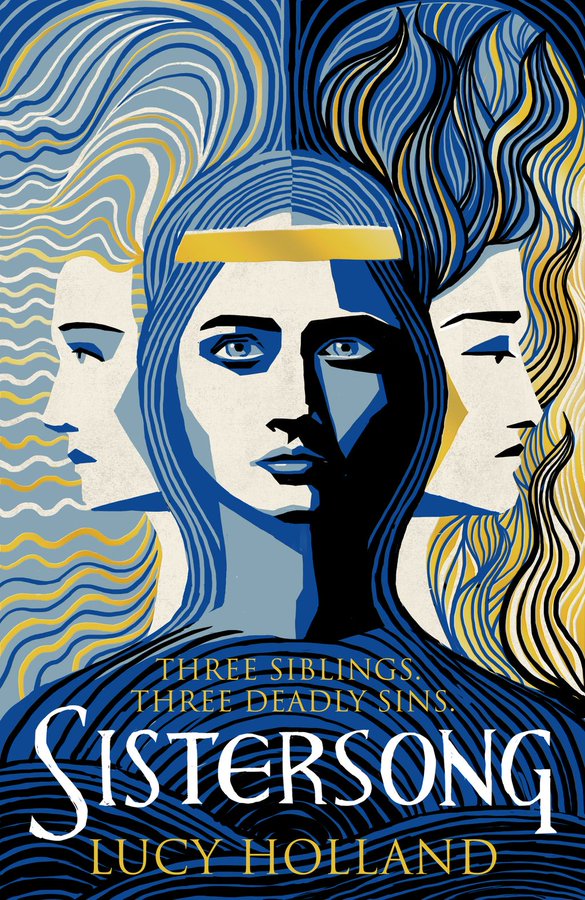
I recently listened to Sistersong by Lucy Holland on audiobook. I’m in the midst of an era kick, where I’m almost exclusively interested in historical fiction or fiction stories set in Dark Age Britain. So, I found this book as part of my keyword search on Audible, and it sounded intriguing.

I enjoyed it, overall.

This was a very intricately and well written story. Holland deftly weaves part fairy tale, part ballad about the stories we tell ourselves and how they come to define us. This story follows three siblings who are each struggling to understand or reconcile some part of themselves, or, in my ways, some part of their relationships with their parents and with each other.

Thus, the story quickly becomes part family reckoning, part coming-of-age, and part classical drama, all wrapped in a tale of lost magic and impending war.

Having known nothing so this story or author beforehand, I found it both surprising and familiar, in the way that classical storytelling forms often are. I recognized the beats as they came, but the characters’ lives were so vivid that their inner emotional turmoil drove the tension.

Each of the three siblings at the center of Sistersong has a unique voice that reflects the others, making their interactions poignant in every scene. Holland peppers her story with enough twists and interesting character turns to make it feel unique.

The soft magic system felt a bit all-powerful for my liking, but it was not a ‘deus ex machina’ effect. Magic permeated the narrative, but did not drive it completely.

Steve D

WAR LORD rings true for THE LAST KINGDOM series and Uhtred’s legacy

A couple weeks back (this post is delayed because life happened), I finished reading War Lord.

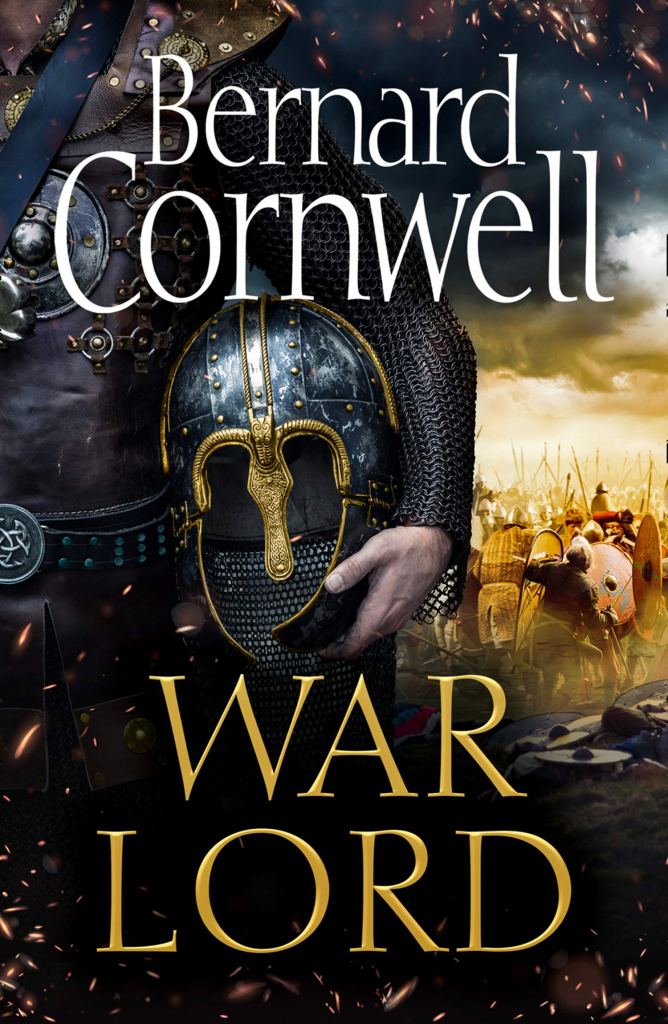
This final installment of The Last Kingdom series by Bernard Cornwell is a perfect ending for what has been a highly entertaining series.

In this story, Uhtred is old, and the only thing he wants is to die at Bebbanburg. He has lived a life of war, and politics, and striving desperately to reclaim the home he had lost as a child. Now he has, and he only wants peace. But war stirs to the north and south, and Uhtred must decide whether to fight for King Aethelstan or Constantine of Alba.

Uhtred’s age in this story make any significant fighting on his part a bit farfetched. That’s why the most ingenious part of this book is how Uhtred mostly becomes a battlefield spectator to be awed by a younger generation of warriors making their own reputations. He is the elder warlord whose experience and presence certainly help shape the battle, a general who commands the respect of those who follow him and tries to fight beside them as best as he can. But he no longer seeks out battle–the sword song–as he did in his younger days.

Uhtred’s relationship with King Aethelstan comes to fruition in this story as Aethelstan pays respect to the man who raised him, and Uhtred recognizes Aehtelstan for the noble and fearsome warrior king he has become.

I greatly appreciated Cornwell’s historical note to close the book, and I’ll be looking into his other historical fiction works.

Steve D

Book Review: SWORD OF KINGS demonstrates Uhtred’s ability to rise above humiliation

I’m very rapidly making my way through the final books in Bernard Cornwell’s The Last Kingdom series. I finished reading book #12 of 13 last week, Sword of Kings.

I greatly enjoyed this story after feeling like its predecessor, War of the Wolf, felt overly contrived.

Sword of Kings follows Uhtred as he makes mistake after mistake. For the first time really in the entire series, Uhtred’s penchant for impetuous decision-making and lack of communication with anybody significant in his life stacks up against him.

A similar trail of mistakes followed in Uhtred’s wake in War of the Wolf. The difference in Sword of Kings is that in the moment, every single one of Uhtred’s mistakes makes sense. He rationalizes to the reader as he proceeds, but events turn against him for various reasons, and by the time you reach the final confrontation, you’re left wondering a) how the hell did we get here, and b) how the hell is Uhtred getting out of this one alive?

Uhtred ultimately faces the most humiliating moment of his life. The shame, regret, and fear he demonstrates thereafter is poignant as a side of Uhtred we’ve never seen. After several books of seeming invincibility to anyone else’s ambitions and his own brashness, Uhtred is brought as low as possible, and he has to be convinced by those closest to him to either give in or fight for his own dignity.

My only nitpick is the quite flippant disposal of a few characters in Uhtred’s life, treated with little more than a footnote at the end of the story. Without giving away anything, I think these characters had lost their own purpose in Uhtred’s stories, and perhaps made room for new characters and narrative developments, but these are not realized until the next book.

This is perhaps one of the best novels of the series.

Book Review: WAR OF THE WOLF has points of interest, falls flat

I’m working my way through the final three books of Bernard Cornwell’s The Last Kingdom series. War of the Wolf posits an interesting question: what sorts of adventures / wars does Lord Uhtred get drawn into after he’s achieved his ultimate goal?

The answer, it seems, is getting tricked into fighting a war in someone else’s land.

While I always enjoy The Last Kingdom series to some extent, this installment felt too formulaic. The book opens with Uhtred outside of Bebbanburg, the nigh impenetrable fortress of which he is lord, for a dubious reason. Someone lured him there with a lie to try to ambush and kill him. Without giving away any spoilers, the rest of the narrative follows with similarly dubious decision-making by our usually cunning Uhtred.

There were some notable emotional stakes here that helped Uhtred’s individual development, and his fealty to King Sigtryggr of Eoforwic makes for some interesting politics. Aethelstan remains a compelling character, but his presence in this story merely feels like set-up for future stories.

This was not my favorite story in this series, but it was still entertaining.

Steve D

Book Review: ANDREA VERNON AND THE CORPORATION FOR ULTRAHUMAN PROTECTION brings quick wit and plot

I don’t remember the circumstances under which I picked up Andrea Vernon and the Corporation for UltraHuman Protection, but it’s been sitting in my Audible library for a good while. So I finally decided to read it.

It was quite enjoyable.

Author Alexander Kane appears to have a knack for witty and compelling storytelling that does not get weighed down by exposition. This story moves quickly and demonstrates Kane’s deft plotting. No chapter felt cumbersome, and no character was throw-away.

Each character had a unique voice, perhaps in part thanks to Bahni Turpin’s excellent narration. Andrea, as the protagonist, had the strongest scenes and sense of growth. Other characters, like Ms. Oh, were interesting in their own right, but I often found myself anticipating Andrea’s next section more than any other POV character.

This is not necessarily my preferred style of storytelling, which veers between absurd cultural references and wise-cracking one-liners to keep the dialogue bouncing along, but I respect that Kane executed it so well.

There are two other books in the Andrea Vernon series, and I just may be tempted to pick them up.

Steve D