

I got Children of Time by Adrian Tchaikovsky as a gift from my brother-in-law, who thought I might enjoy it. I had heard of Tchaikovsky before in passing, but was otherwise unfamiliar with his work.
The description of this book certainly piqued my interest, and I didn’t want it to languish on my to-be-read shelf for ages, so I dug in.
Children of Time is a fantastic read that encapsulates both the awe-inspiring technological dreams of epic science fiction and the remarkably grounded perspectives and emotional weight of human stories.
This story is described as “evolutionary world-building”, and it takes place over literal millennia as a ship of human survivors of a destroyed Earth search for and try to claim a terraformed Earth-like world as their own. Only a select few humans aboard this ship are awakened at various intervals to deal with the potentially-catastrophic problems that can befall any deep-space mission. Simultaneously, a new race of beings are evolving on the terraformed world at a super-charged pace, thanks to a bioengineered nanovirus to accelerate their advancement in preparation for their human-creators’ arrival.
This brilliantly “symbiotic” narrative alternates over nearly incomprehensible lurches in time. One human aboard the ark ship is awakened from cryo-sleep several times over the course of millennia, facing new challenges or threats each time in what to him feels like only weeks. On the terraformed world, the narrative follows successive generations of characters as they advance and reach for the stars in their own right.
The first portion of the story is a little jarring, perhaps intentionally so, and the reader is flung from one moment in time to the next, separated by centuries or more. Once the reader figures out this rhythm, though, it is quite enjoyable to see how the dueling plots advance over such inhuman time spans.
Much of the world-building focuses on how such a world could be terraformed, how a massive ark ship carrying the remnants of human civilization survives for millennia, and how a nanovirus can advance a civilization. This is all endlessly fascinating, toeing the line between believability and awe.
The story, however, is an entirely human one, focused on the very existence of one civilization or another. This book delves into what it means to be both the first and the last of a great civilization, to survive and continue living as the world appears to be collapsing around you, and to harness or reject the breakneck pace of social and technological advancement.
I loved this book, and there appear to be two more in this series already. I will absolutely be picking up the next installment, Children of Ruin, in the near future.
Steve D




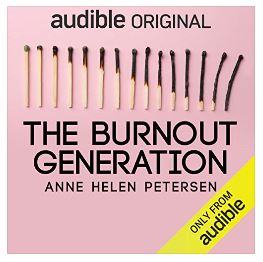 I just finished listening to Anne Helen Petersen’s “The Burnout Generation” on Audible yesterday, and I’m having so many feelings!!!
 The Encircling Sea is the second book in Adrian Goldsworthy’s historical fiction epic about the Roman presence in Northern Britannia.
 Evening Satellite Publishing