Book Review: A CLOSED AND COMMON ORBIT lands as cozy sci-fi with intimately personal stakes

After gulping down the audiobook form of The Long Way to a Small, Angry Planet, Becky Chambers’s first in the Wayfarer series, I did not hesitate to pick up book 2: A Closed and Common Orbit.

I had thoroughly enjoyed the first series entrant as a galaxy-crossing sci-fi adventure, so I was a caught a bit off guard to discover that I would spend all of book 2 with characters who were only a footnote in book 1.

Part of this is my fault, because I neglected to read the blurb before purchasing and beginning A Closed and Common Orbit. So I was a bit surprised, a little confused, and then curious.

This book follows Pepper, a tech whom the crew of The Wayfarer encounter in book 1, and Sidra, a conscious AI placed into a human-like body. Pepper’s and Sidra’s stories meshed well and approached themes of identity, predestination, and humanity with thoughtfulness. The two spend much of the book trying to navigate their own senses of self, while also figuring out how to integrate Sidra into Personhood and the local society of pepper’s home city.

Pepper’s story also looks backward, beginning with her life a child to explore how she got where she is. I was intrigued by Pepper’s hardships as a teenager, and I felt that her transition from that life into the one she built for herself was glossed over. However, her backstory clearly focused on and succeeded with explaining why she has such an affinity for advanced AI’s and their personhood.

Both character arcs are effective in demonstrating and resolving their respective emotional journeys.

Surrounding these very intimate themes of identity, the story barely touched on how Pepper’s and Sidra’s society did not accept AI’s as People, and what that might mean for Sidra. I would have liked to understand more about how technology and sapient AI was viewed and treated in the Galactic Commons at large.

Rich world-building surrounds this story, but it’s a little too focused on the characters’ internal struggles. I kept looking for a broader view to balance the intense personal stakes of the story. Similar to its predecessor, A Closed and Common Orbit excels in displaying what life is like for people on this planet, a sort of cozy sci-fi setting for these poignant themes.

Still, this was very much worth the read, and I’m interested in continuing this series in the near future.

For the audiobook, I found the narration stilted with unnatural inflection in many places, especially with dialogue. I think this may have been intentional by the narrator to reflect Sidra’s voice as an AI, but it honestly became more and more grating as the story proceeded.

Steve D

Book Review: THE LONG WAY TO A SMALL, ANGRY PLANET

I recently listened to the audiobook version of The Long Way to a Small, Angry Planet by Becky Chambers, a story I found delightful in its character-building, and intriguing in its world-building.

The Long Way to a Small, Angry Planet presents a vivid galaxy of unique species governed by the Galactic Commons. Humans in this story are among the least powerful species, their Exodans having survived the destruction of Earth (at human hands) and only recently invited as a GC member species. The Galactic Commons includes a diverse array of non-human species, each with their own cultures, histories, and perceptions about their galaxy and the other peoples within it.

Chambers is very deliberate the language she uses to describe each species and individual. While their physical traits and cultural norms may differ, all GC member species are People, and all are referred to as Sapient. Specific individuals are also male, female, or non-binary, with standard pronouns that appear to be widely accepted across the story for such designations. This helps acclimate the reader to each character’s voice and perspective, while making it seem plausible that they speak a common language (called Clip) and have relatable mannerisms and colloquial speech patterns.

Within this setting, Chambers explores a rich tapestry of relationships, inter-species politics, and grounded character struggles aboard a long-haul ship. Rosemary Harper, a human from the Mars settlement, is the lead protagonist, but she does not necessarily drive the narrative.

As the newest member of the Wayfarer crew, a long-haul tunneling ship which bores holes through the fabric of spacetime to create tunnels through which ships can jump light-years across the galaxy, Rosemary is an observer who becomes a more and more prominent member of the crew. She develops her own relationships with her crewmates and shows how her clerical and research skills can help their ship.

But Rosemary’s outsider status as a spacer means that her perspective is a suitable entry point for the reader into this world.

Chambers’s writing is funny and poignant, with realistic dialogue and good escalation amid more tense moments and scenes. Her character development would work in any setting, but the fact that she couples this with believable sci-fi world-building elevates the story into a compelling narrative.

This was a book I couldn’t put down, and would gladly read again.

I would likely purchase and read a hard copy, because the audiobook’s narrator made some interesting inflection and pronunciation choices that took me out of the story for scattered moments.

Steve D

Book Review: Spectacular World-Building in CHILDREN OF TIME

I got Children of Time by Adrian Tchaikovsky as a gift from my brother-in-law, who thought I might enjoy it. I had heard of Tchaikovsky before in passing, but was otherwise unfamiliar with his work.

The description of this book certainly piqued my interest, and I didn’t want it to languish on my to-be-read shelf for ages, so I dug in.

Children of Time is a fantastic read that encapsulates both the awe-inspiring technological dreams of epic science fiction and the remarkably grounded perspectives and emotional weight of human stories.

This story is described as “evolutionary world-building”, and it takes place over literal millennia as a ship of human survivors of a destroyed Earth search for and try to claim a terraformed Earth-like world as their own. Only a select few humans aboard this ship are awakened at various intervals to deal with the potentially-catastrophic problems that can befall any deep-space mission. Simultaneously, a new race of beings are evolving on the terraformed world at a super-charged pace, thanks to a bioengineered nanovirus to accelerate their advancement in preparation for their human-creators’ arrival.

This brilliantly “symbiotic” narrative alternates over nearly incomprehensible lurches in time. One human aboard the ark ship is awakened from cryo-sleep several times over the course of millennia, facing new challenges or threats each time in what to him feels like only weeks. On the terraformed world, the narrative follows successive generations of characters as they advance and reach for the stars in their own right.

The first portion of the story is a little jarring, perhaps intentionally so, and the reader is flung from one moment in time to the next, separated by centuries or more. Once the reader figures out this rhythm, though, it is quite enjoyable to see how the dueling plots advance over such inhuman time spans.

Much of the world-building focuses on how such a world could be terraformed, how a massive ark ship carrying the remnants of human civilization survives for millennia, and how a nanovirus can advance a civilization. This is all endlessly fascinating, toeing the line between believability and awe.

The story, however, is an entirely human one, focused on the very existence of one civilization or another. This book delves into what it means to be both the first and the last of a great civilization, to survive and continue living as the world appears to be collapsing around you, and to harness or reject the breakneck pace of social and technological advancement.

I loved this book, and there appear to be two more in this series already. I will absolutely be picking up the next installment, Children of Ruin, in the near future.

Steve D

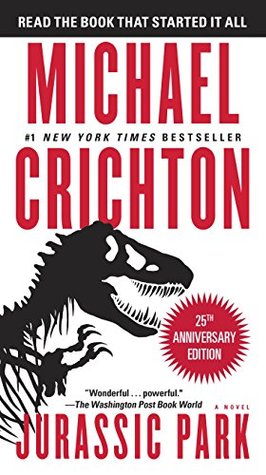
Book Review: JURASSIC PARK delivers thrills and layered plot-building

I just finished listening to Jurassic Park by Michael Crichton on Audible, a book I probably should have read years ago, but I’m glad I finally checked it off my list.

Jurassic Park the movie is one of my favorites ever, so I was excited to finally read the original novel that inspired it — and compare how the film adaptation differed from the novel.

I really enjoyed this book and basically couldn’t put it down for a few days. Overall, the characters each had unique voices, and the plot was compelling.

To my surprise and enjoyment, the first part of the novel builds up the background of Ingen, Hammond, and some other key players. There is a fair amount of techno jargon, but Crichton writes it in such a way that is accessible and, just as importantly, believable, at least as far as science fiction can be believed. These sections serve to enliven the story as it progresses, providing the reader with much-needed context to feel the weight of the story.

These early sections are then interspersed with vignettes of doctors or others encountering unidentified “lizards”, but none of the characters are able to piece together the clues. In this way the tension very slowly builds.

By the time the main characters arrive at Isla Nublar to tour the park, the reader is nearly overwhelmed with dread over the mystery “lizards” terrorizing the local population, the industrial espionage of a rival bioengineering company, and the shady, or perhaps negligent, designs of Hammond and the creators of Jurassic Park.

The story is incredibly layered with detail about all of the flaws with the park. There is no fatal flaw, but there are many tiny ones that create a perfect storm of a disaster, isolating the characters on this island in a nightmare scenario.

The action was thrilling but not overwhelming, and the plot kept pace as the situation continued to unravel. Ian Malcom’s continuous diatribes about chaos theory could be tiresome for some readers, but I found these more philosophical sections quite engaging.

The narration of the audiobook was great as well.

Regarding the film versus the novel, I find it quite remarkable how well the film adheres to the spirit of the novel, even if several key characters and plot points are either changed or omitted entirely. Those types of changes are to be expected when adapting such a detailed novel to film, but it only makes me enjoy the movie more knowing that it is a worthy reflection of Crichton’s story, even if it looks a little different.

Steve D

#BookReview: FORGET NOTHING, great intro to GALAXY’S EDGE universe

Another Audible Original that I’m glad I listened to. “Forget Nothing” is a military sci-fi short in the Galaxy’s Edge universe of stories, which is apparently huge.

I’d never read any of the Galaxy’s Edge stories, so this was a good introduction, and has me interested in picking up more. Continue reading “#BookReview: FORGET NOTHING, great intro to GALAXY’S EDGE universe”

#Review: CLICK. by Luther M. Siler – Quick, Fun, Inter-Dimensional Action

I got Click. directly from the author after I won a contest on his site. I was the first to comment a random word from a video he posted, proving I actually watched it.

Click. is an exciting and action-packed story that’s easy to digest and hard to put down. As is typical with Siler’s stories, the dialogue is snappy and sarcastic, with one-liners and pop culture references peppered throughout.

Continue reading “#Review: CLICK. by Luther M. Siler – Quick, Fun, Inter-Dimensional Action”

What The Umbrella Academy Covers: Sci-Fi Mainstays and Comic Book Commons

Written by Gerard Way and illustrated by Gabriel Ba, The Umbrella Academy is another example of comic book turned TV show, following in the footsteps of similarly dark realism properties like the Marvel series quintet, DC’s Arrowverse, and Wynonna Earp. It’s an interesting road now oft traveled in the pursuit of more viewers; a path that borrows generously from other mediums as well as other generations.

This fanciful musing on what TUA weaves well into its own dynamic story is in no way a slight against it. I enjoyed the first season quite a lot and finished it fast. Tropes and throwbacks are categorized as such , and repeated like so, because, in a world full of individuals, occasionally strangely specific themes seem to grip our interest.

In this post, I wish to explore the familiar as an enticement to embrace the new. Continue reading “What The Umbrella Academy Covers: Sci-Fi Mainstays and Comic Book Commons”

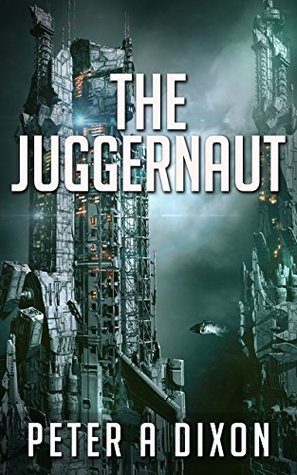
The Juggernaut, Peter A. Dixon – Book Review

I’ve mentioned a few times that I joined Wattpad to see what stories I could dig up there. I just finished my first full book there:

The Juggernaut, by Peter A. Dixon. Overall, I enjoyed the story, but it left me wanting in some areas.

Continue reading “The Juggernaut, Peter A. Dixon – Book Review”

Saturday of Book Reviewing – Heinlein’s Farnham’s Freehold

Awkward article heading aside, this book was all kinds of messed up. Robert A. Heinlein was from a ‘different’ time blah blah blah. His writing is straight up hard to digest; it’s hard to delve into and invest in a work so littered with racism and sexism. His female characters are flawed, often two dimensional, and his portrayal of minorities is downright insulting sometimes. These are major problems, however, the reality is, that if we got rid of and erased any and all books with these issues, I’m not sure we’d be able to read much from the past. And to be clear, the themes and ideas that Heinlein depicts in his novels are thought provoking and worth considering.
Saturdays are alllllll about the thinking and considering. Continue reading “Saturday of Book Reviewing – Heinlein’s Farnham’s Freehold”

Is Arkangel a Replacement God for the Next Generation of Parents?

S 4:E02 Synopsis: ‘Worried about her daughter’s safety, single mom Marie signs up for a cutting-edge device that monitors the girl’s whereabouts – and much more.

Ostensibly, this is a story about an overprotective parent suffering the natural consequences of that parenting style taken to its logical extreme. The triggers are twofold; first comes the difficult birth and stillborn scare, second is single mom Marie losing young Sara, her shiny new munchkin, whilst at the playground. The kid is found fast, but it’s too late: the fear has taken hold and Marie believes, ardently, that she needs help. Continue reading “Is Arkangel a Replacement God for the Next Generation of Parents?”