“Team”
Workshops and dinners,
whirlwind meetings and greetings,
for dispersed colleagues.
Steve D

Workshops and dinners,
whirlwind meetings and greetings,
for dispersed colleagues.
Steve D
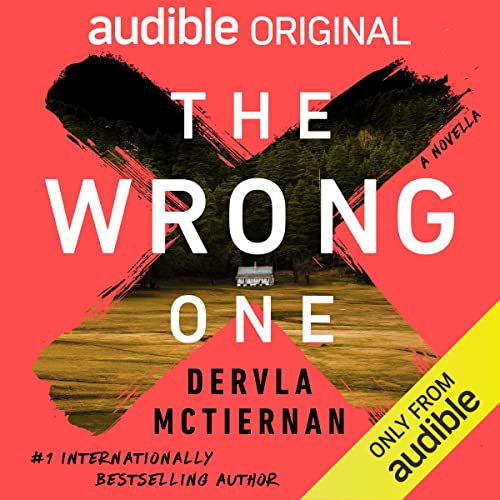
Audible recently offered The Wrong One as part of some kind of sale. I’ll always give free books a shot, and I could definitely not say no to a novella by Dervla McTiernan.
I’ve read the first couple installments of McTiernan’s more well-known Cormac Reilly series, following a Dublin-born detective trying to figure out his career in Galway as he solves often strange cases.
McTiernan’s crime stories always have a slow burning build, usually following multiple characters, until the threads twist into an intense third act. It may sound formulaic, but the characters are always well-developed, and the twists are enough to put a reader off-kilter.
So, I went into The Wrong One expecting to be hooked from the start. Admittedly, I was not. The Wrong One uses two voice actors to narrate the respective point-of-view narrators in the story, and I was not a fan of the first narrator. I’ll go into a little more detail below, in a section marked for spoilers.
This first narrator had an odd inflection to his voice that irked me. The second narrator was good, fitting for a teenaged boy who thinks he knows everything.
Despite my issues with one of the narrators (and the character they were playing), the story’s tension ramped up rapidly with a looming realization and twist that only McTiernan can deliver with such fluidity and emotional weight. I ended up enjoying this story quite a lot. Now I just want to go read more Cormac Reilly stories.
Steve D
…
…
…
…
Alright, so I didn’t like the first narrator, playing Simon, had an inflection that made him sound emotionally vacant and like a know-it-all from the start, making him virtually unlikable. Then, as the story progressed, it becomes clear that Simon is more than full of himself — even delusional — about his advances towards Clara and her obvious (to everyone but him) complete disinterest in him. Then, his pathetic delusions became overbearing, then possessive, then manipulative, and then, holy shit it was him the whole time! Great twist. I’m telling myself that the strange voice-acting of the character was completely intentional to throw the reader off-balance from the start. Totally worked.
Approaching the line
to a different state. Tap out.
Before it’s too late.
Steve D

The shortest month of the year is through, and I half-heartedly wish I had a few more days. It’s been a good month overall, I just had a lull in the middle.
But an ending is also a beginning, and I’m pleased that a new month is starting.
No. I’ve gotten about halfway through my draft. This is the primary lull I mentioned above. I just didn’t sit down enough nights to read through my story. Sometimes revisions, just like writing, is about number of sessions as much as productivity per session.
The good news is that halfway through, I like this story. The pacing is a little disorienting at first, which is intentional, and I can feel it slowing down into its middle rhythm. This first revision pass-through is about the overall flow, so feeling through those ebbs and flows is a good sign of how readers might engage with the story.
This revision process is also highlighting likely next steps for me. I think I want to complete this read-through of Uprooted, focused on overall flow and only obvious edits, and then read through again to trace scene placement and length.
Examining the scene placement and length per scene will help me determine whether particular scenes are unbalanced against others, or where natural breaks in the narrative occur. I wrote this story into ten chapters, but do the chapter breaks make sense? Are they too long? Because this is a novella, I’m starting to think that I should have more numerous but shorter chapters to help make the story more digestible.
I just want to validate that idea with a second read-through.
Once I have a good handle on the overall narrative flow and the scene breakdown of Uprooted, I’ll switch gears and follow the same process for New Earth, allowing me to ensure that the two stories make sense together as well as independently.
No, but I read two and started a third. I also made more progress on A Memory of Light. I got stuck on a longer nonfiction book, Dawn of the Code War, which is a bit of an oral history of the FBI’s, and the US’s, initial foray into cyber attacks. Really interesting read, but not the type of thing I can power through in a weekend.
I’m currently reading a short thriller, The Wrong One, by Dervla McTiernan. I’ve read a few of her Cormac Reilly books, so I did not hesitate to pick up this short story on Audible.
Next, I’m looking for some fantasy / historical fiction. Might be going back to Bernard Cornwell’s The Last Kingdom series… I’m on book eight.
YES at least in the back half of the month. I finally bit the bullet and paid for a workout app program thing. I chose Asana Rebel, since they had a one-year subscription deal and I kept seeing their ads. (Your Instagram marketing campaign worked on me, Asana Rebel! Curse you!)
I started with their intro program and am moving onto full yoga sets. It’s not terribly difficult for me to find 10-15 minutes of exercise time in a day. 20-30 minute sessions will be tougher. I’m thinking I’ll intersperse their yoga sessions with resistance training and… dare I say it? Sprinting.
I’m not into running, although I’ve been told I’m built like a runner. I’m not interested in long-distance running, but sprinting to build leg strength sounds okay. I just need to figure out what that type of workout looks like.
Asana Rebel is nice, because they push notifications to you about a weekly goal — mine is three workouts per week — and quiz you on your mood and what types of exercises may help you in the moment. At the moment, I like the structure it provides. I just need to be disciplined in building on top of it, so that’s what March will be about.
Steve D
New cubby shelving,
vertical toy arrangement,
clutter now cubic.
Steve D

Creativity is tricky. Trying to be creative is even trickier.
In recent months, I’ve found myself searching for more of an outlet for my creativity. Writing stories is my first creative love, but the fact is that it comes with several limitations, some of which I may be unnecessarily imposing on myself.
I also struggle with a lot of the mental aspects of sharing my creativity with others, especially through social media. How much sharing is too much, too revealing, too damaging to my own privacy? Ideas run through my head all the time, and I feel compelled to share them with people, but I often don’t, or perhaps more often I share them in person with my wife or my friends. That type of creativity sharing can be quite cathartic, but it leaves open the question of whether, and what, and how I share my creativity beyond that limited group of people.
This very post comes out of a sense of frustration that I didn’t have something else to write about. So, I’m going to do some unpacking here and see where it takes us.
I mentioned above that it feels like there are limits to my creative outlet in writing stories. As soon as I wrote that, I thought that many of those limits must be self-imposed, so I’d like to examine them. In no particular order:
Five off the top of my head; not bad. That should be enough to delve into for a bit.
I’m not a full-time writer and likely will not be in the foreseeable future, so this limitation is partially by circumstance. However, I think it’s also due in part to the way in which I approach writing. I primarily write novels or at least short stories, and so sitting down to write 100 words doesn’t feel like much of an accomplishment.
Now, look, I fully realize that every little bit counts towards the greater goal. I get all the writing mantras. But it can be difficult to maintain that steadfastness day-to-day, week-to-week, month-to-month as you churn over a longer story.
I’m combining items two and three, because they feel very much related, although still different
Worries over copyright infringement is not easy to navigate, especially online, as I discussed last week. But even beyond the notion of someone stealing my work, I’m quite protective of my creative ideas, especially when it comes to my world-building universe.
With enough prompting, I can quite easily ramble about the myriad ideas I have for my fantasy universe, but I sometimes worry that speaking my ideas out loud will… release them from my mind. As if the words roll off my tongue and the ideas themselves evaporate.
Strange, I know. I’ve learned to be careful about how much I reveal about my stories, my ideas, and where I might take them, because I don’t want to lose the drive to write them down. Speaking them out loud is a form of sharing them with the world, but I know I can develop them in so much more depth and with more coherence if I write them down. So, I try to “save” my ideas for my writing, or maybe only discuss certain aspects of them, if I want to workshop them with someone I trust.
Another piece of “protecting” my ideas springs to mind.
I’m also combining items four and five.
I realize that there are tons of platforms out there where I can publish stories for various online communities to read. Wattpad, Tumblr, Reddit, IngramSpark, Kindle, this blog… and literally hundreds or thousands of other websites I cannot even name.
But does publishing my story in one space restrict me from another? Is a freemium story platform like Wattpad too open to exploitation of my ideas? Is there just too much damn content online for any of this to matter? I have no clue.
If you couldn’t tell, I’m in the process of reassessing how I write and publish my stories. I love the idea of publishing novels, and I will continue to strive for that. But if I’m only publishing a novel once in a blue moon, then where do the rest of my ideas go? Is there somewhere else I can put them to get them into the world without feeling exposed — to copyright infringement, or loss of my ideas to the ether, or whatever else?
These questions bug me, so to this point I’ve resigned myself to the full self-publishing process with novels, novellas, or short stories, because it feels more official, and safer.
But I think I can find something else to fill the drawn-out in-between spaces — spaces in my head, in my publishing schedule, in my day-to-day schedule where smaller ideas can be nurtured and thrive. I just don’t know what yet.
Steve D
Small feet want to run,
patter over stones and brush,
learning to balance.
Steve D
Of the multitude of world problems to concern a reasonable human being over the last few months, one has lingered in the back of my mind in a more personal and, dare I say, private, way. I think about my writing a lot. It’s the main reason I have this blog, as a space to write about writing–my ideas, the writing process, the publishing process, the connective tissue of good storytelling.
I also think about my place as an “author” a lot. Not my level of notoriety or what I earn from writing — negligible in either case — but in how my writing and my “profile” is seen online. Privacy is always a consideration for someone who has a presence among the online public.
Every time I get a new idea or see a new tool for my writing, I consider whether I should be doing more to protect my own privacy and security online, as well as protecting my data and copyright. In an era when AI-generated tools are quickly gaining the ability to look, sound, illustrate, or write like real people, I question whether I should have an online presence at all.
With search engines becoming harder to navigate and the overwhelming glut of Content out there, it’s hard to find cogent, well-thought-out answers to these types of questions. So, I just want to pose my questions in a general way, talk a little about my thought process, and see what other writers or creators of any type think.
I have registered US copyright of my only published novel, and automatic copyright over all of my writings on this site, a short story in an online litmag, and a 12-part series published on Wattpad. (See a rundown of my writing here.) My writing is generally available to anyone who happens upon it online. My novel costs money to purchase, but that’s it.
Is this enough to protect my work from billions of users who may find it online? Legally, yes. But practically? I really don’t know. My novel could have already been lifted, translated into another language, and republished under someone else’s name, and I’m not sure how I would find out about it. The odds of that happening are probably slim, but IP theft definitely exists online.
At a certain point, I feel like worrying about copyright infringement online is like chasing ghosts. In my broader existentialist view, I will have no control over the things I write and publish after I’m gone, so is it worth fretting over it now? To some extent, I think, but honestly — I just want to be able to publish my own work and sell it to people who want to read it. I would hope I can carve out a space to do that much.
I published my short mythology series on Wattpad in 2019, mostly as an experiment to see what kind of readership I could get publishing one chapter per month. The short answer is: not much. Wattpad is social media for writers, so you have to be really prolific to gain a real following there. A lot of authors use Wattpad to publish first-look drafts of their novels, section by section, to gain a following ahead of self-publishing it in full. (Traditional publishing will generally not publish something that has already been published, so Wattpad is a readership-building tool for self-published authors.)
I don’t doubt the success that some authors have on Wattpad, and I have definitely read some good content there. But is it worth the effort for me to provide my writing there, for free? I’m not really concerned about providing free content. I have given a lot of thought to doing just that to build readership of my work. But Wattpad is a platform where anyone can sign up under anonymous usernames and scrape content from millions of stories by nearly as many authors.
Is that really a “safe” place to put my work? I’ve already done so, but only with a side project, not my primary novels. Wattpad is in the business of bringing authors to its platform, so I would think they take copyright infringement and data security seriously, but it’s a free service (that has a premium user tier).
George R.R. Martin famously stores all of his writing on a DOS computer in his basement, which has no internet connection. I don’t use cloud storage for my writing yet, but I’ve thought about it. Currently, every outline, draft, and finished manuscript of my writing is stored on a flash drive. I’ve used it for years, but I’ve always had a little fear in the back of my head that it will break, or burn out, or get lost, and all of my work will be gone.
Cloud storage offers a back-up plan, if not a primary storage option. I pay for a cloud storage solution for personal/family photos, but I still hesitate to put my writing there. Cloud storage servers can get hacked, data can be corrupted, and work can still be lost.
But these are the questions that pop up every time I think about doing something different with my writing. I can (and probably will) do a deep-dive into the writing/self-publishing threads of Reddit at some point to see how others feel about this. For now, I just wanted to voice my quesitons.
Who else thinks about this stuff? How do you approach it with your creative work?
Steve D
Singular moment,
turns from one mood to the next,
opposing facade.
Steve D
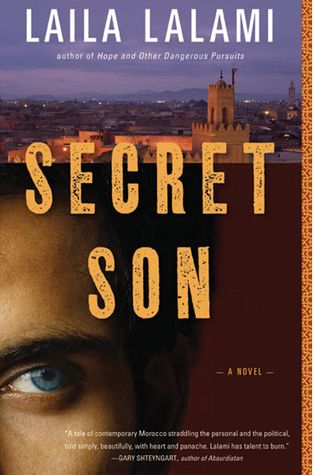
Secret Son portrays the life of a young man in a Casablanca slum trying to find his way. Caught between the stories of orphanhood and struggle his mother raised him on and the discovery of his real family, Youssef tries to understand who he is versus the various roles that society asks him to play.
As a fatherless boy from a poor area, Youssef’s prospects are limited until he finds a glimmer of hope in the discovery of his unknown wealthy father. Youssef is suddenly thrust into the elite circles of Casablanca life. As he tries to fit into this new world, he must navigate college, friendships, life as a working man, and the opposing wishes of his parents — the mother who raised him, and the father he always wanted.
Ultimately, Youssef’s uncertainty leads him astray, and he must find a way out. Like many disillusioned adults, he turns to the only people who seem to understand his struggle, a local political organization who promise to help the people of Morocco.
For the first part of this story, Youssef is the only point-of-view character. However, this changes when the meeting between he and his father is told first from his father’s perspective, and then again from Youssef’s. In this and other mirrored scenes, the reader is able to understand the interior thoughts of each participant — how they react to and often misunderstand each other. I found myself relating to each of the characters in different ways, whether Youssef’s desperation for a path forward, his mother’s attempts to set him on that path, and his father’s hope for a brighter future with his newfound son. Other characters, as well, helped to fill in the gaps between these three, to give the reader a full picture of the history of this family.
The abrupt ending and non-finality of any characters’ stories were surprising but fitting. The notions of Family, Identity, and Home don’t have beginnings, middles, and ends. They are relationships an individual evolves over time that shape one’s decisions and outlook, but rarely settle in one place.
Lalami captured the turmoil of family, of adolescence, and of despair amidst social stagnation in ways that many will be able to relate to. Great story.
Steve D
 Evening Satellite Publishing