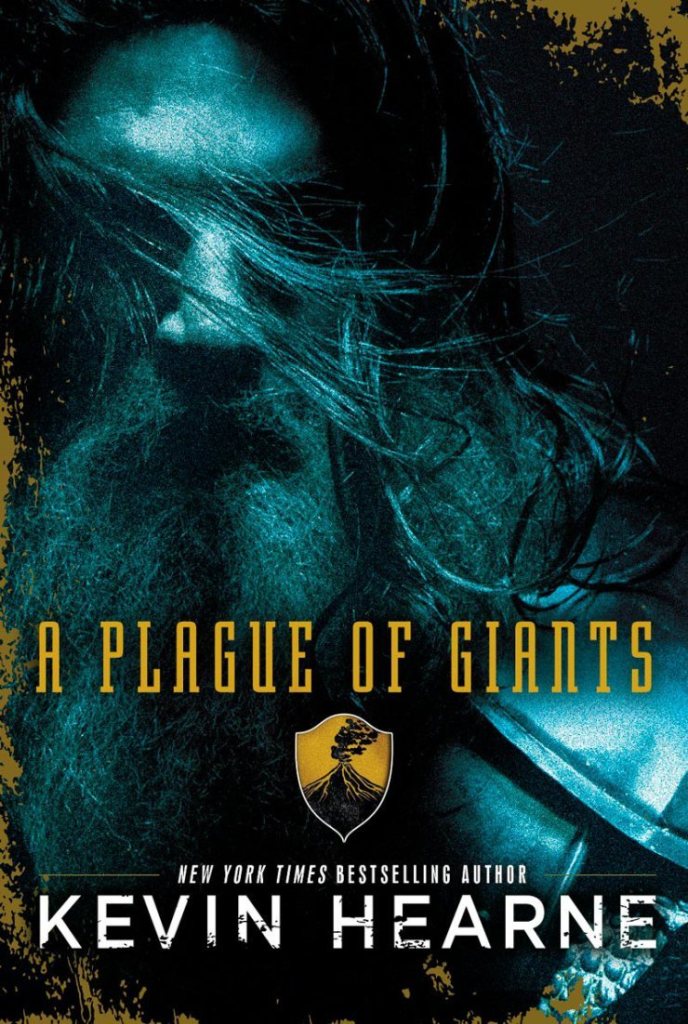
Book Review: A PLAGUE OF GIANTS is a superbly intricate story

A Plague of Giants by Kevin Hearne, the first in his Seven Kennings series, has been on my radar for far too long. I finally got this book on audiobook, and man, I can’t believe I neglected to read this sooner.

A Plague of Giants is a highly enjoyable read. This is perhaps one of the most well-rounded fantasy stories I’ve read.

The world-building is superbly intricate and layered into the plot in a way that’s accessible to the reader. This is introduced to the read through a framework structure, where a bard is recounting stories of a recent war to a crowd of refugees who had fled from it. The bard, through his “kenning” – the system of magic in this universe – can take the appearance and voice of whoever’s story he is telling. Thus, we’re treated to multiple voices through the voiceover narration of Luke Daniels and Xe Sand in turn.

The plot is well paced, and the multiple point-of-view narratives keep the voicing dynamic. This is the type of story where the first third feels to come from multiple unrelated angles, but each of the POV narrators end up building towards a larger theme.

The framework style of storytelling is effective and introduces its own plot mechanics that add depth to the main narrative. The bard and a local scholar spend time together between recountings of the tale, so that the scholar can record the bard’s oral history in writing.

And the characters feel authentic. This book carries weighty themes of grief and loss without burdening the reader with them, instead allowing each character to experience these feelings in unique ways. The characters wrestle with their own perspectives or histories even as they’re experiencing new waves of loss with the onset of this war, forcing the characters to react and reassess their own values in real time.

A Plague of Giants is one of the best fantasy novels I’ve read in recent memory. I cannot wait to start book 2 in this series.

Steve D

Book Review: NO GOOD MEN AMONG THE LIVING and the tragic debacle of the War in Afghanistan

Last month, I listened to the audiobook version of No Good Men Among the Living: America, the Taliban, and the War through Afghan Eyes, by journalist Anand Gopal.

I was barely a teenager when the War in Afghanistan began in 2001, and I remember the profound effect it had on me at the time.

When the war turned into an occupation and nation-building experiment, and then a resurgence of the Taliban, I knew that I didn’t understand the whole story. In the aftermath of the US’s abrupt exodus from Afghanistan, I was completely perplexed by how fruitless it had all been, with the Taliban back in power, and seemingly stronger than before.

Anand Gopal’s book traces the years before the American invasion, starting with the monarchy and Communist revolution in the 1970s, which prompted Russia’s occupation. From the late 80s and early 90s, Gopal begins following the involvement of various actors in the militias that formed in response to the Russian occupation, leading to the bloody civil war of the mid-1990s. The Taliban had gained control of large portions of the country by the outset of the American invasion, a sudden and confounding incursion, from the perspective of many of the locals interviewed, that was largely welcomed.

Gopal’s accounts of the lives of several Afghan people before and during the American war there is a fantastic narrative. It is also a devastating and infuriating demonstration of the downfall of American policy in the country.

The American policy, as told by several local actors and recounted by Gopal, had been to fight “terrorism” wherever it could be found. This led to local strongmen accusing their rivals of being enemies of the American mission, while American military leaders seemed completely clueless of the tribal rivalries and affiliations that had existed long before their invasion.

It is not difficult to see how the rise of strongmen across Afghanistan, funded by US taxpayers, created a self-perpetuating war machine that favored disunity and brutal politics, even as Afghanistan’s first democratic government tried to establish control.

Even though it was published in 2015, Gopal’s account also makes it easier to understand how the government could collapse so completely and utterly to the Taliban in 2021.

There were parts of this book that made me curse aloud at the sheer ignorance and brutality of it all. This book is not about choosing sides, except perhaps the sides of the civilians trying to survive the war. Gopal speaks to the cruelty of the first and subsequent Taliban regimes, but he also presents the reader with the callousness of American operations, many of which inadvertently targeted civilian homes or facilities (such as schools) that had no connections with the enemies the Americans were hunting.

This was not an easy read, but a necessary one for anyone who wants to understand what it might have been like to try to live through this war. It is tragic, infuriating, and shameful, and it makes me doubt what the American military and intelligence establishment has learned from this war, if anything.

I feel like the figures in this book have more stories that need to be heard, but I fear how they have fared in the intervening years.

Steve D

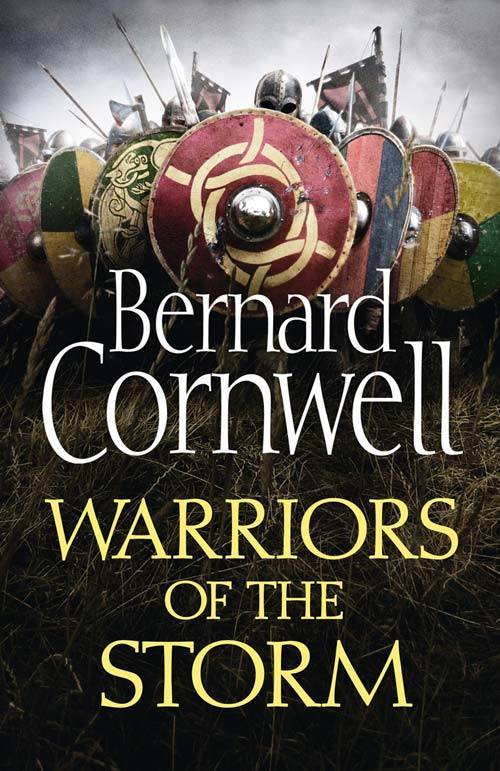
Book Review: WARRIORS OF THE STORM

I’ve continued my listening to The Last Kingdom series by Bernard Cornwell with Warriors of the Storm. This 9th entrant in The Last Kingdom series really brought all of the elements I enjoy about this story together.

In this story, Uhtred has entered his second “prime” as a lord serving Aethelflaed, the Lady of Mercia.

Uhtred has reestablished his relationships with his children and the young Aethelstan, and he builds on these relationships in Warriors of the Storm in meaningful ways, demonstrating that he is no longer the absent father as when his children were younger. He is a father and a leader of young people, who finds young boy servants he knows can learn from him and join the ranks of his warriors as they become men.

Uhtred’s own ambitions have also been reseeded after seeming lost for a time. Through the middle few books of this series, Uhtred appears mostly aimless. He always pines to retake his ancestral home at Bebbanburg, but he has very little idea of how to accomplish that, so he is buffeted from conflict to conflict against a constant tide of new enemies. Warriors of the Storm feels like the first time in several books that Uhtred shows real ambition, where he takes proactive steps to make his claim to Bebbanburg.

This ambition gets Uhtred into some trouble with an army of Norsemen, hearkening back to his younger brasher days. But as a veteran warlord, and with some good allies, he makes his stand.

This story called back a lot of themes from previous stories, helping it feel quite familiar: a Northern threat; a mysterious sorceress; a hair-brained quest; and a last-ditch battle. It was a great story overall that reminded me of why I love this series.

The narration is serviceable, but the tone of this narrator feels underwhelming to me. I suppose nothing compares to the bellowing and growling of Jonathan Keeble, who narrated the first few stories of this series.

Steve D

Review: PLAIN ENGLISH Podcast’s coverage of the war in Ukraine

I’ve never reviewed a podcast here before, but the more I find myself needing interesting and engaging information about in-depth topics, the more I turn to podcasts to get it. I simultaneously need to feel connected with what’s going on in the world without being inundated with opinion pieces, social media blather, and obnoxious punditry.

I was not following the major news outlets on Russia’s invasion of Ukraine. Instead, I had been getting bite-sized analysis notifications about once daily, but I needed more.

Plain English is a podcast on the Ringer where host Derek Thompson deep-dives into interesting topics. I had never listened to his podcast before, but after hearing about it from other Ringer shows (of which I listen to several) I noticed that he had done more than one episode on the ongoing war.

https://www.theringer.com/plain-english-with-derek-thompson-podcast

As it turns out, Thompson has done seven episodes on the war in Ukraine since its outbreak on Feb 25, speaking with military analysts, financial analysts, and even local Ukrainians about the war, its immediate impact, and its wider and longer-term implications.

I have listened to all seven episodes over the last four days, and I’m eager for more. Thompson takes a very complex subject that is destined to be shredded into a thousand opinions by a thousand talking heads on every network, and asks basic yet direct questions in his interviews with experts.

In the March 1 episode, for instance, Thompson speaks with two different financial analysts about the sanctions that the US and EU have slammed upon Russia, what they are really aimed to accomplish, and what the medium- to long-term impact could be.

What I particularly appreciate about Thompson’s concise narrative style is that he never loses sight of the very human tragedy that is unfolding in this conflict. Ukrainian citizens being targeted and killed in the action. And yes, Russian citizens’ outcries of protest being stamped out by their government, and the potential ruin that Russia’s economic crash could wreak upon people all over the world. (Listen to that March 1 episode).

This is not a case of “both sides”. Putin and the Russian government and military are obviously in the wrong, but their war, and the world’s sanctions against Russia will have real consequences for real people.

Thompson explains these points and much more without talking down to his audience, and with the goal of understanding above anything else. His discussions have made me feel like I can contextualize this conflict in more tangible terms without having to sift through the noise of an online news search or broadcast news clips.

Whether you are already well-informed on this conflict or not, I highly recommend this series of episodes on the Plain English podcast.

Слава Україні

Steve D

Book Review: THE LAST KINGDOM and engrossing characters and story

After years of watching the show and hearing from my father-in-law that I would love Bernard Cornwell’s The Saxon Stories series — now more famously known as The Last Kingdom series — I finally listened to the first story, The Last Kingdom, on Audible.

This was my first introduction to Cornwell’s writing, having watched all of the TV adaptation of “The Last Kingdom” previously. Even though I came into this book with inflated expectations, I was definitely not disappointed.

The Last Kingdom follows young Uhtred, the son of an English noble, from the time he is kidnapped by a Danish earl, Ragnar, until he becomes a man. This first installment is effectively a coming-of-age story, where Uhtred learns how to live like a Dane and how to be a true warrior. He learns early on that he has a strong lust for battle and killing, and he chooses the warrior’s path for himself, becoming caught between his Saxon heritage and his Danish upbringing.

Cornwell’s story is exciting, and his plot is punctuated by thrilling action sequences and scenes of dialogue that do most of the heavy lifting in revealing the characters. Many of the names would be familiar to those who had watched the titular Netflix show, but the story is far more in depth.

I thoroughly enjoyed seeing more of Uhtred’s early years, which are largely glossed over in the show. The reader gets to see more of the relationship between Uhtred and Ragnar, which truly becomes a father-son bond as the young Uhtred grows. This story lays a strong foundation for Uhtred to constantly be pulled between the two halves of his heart — the half that wants to help Ragnar the Younger in avenging the death of their father, and the half that wants to reclaim his birthright as lord of Bebbanburg.

This story also sets up what is sure to be a fiery relationship/rivalry between Uhtred and King Alfred of Wessex, as Alfred ensnares Uhtred deeper and deeper in the politics of Wessex (and his liege-ship), and Uhtred tries to angle for a chance to see his homeland in Northumbria reclaimed. The dialogue scenes between Uhtred and King Alfred crackle with tension.

If I had one gripe against this story, it’s that I don’t know if I would enjoy it as much if I didn’t already know the characters. Being able to see the actors’ faces in my mind as I listened brought this story to life in a way that many others cannot be.

Can’t wait to start the next one.

Steve D

#Review: BRIGANTIA – an excellent part 3 to the Vindolanda saga

Brigantia by Adrian Goldsworthy, historical fiction, Roman Britannia, war, military

Brigantia is the third novel in the Vindolana saga, Adrian Goldsworthy’s epic historical fiction set in Roman Britannia during the early years of Trajan’s reign.

The third installment of the Vindolanda saga is as compelling and full of twists as the first two. New characters are introduced who bring renewed depth to the story, but the mainstays all have their part to play.

The plot also uncovers even richer and more intricate details about Ferox’s past and his dueling identity as both Roman Centurion and Silures Prince. Continue reading “#Review: BRIGANTIA – an excellent part 3 to the Vindolanda saga”

#Review: Netflix’s ‘OUTLAW KING’ Falls Flat

While I was on paternity leave, I had a lot of time to binge-watch Netflix, so I was excited to get to some of the films that had been piling up in my list.

Outlaw King, Netflix’s historical fiction about Robert the Bruce’s rebellion against the English crown, was a natural pick for me.

  1. I like Chris Pine
  2. I love Scotland
  3. And I’m interested in Scottish history. I nearly wrote my very first history paper on William Wallace when I was 14, mainly because I had watched Braveheart a thousand times and read about some of the historical battles depicted there.

Unfortunately, while this movie did a lot of things well, it didn’t resonate with me the way I anticipated it would. Continue reading “#Review: Netflix’s ‘OUTLAW KING’ Falls Flat”

Exploring Úr’Dan: The Arrowhead

I’ve managed to fall into a monthly rhythm with this series without even trying. However, I may do an extra one this month in honor of NaNo.

For today’s journey, I’d like to take you to a small region that wields significant influence in the Uplands — some might even say disproportionate influence. Continue reading “Exploring Úr’Dan: The Arrowhead”

Exploring Úr’Dan: Brief History of the Northern Migration

I’ve spent the last several installments of this series talking about the various peoples who inhabit Úr’Dan. Now I think it’s time to start giving bits of the history of this subcontinent.

Continue reading “Exploring Úr’Dan: Brief History of the Northern Migration”

4 Ways to Write an Exciting Action Scene

The end of Manuscript: Beta of The Warden of Everfeld: Memento is nigh, and my characters (most of them) just survived a battle scene that ended as abruptly as it began. Continue reading “4 Ways to Write an Exciting Action Scene”