
I am woefully behind on posting book reviews, which is perhaps a good thing. It means I’ve at least been keeping up with my reading. So here goes an attempted book review for a book I finished almost a month ago.
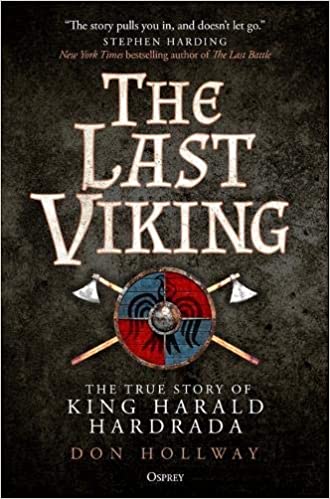
I listened to The Last Viking: The True Story of King Harald Hardrada by Don Hollway on audiobook, and it reminded me of the pleasing rhythm of well-constructed narrative history.
King Harald Hardrada was, as Hollway argues, the last great figure of the Viking age of Norse history. After his older brother, King Olaf of Norway, is killed in battle, the young Harald embarks on a wild life’s journey that takes him opposite corners of Europe, until his death in 1066.
Hollway uses a combination of historical sources and dramatized dialogue and exposition to weave together this history of Harald Hardrada’s life. His open discussion of his sources (or lack thereof, at times) and their veracity lends credibility to his understanding of Harald’s life. We have to take the information we have about a person who appears larger than life. Hollway then builds a narrative and life journey fit for a figure who appeared to be legendary in his own time.
To open the book, Hollway cleverly sets the scene for the battle of Stamford Bridge in England, 1066, where King Harald Hardrada of Norway met King Harold the Saxon, of Wessex.
Before the battle begins, Hollway winds the clock back to Harald’s youth. Following the death of his brother, the book follows Harald as he makes his way down the Volga and ultimately to Constantinople, becomes embroiled in the imperial court, and escapes as the reign of Constantine II collapses.
Harald then returns to his homeland and attempts to conquer parts of Sweden and Denmark from his seat in Norway, before finally embarking on his expedition to conquer England. This framing leads to a surprisingly climactic end for Harald, in which Hollway deservedly places him among the most influential figures of his time.
The Last Viking is an excellent read for anyone interested in the early medieval period of Northern Europe or the Byzantine period. For me personally, this book tugged at multiple threads in the history of side of my brain, and only reinforces my growing obsession with the early-Medieval period in Britain, and now Scandanavia.
Steve D
 Evening Satellite Publishing